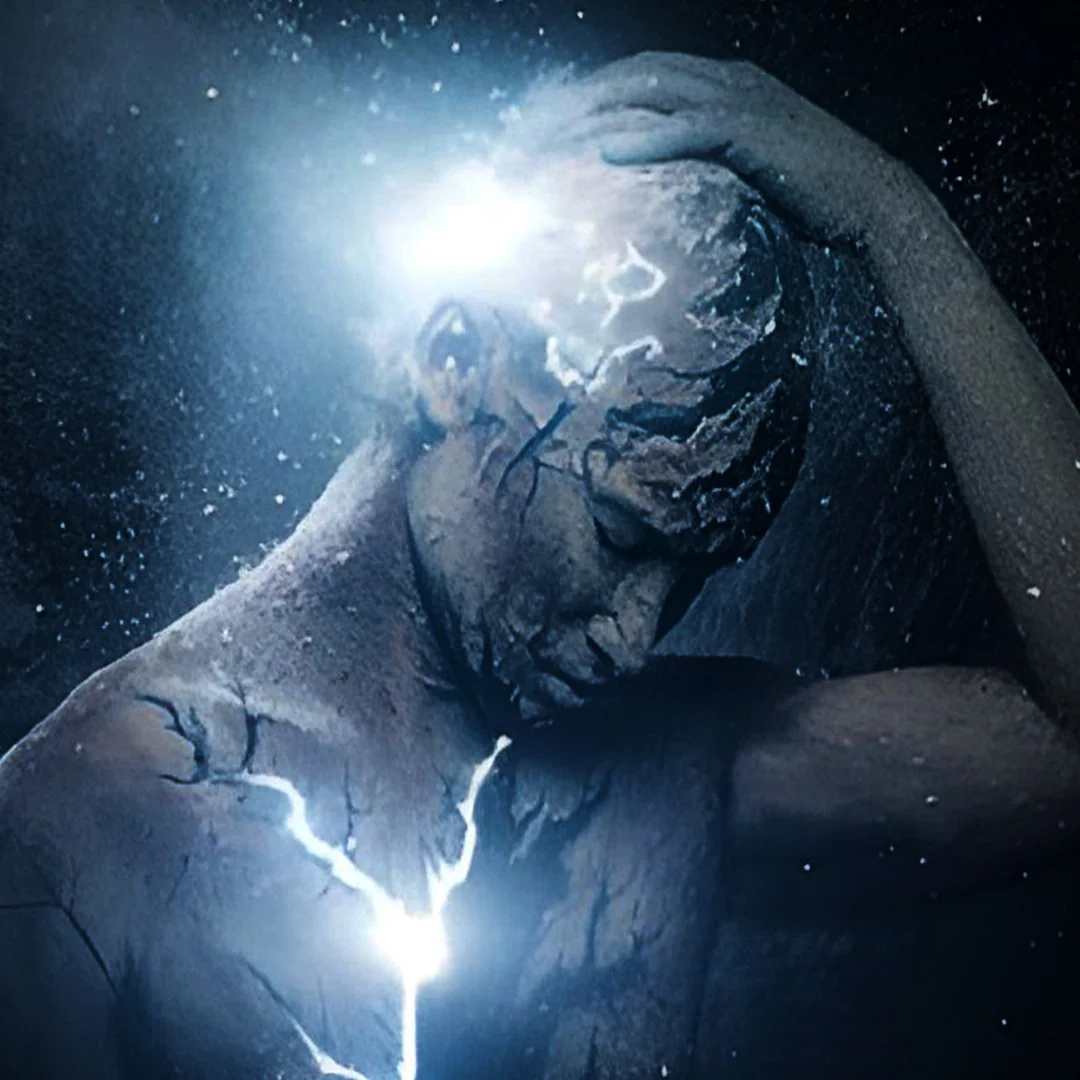
The study examined how areas of the brain responsible for empathy and analytical reasoning are linked to spirituality and belief. Its findings propose that religious faith and scientific thinking clash because they activate separate regions of the brain during cognitive tasks. People with a strong belief in the supernatural tend to suppress regions associated with analytical thought.
Tony Jack, a philosophy of science professor at Case Western Reserve University and one of the study’s authors, commented: "From our understanding of the brain, jumping to believe in the supernatural actually inhibits critical or analytical thinking..."
A stronger emotional inclination often means a stronger religious inclination
In an earlier study using MRI technology, Jack and his colleagues identified two networks of neurons that compete with each other, shaping whether people view the world through a religious or scientific lens. The brain's analytical network fuels critical thinking, while its social network supports empathy and spiritual insight. During experiments, participants faced ethical or scientific dilemmas while brain scans measured activity. Results showed that activating one network tended to suppress the other. Those with higher levels of religious belief were generally more emotionally driven and so tended to inhibit the regions of the brain responsible for analytical reasoning.
The conflict between religion and science
In the most recent research, scientists conducted a series of eight experiments involving between 159 and 527 adult participants. The goal was to compare belief in God with analytical thinking and moral concerns. Across all trials, researchers observed that spiritual belief and emotional anxiety were closely linked to frequent participation in religious rituals; the more religious a person was, the more likely they were to suppress their brain's analytical network and prioritize emotional responses. According to the study, when someone faces a conflict between scientific and religious perspectives, their brain's makeup plays a critical role in determining how they process and express this conflict.
Bringing both networks together
The study also points out that some of history’s greatest scientists were also deeply spiritual. As Jack explains: "Far from constantly clashing with science, under the right circumstances religious beliefs can actually enhance scientific creativity and insight." He adds: "Many renowned scientists were in fact spiritual or religious—these individuals had the mental complexity to realize that science and religion do not need to be in conflict."
Researchers suggest that people who can effectively use both neural networks, instead of shutting one down, are better equipped to understand the world and make groundbreaking discoveries.
As Albert Einstein famously said: "Science without religion is lame, religion without science is blind." " .
So, are you someone who thinks exclusively in scientific terms at times and purely in religious terms at others—or are you able to engage both ways of thinking without losing your analytical edge?
About the Author



No comments:
Post a Comment