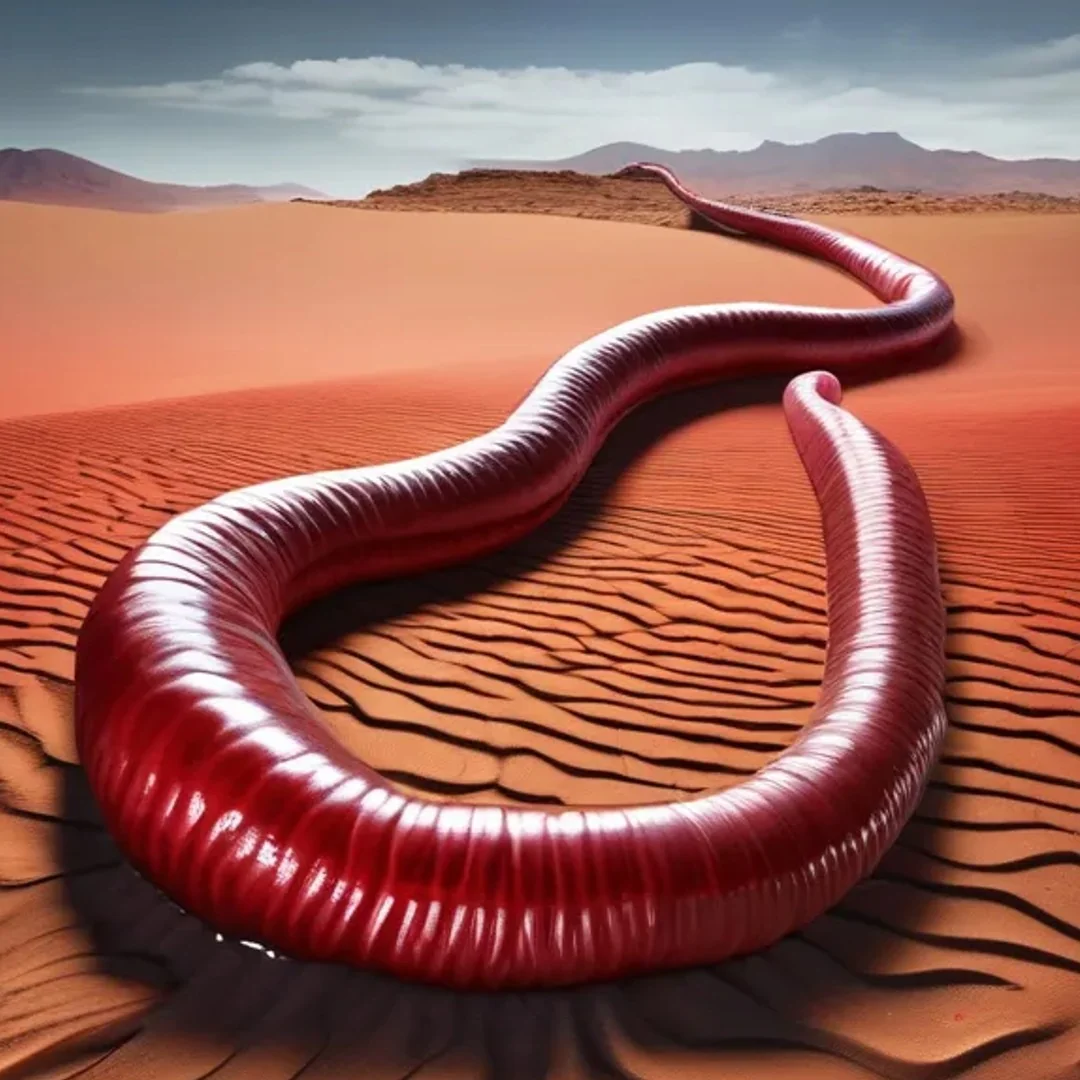
The Mongolian death worm is one of the most enigmatic creatures in modern desert folklore. Some consider it nothing more than a legend, while others classify it as a cryptid—a mysterious animal yet to be confirmed by science—believed to inhabit the sands of Mongolia's Gobi Desert. In this feature, we'll explore its mythological origins, descriptions, scientific investigations, possible explanations, and its current status from both scientific and popular perspectives.
Mythological Origins and Historical Accounts
Western sources indicate that the first Western public mention of this worm came from Roy Chapman Andrews’s book On the Trail of Ancient Man, published in 1926, which relayed information from Mongolian officials regarding the creature’s existence.
In 1922, a Mongolian minister described it as "roughly sausage-shaped, about two feet long, without a head or legs, and so venomous that simply touching it brings instant death. It lives in the hottest parts of the desert."
Historians note that this legend draws from the heritage of Mongolian herders who live among the sands and believe in a subterranean creature that stirs up waves of sand whenever the ground is disturbed.
From the mid-20th century onward, several research expeditions from Western countries attempted to study the phenomenon scientifically. We’ll delve into these efforts in the scientific investigation section.
Physical Description and Attributed Traits
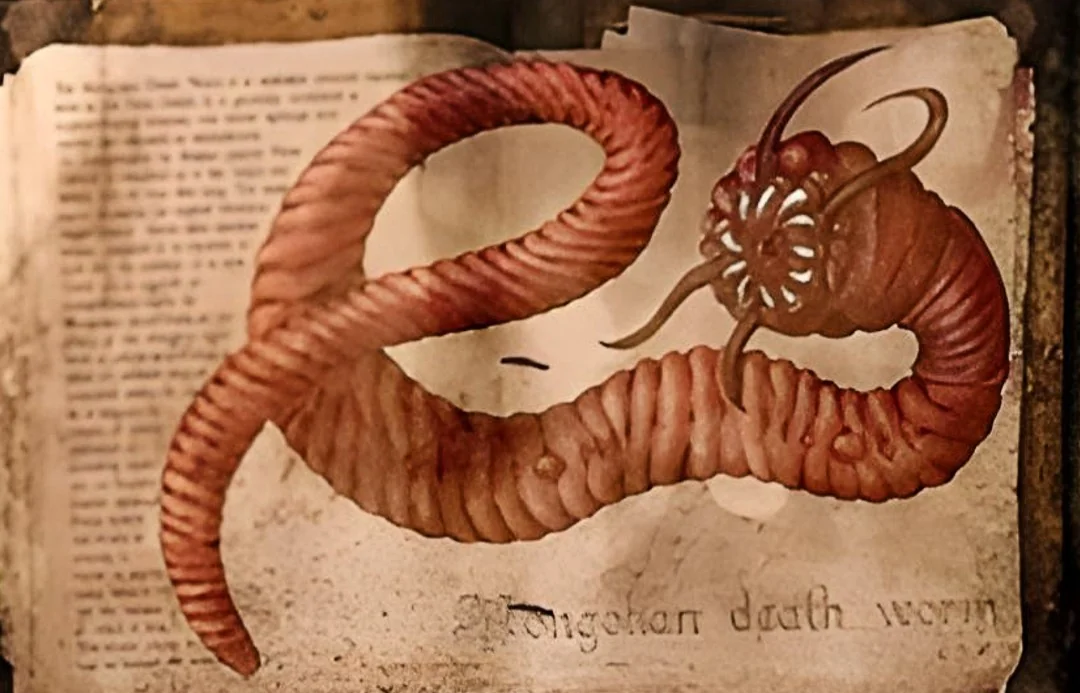
The creature is often described as looking like a gigantic intestinal worm or a large sausage, typically measuring between two and five feet long (about 0.6 to 1.5 meters). Its color is usually reddish-brown or dark red, sometimes appearing bright red or even blue when enraged, depending on the legend. Identifiable features like a head, legs, or a distinctive tail are reportedly absent; in some accounts, the head and tail are indistinguishable from each other.
It is said to possess unusual abilities, such as spitting a toxic or acidic saliva that can dissolve flesh or quickly kill, and emitting electrical shocks or discharges to stun its prey.
It moves underground, and some claim it only emerges after light rainfall or when the ground vibrates.
Presumed Range
The Mongolian worm is associated with regions of the Gobi Desert in Mongolia—sometimes to its south or west—where the terrain is composed of dry sands and barren slopes. It is usually said to live underground, surfacing only rarely, possibly after light rain when the sands become easier to penetrate.
Scientific Investigations and Field Research
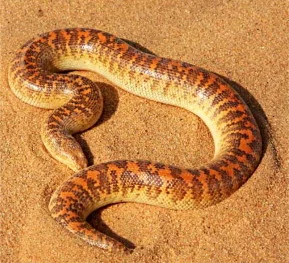
In 1983, locals were shown a photo of a species of sand snake Tartar sand boa (Eryx tataricus), which they identified as the same creature they had witnessed. This gave rise to the theory that the legend was based on sightings of sand snakes, not a so-called 'death worm.'
In 1990 and again in 1992, Czech explorer Ivan Mackerle (Ivan Mackerle) led expeditions to the Gobi, taking inspiration from the idea of using a vibration device (thumper) to draw the creature out from underground, but without any definitive result.
In May 2005, a team from Centre for Fortean Zoology (CFZ), led by Richard Freeman, traveled to the desert and tried using traps and water attractants. However, no physical evidence was found.
Despite all these efforts, no remains or scientifically valid images have been recovered to confirm the worm’s existence.
Scientific Analysis and Skeptical Arguments
Many scientists believe the stories may stem from misidentified sightings of sand snakes or legless lizards—such as amphisbaenia—that inhabit the region's sand dunes.
From a scientific perspective, it stands to reason that if a creature were truly as large as claimed—capable of emitting electric shocks or spraying deadly venom—and lived in the Gobi Desert, it would have left behind physical evidence such as remains or carcasses. Given the region's dry climate, where bodies do not quickly decay, the absence of such evidence is a strong argument against its existence.
While it’s possible that an undiscovered species could inhabit remote regions, the claims of supernatural abilities like electricity or corrosive acid are likely exaggerations or have symbolic roots in storytelling.
Popular and Cultural Perspective
Mongolian herders have developed a long-standing oral tradition that encodes warnings about the dangers of the desert. Whether real or mythical, the worm serves as a creature to beware of—either as a literal threat or a warning symbol.
In Western culture, the worm has become a reference point in movies and cryptid folklore (cryptids), inspiring adventurous stories set in remote, mysterious places.
Between Fact and Legend
Considering all the information, we can conclude:
- So far, there is no definitive scientific evidence proving the existence of the worm as described in the legend.
- However, repeated local accounts from an isolated area like the Gobi mean that a yet-undocumented species of reptile cannot be completely ruled out.
- It is more likely that the 'Mongolian Death Worm' is a mix of known species—such as sand-dwelling snakes—and mythological embellishment that has grown over time.
Continued exploration of these remote areas might eventually uncover a new species or offer a clearer explanation for the legend, but until then, the worm remains an enduring part of natural folklore.
About the Author



No comments:
Post a Comment