If you think ghost stories are a recent phenomenon—say, just a couple of centuries old—think again. Tales of the supernatural were common in ancient Egypt, Greece, and Rome, recounted as real events that captured the imaginations of people millennia ago.
A story preserved by one of Rome's most notable figures shows that belief in ghosts and unseen forces has deep historical roots, stretching back thousands of years.
The Roman senator Pliny the Younger, who died in 113 AD, recounted a chilling ghost story that continues to resonate today. Pliny wrote:
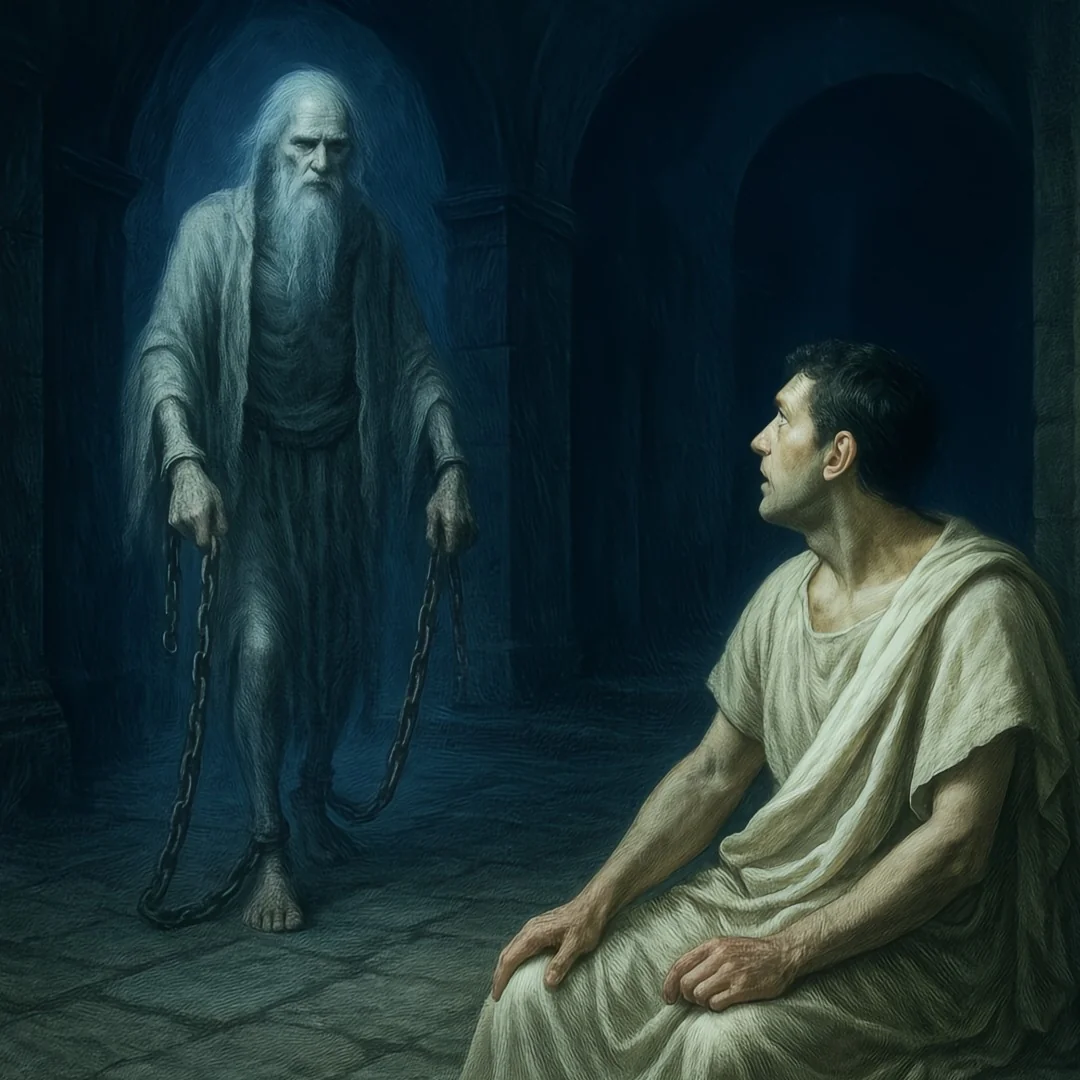
"In Athens there was a large, spacious house that had gained such a terrifying reputation that no one dared live there. At midnight, people would always hear a sound like clanking metal; if you listened more closely, you’d notice the rattle of chains dragging across the floor. These eerie noises signaled the arrival of a dreadful apparition—a ghostly figure of an old, emaciated man, with a sorrowful face, long beard, wild hair, and his hands and feet shackled in chains. Unsurprisingly, the house was abandoned and offered for rent at a measly price. However, a philosopher named Athenodorus heard the story and decided to move in himself, determined to face whatever haunted the house.
One night, the ghost appeared again, dragging his chains with a chilling metallic noise before suddenly vanishing. Unfazed, Athenodorus marked the spot where the specter disappeared, and the next morning instructed workers to dig there. Sure enough, they uncovered a human skeleton, still bound in chains. After the remains were given a proper burial, the haunting ceased, and the house was never troubled by supernatural events again."If you think ghost stories are a recent phenomenon—just a couple of centuries old—you’d be mistaken. Even in ancient Egypt, Greece, and Rome, supernatural events were told and recorded as real occurrences. This narrative, passed down by a famous Roman, shows that belief in ghosts and invisible entities goes back thousands of years.
The Roman senator Pliny the Younger, who died in 113 AD, shared a frightening ghost story that still lingers today. In his words:
"In Athens, there stood a large house infamous for being haunted to the point that no one dared stay. Every night at midnight, the sound of clashing metal echoed through the halls, and with a keen ear you could hear chains scraping the floor—the unmistakable warning of a dreadful spirit: the ghost of a gaunt, old man, his expression gloomy, with a long beard and wild hair, bound hand and foot in chains. It’s no wonder the house was deserted and put up for rent for little money. But a philosopher named Athenodorus, intrigued by the tale, decided to rent it himself and confront whatever might appear.
One night, the ghost materialized again, rattling his chains with a terrifying sound before vanishing. Calm and perceptive, Athenodorus marked the exact spot and ordered workers to dig there in the morning. They discovered a skeleton, its bones still shackled. After the remains were given a respectful burial, the ghost vanished forever, and the house was never haunted again."
Appeasing the Dead
This old tale highlights a belief that has shaped cultures for millennia: the idea that a restless spirit only finds peace when the body is treated with dignity and properly laid to rest.
From ancient Egypt through Greek and Roman civilizations, people believed that neglecting to bury the dead or failing to perform proper rites might lead to tormented spirits returning for justice—manifesting as ghosts or restless entities haunting the living.
There was a common fear that someone denied a proper burial would be left stranded between the realms of the living and the dead, forced to linger as a wandering phantom inside houses or visiting those who had forgotten them. Rituals to appease the departed—offerings, lamps, and prayers—became an essential part of ancient life, reminding lost souls they were not forgotten.
The story of the Athenian ghost told by Pliny the Younger perfectly illustrates this belief. When Athenodorus discovered and respectfully buried the chained skeleton, the ghost finally found peace and vanished, as if at last granted eternal rest.
The message is clear: even the dead demand justice, and they will not rest until their dignity is restored.
Share Your Experience
If you’ve ever had a truly strange, unexplained experience, you can fill out the form and send it here
About the Author



No comments:
Post a Comment