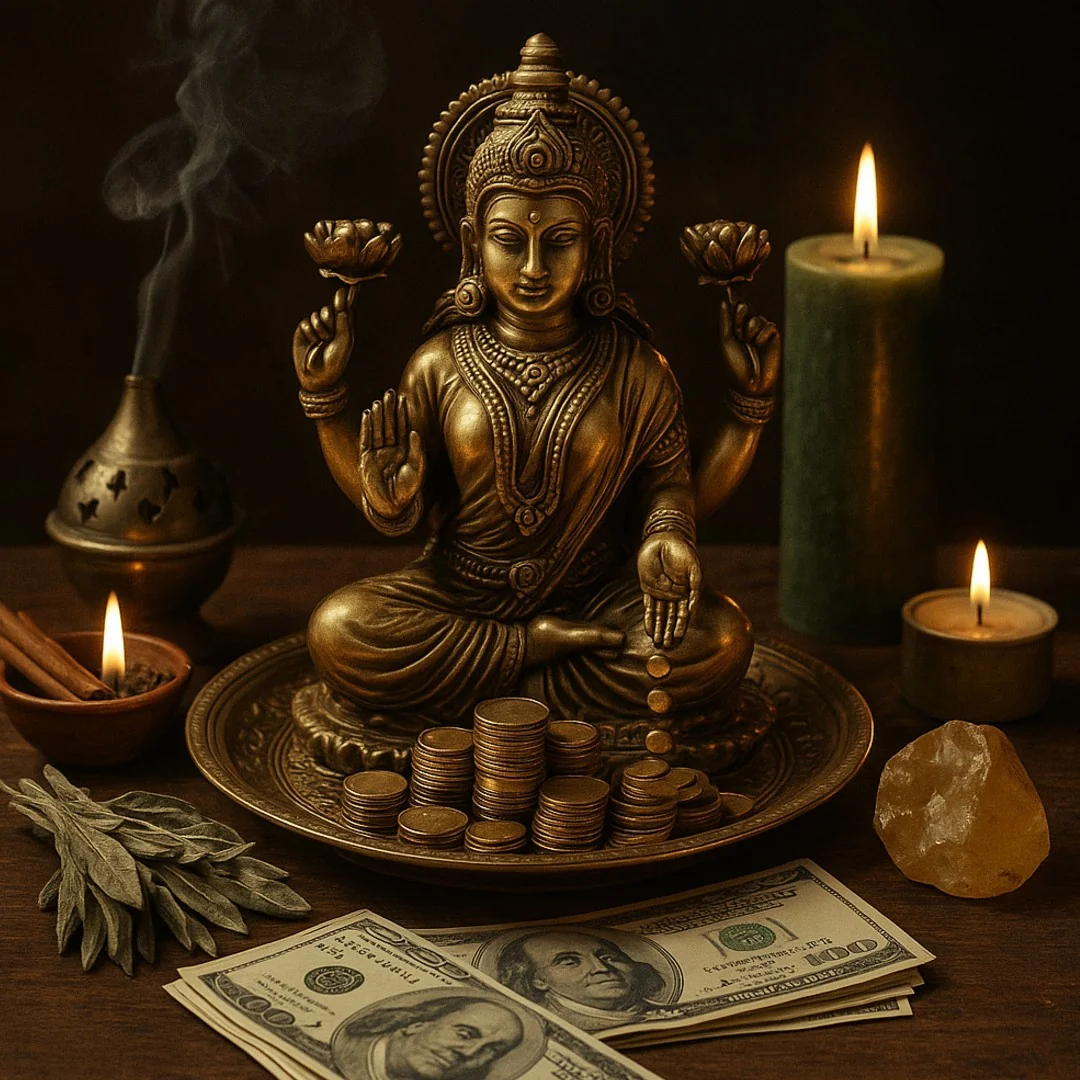
From the earliest times, money wasn’t only seen by human cultures as a product of hard work. It has also been treated as an invisible force—something that could be summoned or appeased through rituals and symbols.
From incense burning in Arab homes, to Hindu mantras recited under the moonlight, to green candles lit in Wiccan circles, these practices share one idea: focusing intent to raise the “vibration” of abundance in a person’s life.
While these rituals can give participants a sense of purpose and control, their outcomes ultimately depend on personal belief and experience, rather than scientific proof.
Folk Rituals in Arab and Islamic Cultures
Within Arab popular traditions, a variety of methods—viewed as 'white spirituality' and intended for blessing rather than harm—are practiced, including:
Money Incense
Blends of frankincense and oud are burned while reciting the Quranic chapter Al-Waqi’ah to inspire prosperity and abundance, with the smoke wafted around the house or shop.
Magic Squares and Talismans
Letter-and-number grids written in special patterns are placed on display or buried at the doorstep; falling into the realm of folk magic, these practices are controversial from a religious perspective.
Seven Copper Coins
Coins are washed with water over which prayers have been recited during the first new moon, then distributed around the home’s corners as a symbol of welcoming a new energy cycle.
King Tarish and Buried Treasures
Folk tales speak of the summoning of King Tarish as a supernatural guardian of hidden treasures or a force influencing luck and wealth. Although such stories are part of local folklore, religious law strictly forbids them since they involve invoking spirits—often accompanied by scams or exploitation.Religious Disclaimer
Some of these practices involve calling on invisible beings (such as jinn) or summoning ‘kings’ of wealth, which are strictly forbidden and considered a form of shirk. If there was a miraculous shortcut to guaranteed wealth, the Prophet Muhammad himself would have used it. The true path to earning remains: effort, planning, work, and reliance on God.
India and the Wealth Mantra
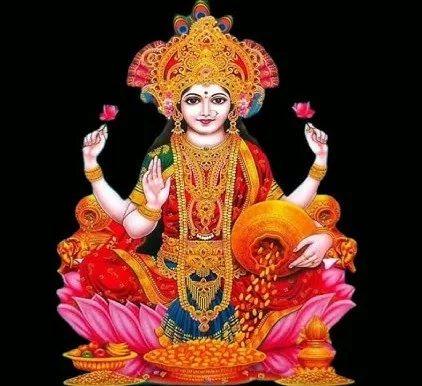
In Hinduism, prosperity is embodied by the goddess Lakshmi, patron of fortune and fertility. During the Diwali festival, a puja (ceremonial worship) is held: Lakshmi’s image is placed on a home altar, adorned with flowers and incense, and a common mantra is chanted:
Om Shreem Mahalakshmiyei Namaha
“I bow in reverence to Mahalakshmi, asking to be graced by her blessings and generosity.”
Meaning explained:
Om: The holy sound symbolizing the universal essence and the beginning of everything.
Shreem: The bija (power-syllable) associated with Lakshmi, invoking wealth and beauty.
Mahalakshmi: A direct invocation of Mahalakshmi as the giver of wealth and blessings.
Namaha: A phrase meaning “I bow in respect” or “I offer my reverence.”
The ritual is often accompanied by physical symbols, like copper vessels filled with water and coins left overnight under the moonlight—representing harmony between the universal (moon) and the domestic (money). Philosophically, these practices are meant to activate intention and nurture a ‘sense of deserving’—not to replace practical effort.
Africa and the Money Bag
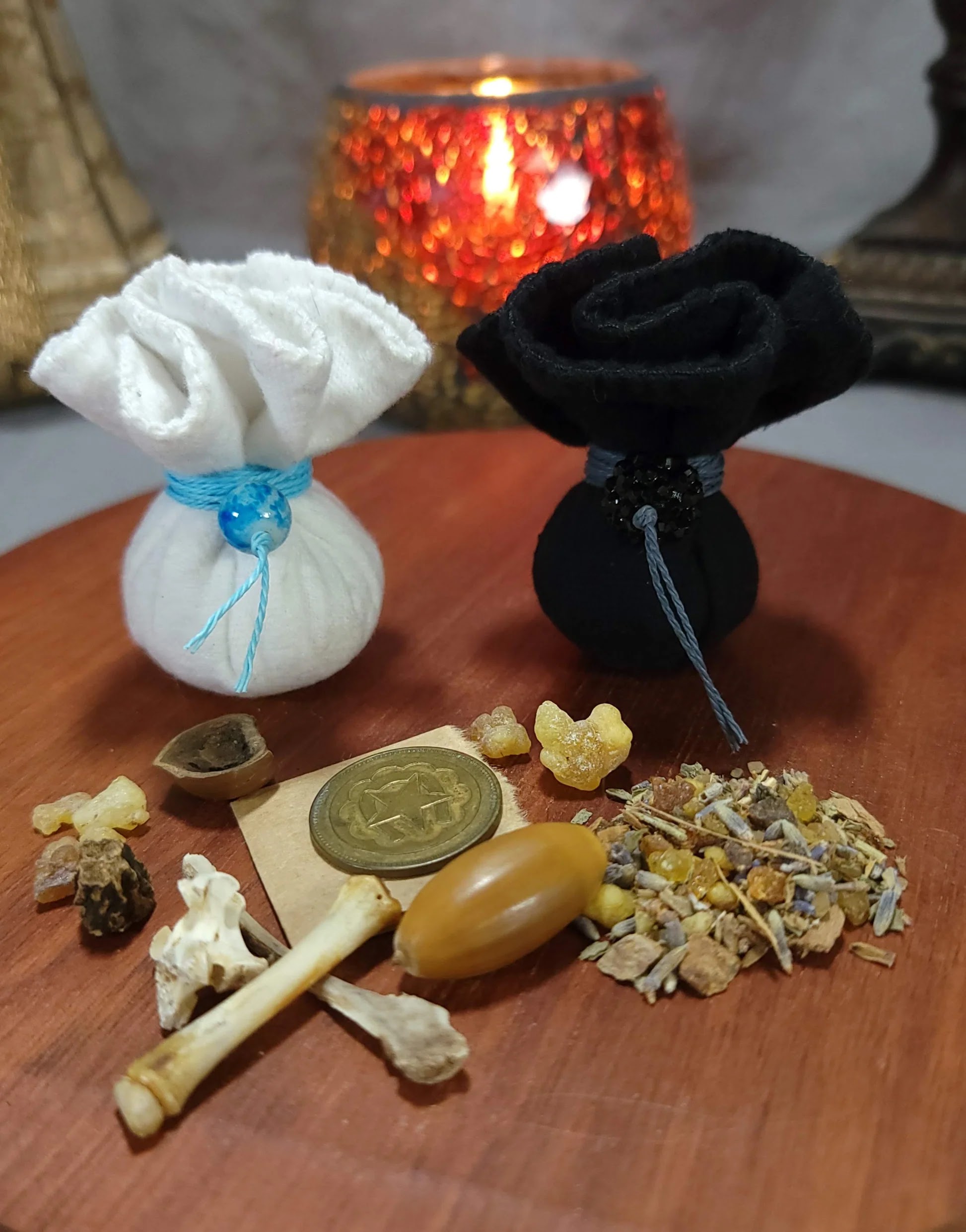
In many African traditions, ancestral spirits are seen as sources of blessing and sustenance. From ritual libations (pouring a bit of water or palm honey to honor the ancestors) to “money baths” with fragrant herbs, these symbolic acts are intended to open the way for abundance. In Vodou and Hoodoo, the money bag (or gris-gris/mojo bag) is filled with coins, herbs, and sometimes other symbolic items and carried close to the body—a kind of prayer-in-a-pouch.
Western Magic and the Green Candle
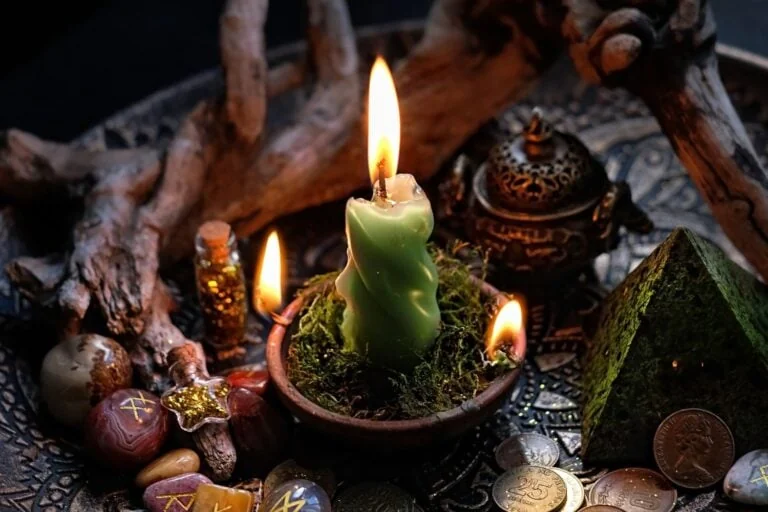
In Western magical traditions such as Wicca, green is linked to Jupiter—the planet of expansion and abundance. A green candle is lit on Thursday (Jupiter’s day), with a specific financial goal written down. “Money jars”—mixes of cinnamon, honey, and a coin kept in the home—are widespread, as is the new moon spell: writing a wish on green paper and burning it at the start of the lunar month to mark a new cycle of prosperity. These rituals use color, herbs, and the lunar calendar to focus intention and transform it into repeatable practice.
Scandinavian Runes: Symbols of Power and Prosperity
In ancient Scandinavian tradition, the art of runic symbols (Runes) was intertwined with magical and spiritual practices believed to tap into the elemental forces within these signs. While runes are letters from the Futhark alphabet, for ancient magicians and priests they represented far more than language—they were talismans carrying “cosmic vibrations” tied to the four elements and fate.
To attract wealth, certain runes, such as Fehu (ᚠ)—the symbol of wealth, possessions, and prosperity—were drawn on green paper or pieces of natural wood, held during meditation with a clear intention for abundance. Rituals sometimes included lighting a gold candle or pine incense, and inscribing the rune onto a coin to be carried as an amulet.
In modern times, spiritual practitioners in Europe and America have revived these customs under the name “rune magic,” emphasizing that the symbols act as keys to energy. They’re not about invoking supernatural entities, but rather about harmonizing consciousness with nature. One social media user claims the following compounded rune attracts money when drawn on the wrist in black or red ink. Rune tattoos are also used by some as symbols for various intentions: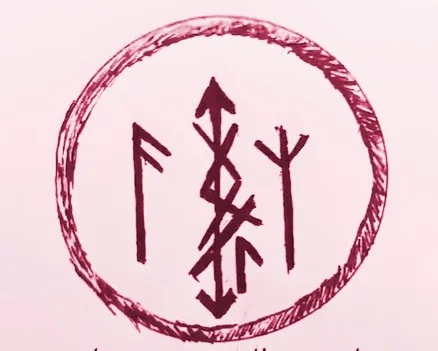
China and the Number of Wealth
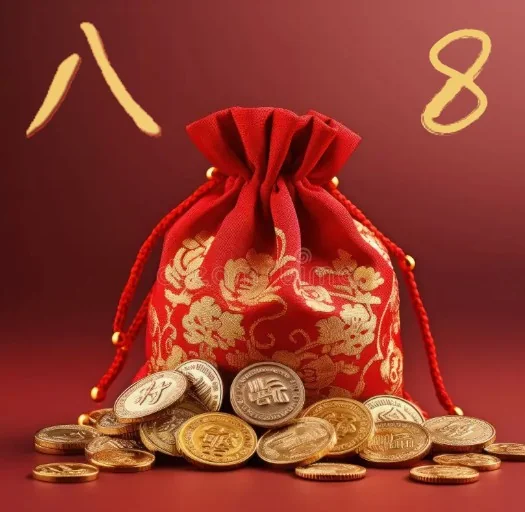
In Chinese culture, the art of attracting prosperity is built on the harmony of color and energy. Red symbolizes luck and strength, while gold and yellow represent wealth and prosperity. Homes and businesses are often decorated with combinations of red and gold—such as coins tied with red ribbons or golden lanterns—to call in Qi positive energy.
The number 8 is especially favored because its Chinese pronunciation (ba) is similar to the word fa, meaning “prosperity,” in contrast with number 4, which is associated with death. For this reason, weddings are held on dates containing the number 8, companies are launched on “8” days, and an address with the number 8 is considered a good omen for financial fortune.
New Age Spirituality
The New Age movement has reimagined old magical practices in the language of “energy and vibrations.” Whether or not one believes in the “energy of objects,” these tools often serve as daily behavioral cues—reminders to stay focused on goals:The Law of Attraction: From Thought to Reality
The Law of Attraction is one of the most widespread modern spiritual concepts. Its premise is simple: “what you focus on grows.” The mental and emotional energy of your thoughts draws events and results into your life that resonate at the same frequency.
Repeatedly visualizing abundance charges the subconscious to adopt behaviors that align with this goal. Gradually, a person begins making small decisions consistent with their new mindset.
Proponents of this law claim that clear intention and strong emotion are key. It's not enough to merely think about money—you must truly feel wealth as if it's already yours. Some people incorporate daily meditation and affirmations like “Abundance flows to me easily and effortlessly” or “I deserve financial success,” believing these phrases help reprogram the subconscious.

From a psychological standpoint, the influence of the “Law of Attraction” is often explained by selective perception bias: the brain starts to notice opportunities aligned with your focus, making it feel as if the universe is responding. Thus, the law moves from mystical philosophy to a practical psychological tool that enhances confidence, motivation, and optimism—traits that have been scientifically shown to increase the likelihood of financial and professional success.
Gemstones: Alleged Keys to Energetic Prosperity
Within esoteric and New Age circles, crystals and gemstones are thought to store “universal energy memory.” Each stone is believed to carry a unique frequency that influences specific aspects of life.
Among these, citrine Citrine, known as the “merchant’s stone” or Merchant’s Stone, is said to attract profit and successful deals while ensuring a steady flow of money. People often keep it in a wallet, on a work desk, or in a shop drawer to symbolize continued prosperity.
Tiger’s eye (Tiger’s Eye) is believed to connect the forces of the sun and earth, providing focus, wisdom, and courage for tough financial decisions. It is also used to ward off envy and negative energy that “blocks abundance,” a belief found in both Western and Eastern traditions.
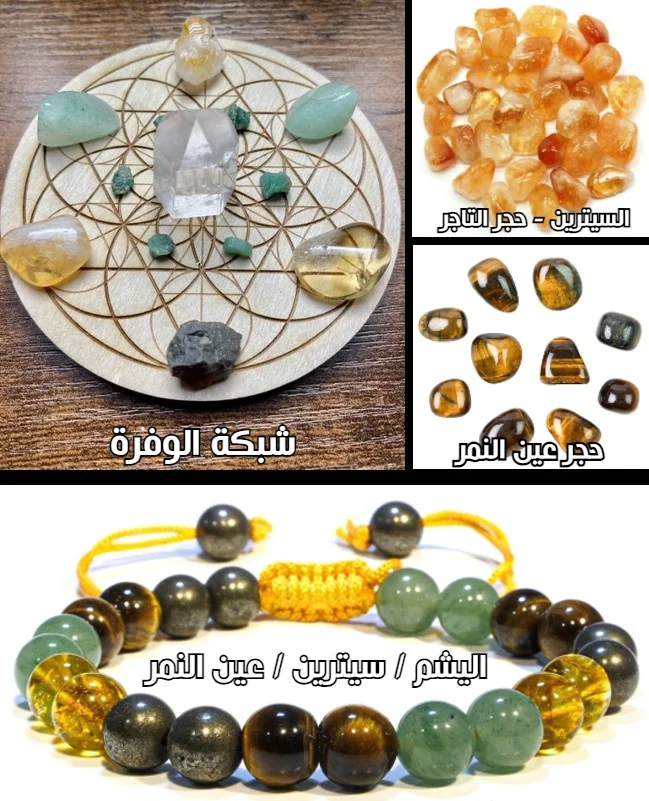
Some practitioners combine several crystals in what’s called an “abundance grid” (Crystal Grid of Abundance), arranging stones like citrine, jade, and pyrite in a sacred geometric pattern thought to amplify their energy—especially when paired with clear intention and daily expressions of gratitude.
Even though science does not support physical effects of crystals, their presence in ancient and modern cultures shows humanity’s ongoing need for tangible symbols that inspire trust, balance, and positive energy—much like prayer beads for mystics or a lucky coin in a merchant’s pocket.
Feng Shui: The Energy of Space and the Wealth Corner
In ancient Chinese philosophy, the principles of Feng Shui Feng Shui hold that our environment carries a vital life force called Qi, which determines our harmony, health, and prosperity. Of the eight energy zones on the Bagua map, the southeast corner is the area dedicated to wealth and abundance.
Practitioners recommend placing an ever-green plant such as a money tree or bamboo in this corner, as green represents continuous growth. Water features, like mini fountains or bowls of flowing water, symbolize the continual movement of money and energy within a home. Traditional Chinese symbols, such as the three-legged money frog or coins tied with red string, are also frequently used to activate the “vibration of financial luck.”
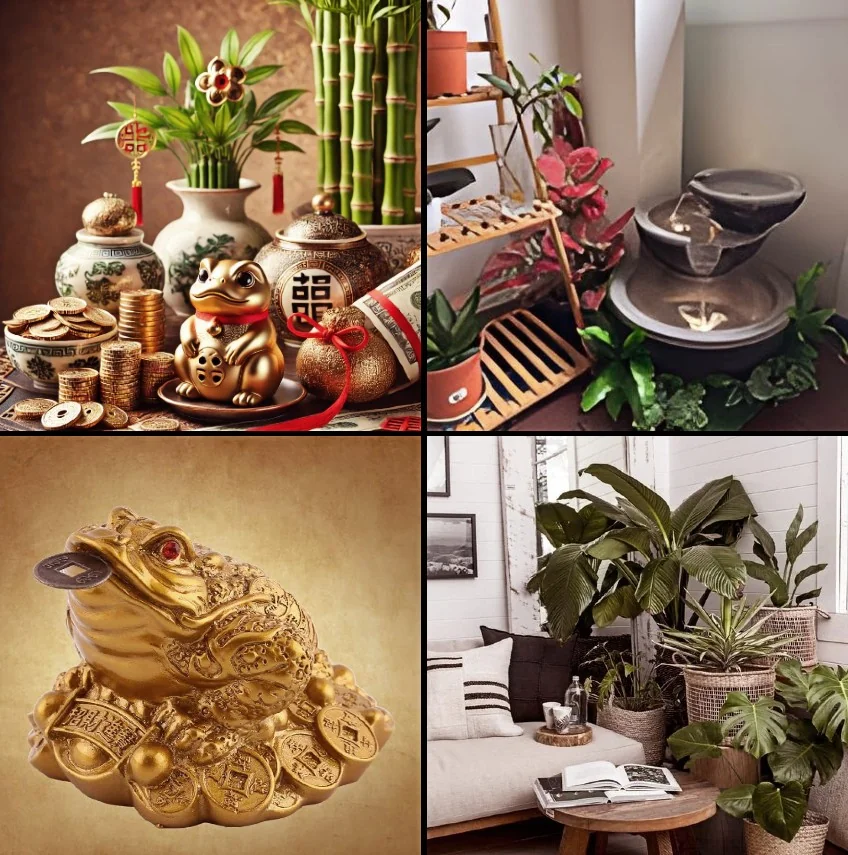
While these practices might seem superstitious to some, they serve an important psychological role: they visually connect financial goals to something tangible. Every time someone sees water flowing or a plant growing, it renews their sense of progress and prosperity. It’s a symbolic way of reprogramming the subconscious through the surrounding environment, so your space itself becomes a daily reminder of your intent to grow wealth and succeed.
In this way, the wealth corner in Feng Shui—whether you believe in its energy or see it as a visual symbol—serves to reinforce a core principle: what we see and interact with every day actively shapes our thinking, motivation, and drive toward abundance and success.
Bay Leaf
In various Western spiritual circles and Feng Shui practices, bay leaves (Bay Leaf) are believed to hold potent symbolic energy for “attracting financial abundance.”
This idea traces back to ancient Greek and Roman traditions, where the bay plant was sacred to Apollo, god of light, prophecy, and success. Crowns of bay were awarded to victors, poets, and wise men, making it a symbol of achievement, spiritual, and material wealth.
Modern rituals use bay leaves as a tool for focusing intentions on prosperity. A popular method involves writing a financial goal or a phrase like “abundance flows to me” on a dried bay leaf, then burning it over a green candle or incense. The ashes are either kept in a small dish or scattered in the air while visualizing the intention coming true.
Some believe placing a bay leaf in your wallet or under your pillow helps to “energize financial intention” according to the principles of the law of attraction or manifestation through focused awareness.
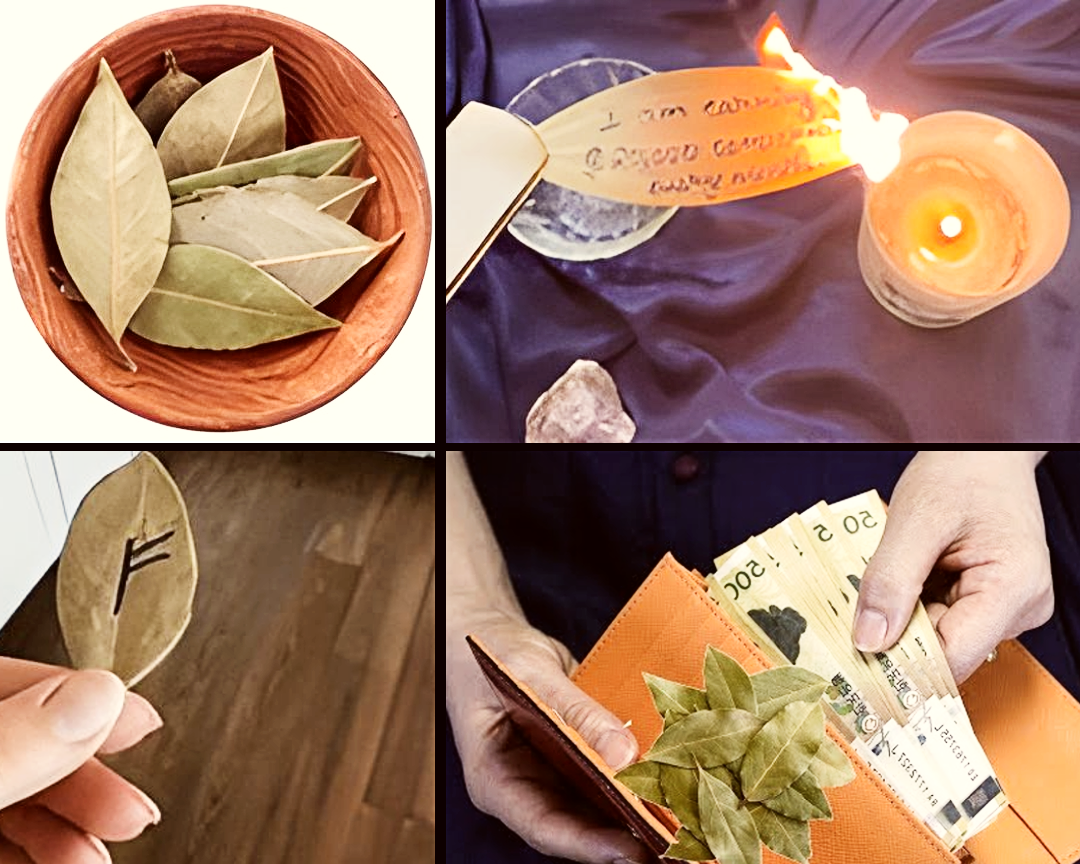
In more recent practices, bay leaves are often combined with Rune Symbols from ancient Norse traditions. Practitioners sometimes write runic letters—each believed to hold distinct energy—on the bay leaf, hoping to influence life’s course.
The most popular abundance-related rune is “Fehu (ᚠ)”, symbolizing wealth, possessions, and prosperity. People write this rune on a bay leaf before burning it or placing it in their wallet, believing it amplifies the leaf’s ability to attract money and opportunity. This blend of sacred botanical power with Norse rune magic reflects a cross-cultural belief: that intent, energy, and symbol together can shift fortune and abundance in one’s life.
These beliefs draw on the plant’s symbolism and its calming scent, which is also valued in herbal healing. There’s no scientific evidence that bay leaves attract money—the effect is rooted in suggestion and focused intention. Much like incense or crystals, bay leaves serve as a symbolic energy tool to reinforce intent and evoke a sense of abundance, rather than offering any tangible means of acquiring it.
Metaphysical and Psychological Perspectives
Metaphysically: Wealth is seen as a form of “life energy”; rituals serve to raise the vibration of abundance by uniting symbol, intent, and feeling.
Psychologically: Rituals can reduce anxiety around money and offer a sense of control, making you more attentive to opportunities and more willing to act. Daily affirmations, small rituals, and symbolic environments all act as mental anchors that build better financial habits. There’s no guaranteed “supernatural power” here—just focused suggestion supporting better behavior.
Proven Approaches to Earning Money
After exploring rituals and beliefs, it’s time for a reality check. True wealth doesn’t appear through incense or spells—it’s built with planning, effort, and discipline. Here’s what experience proves: concrete ways to build wealth that schools rarely teach, but which function like “modern rituals” grounded in clear intentions and consistent habits.
Financial Literacy First
Set a monthly budget, track your expenses, save automatically (pay yourself first), and avoid consumer debt. Learn the difference between an asset (generates income) and a liability (drains money). These basics, often missing from traditional education, radically change your financial path.
Start Early and Invest Regularly
Take advantage of compound returns through consistent, long-term investments (index funds/low-cost diversified assets, or responsibly managed real estate). Make investing a small, monthly habit—not a once-a-year gamble.
Diversify Your Income
Develop a practical skill you can sell (writing, design, translation, data analysis, etc.), and launch a small side project or online store. Multiple income streams boost your financial security and accelerate your saving and investing.
Set Measurable Goals
Define clear numbers and dates: “save 20% of income,” “build a portfolio of X per month.” Review your plan quarterly and adjust as needed—what gets measured, gets managed.
Risk Management Before Rewards
Build an emergency fund (3–6 months of expenses), diversify your assets, and avoid putting all your eggs in one basket. Slow, steady wins beat risky shortcuts.
Continual Self-Investment
Take a new course every quarter, read a book each month, earn a new certification every year. Increasing your own “market value” always comes before increasing your income.
Systems Over Motivation
Use routines: a day each week for expense review, a day for transferring savings, a day for tracking investments. Systems prevail after initial excitement fades.
Key Takeaway
Money ‘responds’ to those who respect its rules: clear goals, a plan, discipline, and patience. It’s not as simple as some claim, but it is possible—and consistent effort leads to real, cumulative results.
Between Ritual and Skill
Exploring the 'rituals of attracting wealth' across civilizations reveals a deep human longing for meaning and reassurance in times of economic uncertainty. Rituals offer a symbolic language for clarifying intention and nurturing hope, while modern tools provide practical ways to turn intention into results. When these two worlds meet—a quiet faith and disciplined action—you unlock the most powerful 'spell' of all: a clear mind, steady habits, and time working in your favor.
About the Author



No comments:
Post a Comment