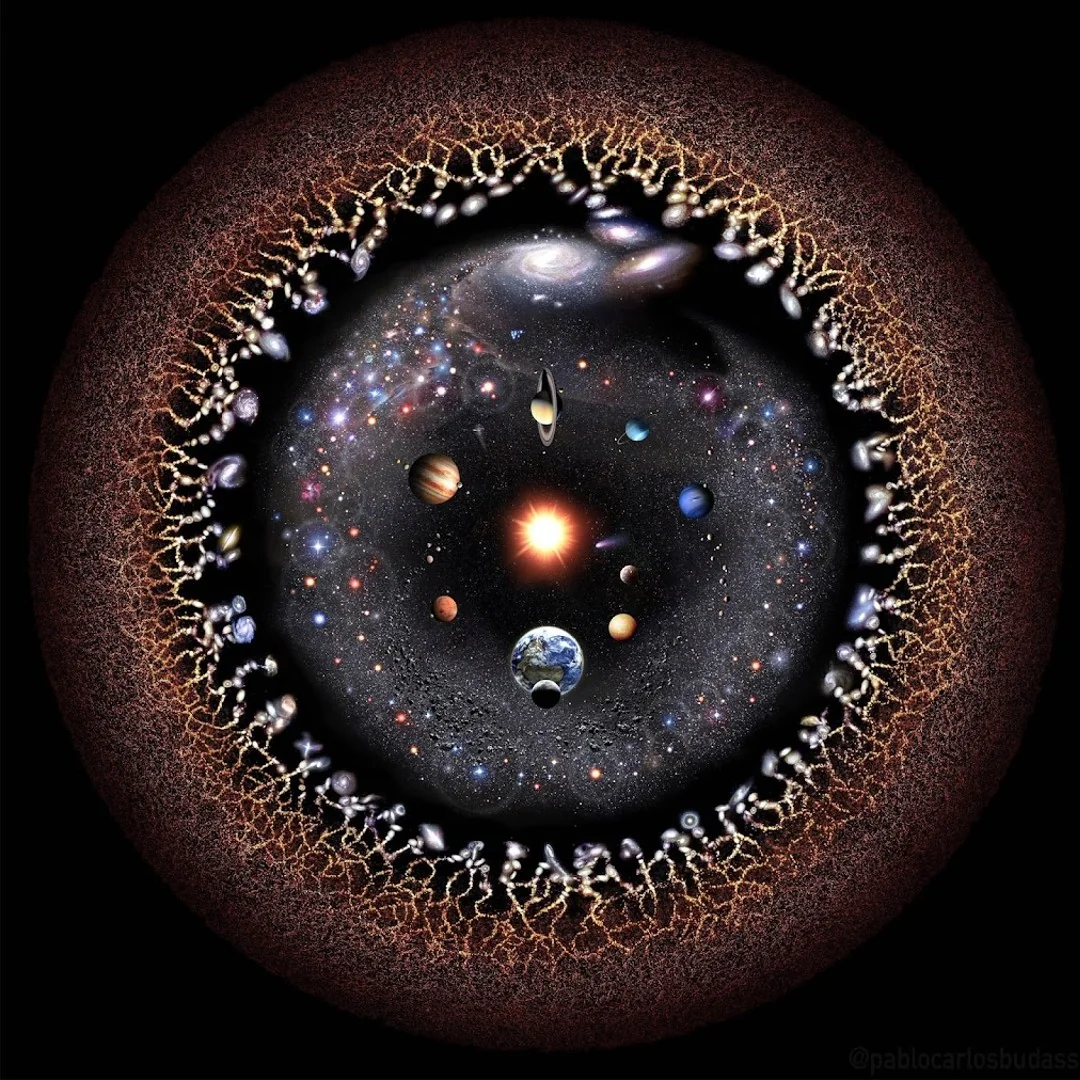
Ever since humans looked up at the sky, they've wondered: does space ever end? What's beyond the farthest star? It sounds like a simple question, but it's actually one of the most complex puzzles we've faced. It strikes at the very limits of existence: Does the universe have an edge? Does it go on forever? Is there something "beyond" it?
The Observable Universe and Its Limits
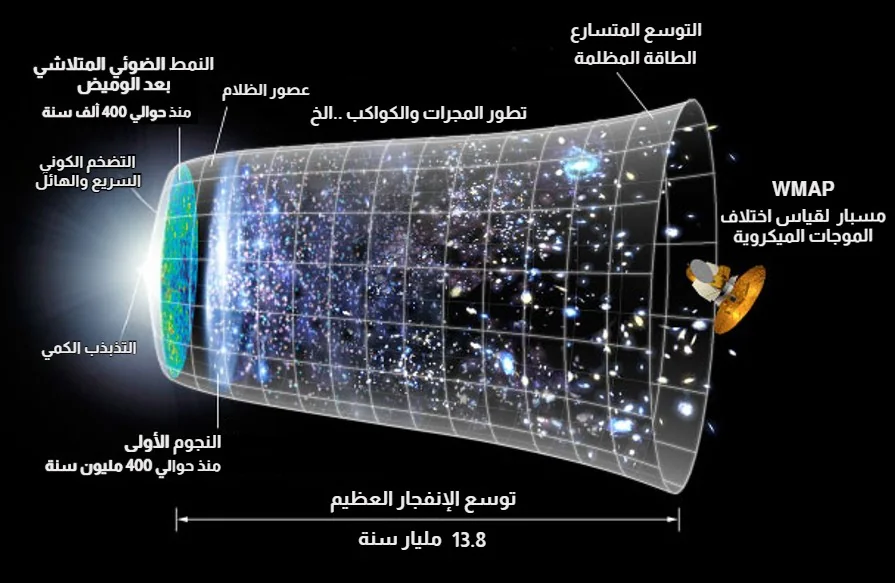
Everything we can see—galaxies, stars, quasars—represents just a small part of the universe. It's only the region whose light has reached us since the Big Bang, about 13.8 billion years ago. Scientists call this the observable universe, and its diameter stretches more than 93 billion light-years.
Despite its mind-boggling scale, the observable universe is just a tiny bubble within a vastly larger reality we can't see, because light from those more distant regions hasn't had enough time to reach us.
To complicate things further, space itself is expanding, so distant galaxies are moving away faster than light can travel—putting them forever beyond our reach.
What lies out there? We don't really know, but most scientists believe it's just more of the same—endless space, dark matter, and unending galaxies .Dark matter, and unending galaxies.
Is There an "Outside" to the Universe?
It might seem logical to ask, "What's outside the universe?" But physically, the question doesn't make sense. The universe isn't a thing inside something else—it's the totality of all space and time. The word "outside" suggests a bigger container, but if the universe is everything that exists, then there simply is no "outside" to define.
Still, a range of theories have tried to imagine what could be beyond this totality—some are grounded in physics, some are philosophical, and some veer into the realm of the metaphysical.
The Multiverse Theory: Many Universes in a Boundless Sea
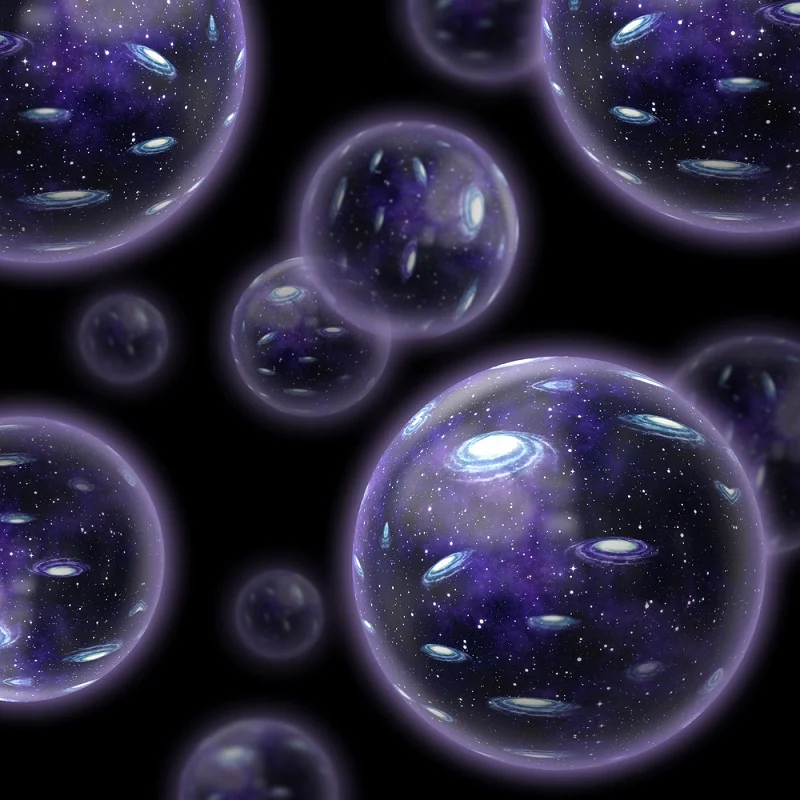
One of the most famous ideas is the multiverse theory. It suggests our universe is just one bubble among countless others in a vast cosmic sea. Each bubble could have its own laws of physics, and these other universes would be completely invisible to us, since their light could never reach us.
In this scenario, space itself goes on forever, with universes born and dying like bubbles in cosmic foam. Some universes might be tiny, some unimaginably vast, and some could contain extra dimensions or flow with time moving in a completely different way.
A Startling Hypothesis: Could We Be Inside a Black Hole?
Another bold proposal is that our universe might be inside a black hole that exists in a larger universe. When a massive star collapses, it creates a point of infinite density—a singularity—which is oddly similar to the "Big Bang" event from which our universe was born. Some mathematical models even suggest the other end of a black hole could branch into a brand-new universe.
If that's true, then maybe every black hole out there could be a gateway to a new universe—and ours is just one of many, sitting within a cosmic womb we can't fathom.
Higher Dimensions Beyond Our Senses
According to general relativity, our universe has four dimensions: length, width, height, and time. This is what we call spacetime.
But newer theories like superstring theory and M-theory propose that space may actually have eleven dimensions. We only notice four, while the others are "curled up" in minuscule, invisible shapes.
Perhaps our universe is a three-dimensional membrane, floating within a space of higher dimensions—completely out of reach for our senses and instruments.
Is It Possible to Loop Back to the Beginning?
If the universe is curved, as some measurements suggest, traveling in a straight line far enough could—at least in theory—bring you back to where you started. Just like walking around the surface of a sphere.
But data from the Planck satellite indicate the universe is almost perfectly flat, which would mean it extends endlessly in every direction.
Still, the curvature might be so slight that we can't measure it yet—making space seem flat while it's actually closed in on itself at a mind-boggling scale.
Where Science Ends and Mystery Begins
Everything we know about the universe comes from the light we receive. But there are regions so remote, even light hasn't had time to reach us since the beginning of time. Forever beyond our experience, these places belong to the territory where science and philosophy come together.
Perhaps there are other universes, higher-dimensional spaces, or forms of being we don't have words for yet. As the physicist John Wheeler said: "The universe doesn't just exist; it participates with us in shaping reality. We're a part of the question we're trying to answer."
Ultimately, "what lies beyond the universe" isn't a place you could ever visit—it's a question about the very nature of existence itself.
The more we learn, the wider the unknown becomes.
Maybe the answer isn't out there somewhere. Maybe it's realizing that our minds are part of this universe too—and its limits are, in a way, the limits of our own awareness.
About the Author



No comments:
Post a Comment