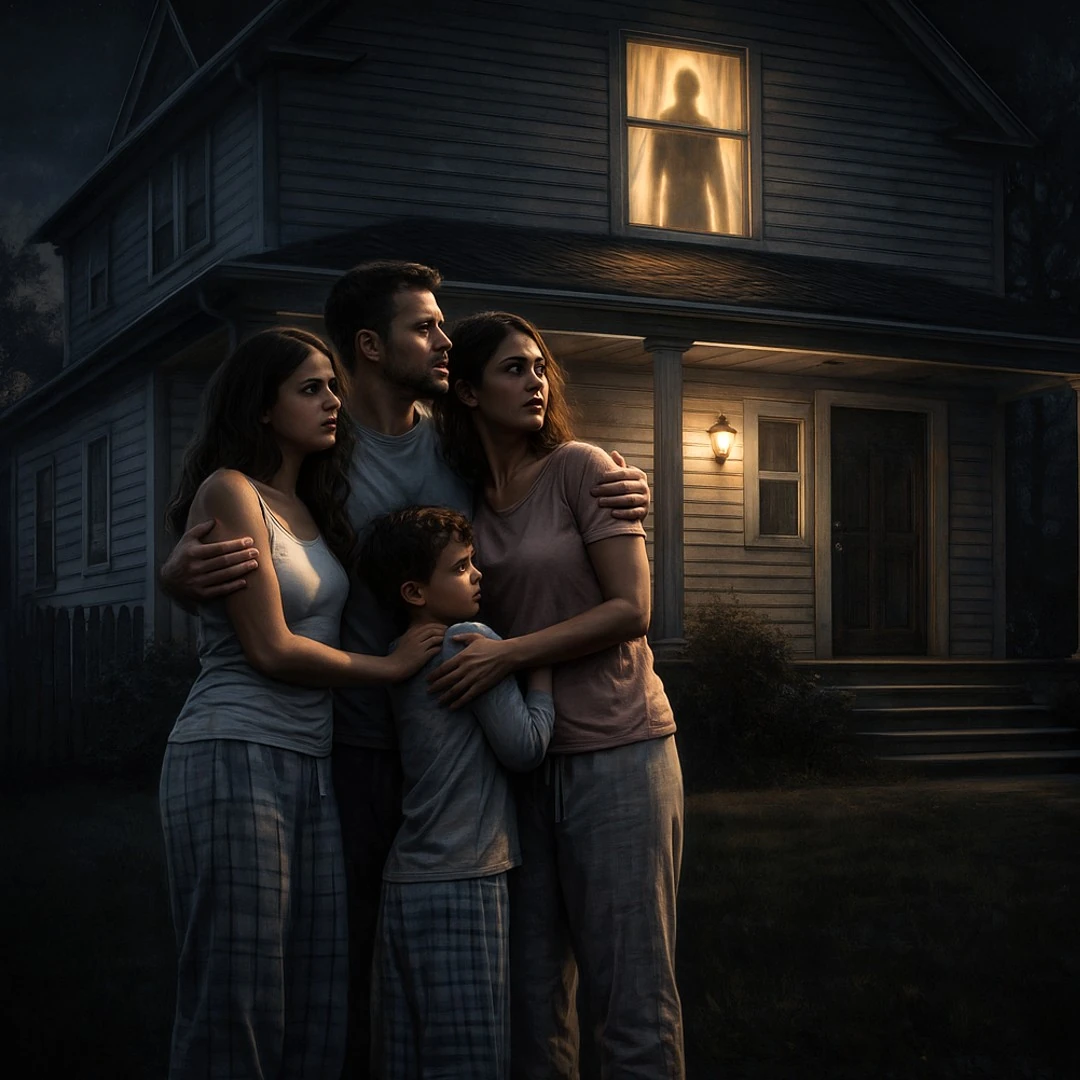
The idea of a haunted house isn't just a trope in horror films; it's an experience claimed by real people across cultures: from ancient homes in Europe, to rural houses in the Arab world, to remote huts in Asia and Africa. Some residents flee, some say the phenomena follow them to new homes, while others try to confront or coexist with the unknown.
This article offers a panoramic overview and practical advice for individuals or families who feel they're living in a “haunted” home. We balance scientific and psychological explanations with religious and spiritual beliefs, and also provide a glimpse at how different cultures have dealt with haunted houses.
What is a haunted house?
A haunted house is typically believed to harbor an unseen presence. Explanations vary: in some traditions, it's thought to be a jinn or non-human entity; in Western lore, it’s a lingering spirit of someone who died there; those who believe in “energies” may attribute it to negative energy related to violent incidents (such as murder, suicide, or injustice); others might mistakenly blame natural or psychological conditions like mold, noise, isolation, or emotional distress for what seems supernatural.
Most investigations into “haunted houses” end up tracing the origin to natural causes: creaking wood, water pipes, faulty wiring, gas leaks, or mass psychological stress. That's why, before jumping to conclusions about ghosts, it's important to rule out logical, physical explanations.
Common Signs of Hauntings
Among the reported signs of haunted places that appear in firsthand accounts or folklore are:
- Hearing footsteps in empty hallways or on upper floors when no one is there.
- Whispered voices, hearing your name called, or persistent knocking on walls or doors.
- Sudden cold spots in otherwise warm rooms.
- Unexplained odors: old perfume, smoke, or foul smells with no clear source.
- Seeing fleeting shadows or misty forms out of the corner of your eye.
- Objects moving, or items falling with no obvious cause.
- Recurring dreams about the house or specific people, often with sleep paralysis or the sense of a 'presence.'
- Pets behaving oddly: a dog barking at an empty corner, or a cat refusing to enter a particular room.
These may be potential signs, but none are definitive proof. Each could have a psychological or physical cause—so careful investigation is essential before making assumptions.
Flight or confrontation
When unsettling events begin, some families leave immediately, searching for a spiritually “cleaner” home. Others, unable to move, attempt to coexist or confront the disturbances. Some report that the phenomena follow them to new places, suggesting the issue may not lie in the building, but travel with a person or object (a memory, an item, a curse as some folk stories describe, etc.).
Therefore, running away isn’t always a guaranteed solution. Often, addressing the root of the problem is more effective than escaping indefinitely.
Steps to Investigate
1- Rule out physical causes
Before concluding, “We have a ghost,” check:
- Doors and windows (for drafts or wood expansion).
- Pipes, appliances, ovens, and heaters.
- Electrical wiring, alarms, and cameras.
- Presence of small animals (mice, cats, birds nesting in the attic, etc.).
These factors can explain up to 80% of 'unusual' occurrences.
2- Consider psychological factors
Sleep deprivation, stress, depression, isolation, or certain medications and substances can all lead to:
- Auditory or visual hallucinations.
- A sense of being watched.
- Ordinary sounds seem louder and more startling.
That’s why it’s important to consider psychological explanations alongside supernatural ones. If only one person in the family is experiencing symptoms, it may be wise to consult a mental health professional.
3– Documenting experiences in a “house journal”
A practical step: designate a notebook to record every incident—the date, time, location, who was present, and what happened. Each person should write their own notes. After a few weeks, you may start to notice patterns: certain times, specific rooms, or links to particular activities (switching on devices, changes in weather, etc.).
Keeping this record can help you identify natural explanations or provide a complete file if you later seek help from researchers or spiritual advisors.
Etiquette for Living in a Suspected Haunted House
If, after following these verification steps, you still suspect there’s something unusual in the house, here are some general guidelines for daily life:
Stay calm
Panic feeds the imagination, and imagination fuels more panic—it’s a vicious cycle. Make this your rule: “We’ll take everything seriously, but without hysteria.”
No insults or provocation
Many spiritual traditions warn against antagonizing unseen entities. Don’t shout things like, “Show yourself if you’re brave!” or insult the “hidden resident.”
A calm, firm message is better: “This is our home now. We want to live in peace. We do not allow harm to ourselves or our children.”
Protect children’s well-being
Avoid frightening conversations in front of them. Reassure them that you’re handling the situation and that nothing can harm them. Stick to the family routine—meals, schoolwork, playtime. Normal daily life is stronger than a scary atmosphere.
Don’t turn your home into a “permanent haunted house”
Deliberately turning off the lights, telling scary stories at night, and playing Ouija out of curiosity—all these things make the house a breeding ground for anxiety and group suggestion.
Should we communicate with the spirit, or ignore it?
When is communication a reasonable option? According to many cultures, a spirit lingers because it:
- Doesn’t realize it has passed away.
- Feels wronged or has unresolved issues.
- Is attached to something in the house (a child, an object, a memory).
Some suggest a calm message addressed to the spirit may help, such as: “If you are the spirit of someone who has passed or their companion, we’re letting you know you’ve moved on from this world. Others live here now. We invite you to find peace and not to harm or disturb us.”
Or: “If you feel you’ve been wronged, we wish you forgiveness and justice. But hurting us won’t help you. Go in peace.”
The point isn’t to “summon” anything, but to offer reassurance and draw boundaries.
Important warning: Avoid Ouija and spirit summoning
Spirit boards like Ouija, random séances, and occult practices—all these may, according to religious and cultural beliefs, invite darker forces than the original problem.
Many religions prohibit trying to summon spirits, seeing it as a form of fortune-telling or meddling with the unseen. Even from a psychological perspective, these games feed fear and create endless stories.
If you feel communication is necessary, keep it to calm words spoken at home, or consult a trusted, experienced expert (a spiritual medium, imam, or priest)—never use dubious games or gatherings.
Methods of spiritual protection and cleansing
1– From an Islamic perspective
In Islamic tradition, many unusual occurrences are attributed to jinn, and dealing with them often relies on Quranic verses and specific prayers:
- Regularly reciting Surah Al-Baqarah in the home—according to Hadith, devils are driven away from any house where this chapter is read.
- Reciting morning and evening prayers, and saying specific supplications when entering or leaving the house.
- Playing Quran recitation at a moderate volume at home, especially Ayat Al-Kursi, the final verses of Surah Al-Baqarah, and the concluding chapters.
- If disturbances become severe, it’s common to invite a trusted religious healer to recite the Quran over family members and suspected locations.
- Avoid practices believed to attract jinn (such as sorcery, amulets with polytheistic associations, unclean places, loud disruptive music—following popular religious customs).
The underlying idea is to transform the home into a place that harmful entities cannot bear, and one that welcomes peace and positive spiritual presence.
2- Popular Spiritual and Folk Remedies
Beyond religious rituals, various cultures have developed similar practices:
Burning herbs
sage, frankincense, wormwood, or other local plants—burned in moderation as the homeowner walks through the house, with the intention of purifying the space from negative energy.
Salt
Scattering coarse salt at thresholds, or dissolving it in water and sprinkling it in corners, as a symbol of cleansing and breaking unwanted attachments.
Holy water and religious symbols
In Christian traditions: sprinkling holy water, hanging a cross or icons, and reading passages from the Bible at home. In other traditions: displaying verses or amulets inscribed with sacred texts on doors and windows.
Plants, candles, and light
Opening windows, letting in natural light, placing green plants, and lighting a white candle with the intention of inviting peace—all simple methods to ease feelings of heaviness or darkness.
Cleaning and organizing
A home filled with clutter and dust can feel oppressive. Deep cleaning and redecorating (fresh paint, rearranged furniture) helps create the sense of a new beginning—sending a clear message, even to the unseen: 'This is a managed home, with careful owners and order.'
Seeking professional help
1- Paranormal investigation teams
Today, hobbyists and professionals—especially in the West—investigate alleged haunted houses; such teams are rare in the Arab world:
- They use cameras, audio recorders, and devices for measuring temperature or electromagnetic fields.
- They aim to rule out natural explanations before labeling any activity as 'unexplained.'
- Often, they’ll find most issues have ordinary causes, which itself can be reassuring.
- If they do find something unusual, they might recommend further spiritual steps.
A few warnings: avoid anyone demanding large sums to 'remove a ghost,' and steer clear of those mixing science with superstition. Look for reputable teams who communicate respectfully and do not exploit your fears.
2- Religious leaders and spiritual mediators
If the situation feels overwhelming for you:
- In the Islamic context: A trusted sheikh, knowledgeable in ruqyah, who is moderate and not motivated by money.
- In the Christian context: A priest or pastor visits the home, offers prayers, and blesses the house.
- In other contexts: A respected shaman, Buddhist or Taoist priest, or spiritual medium.
These individuals typically perform:
- A group prayer held in the home.
- Reading of sacred texts.
- Cleansing rituals using items like holy water, incense, or salt.
The phenomena may not disappear after the first attempt; sometimes it takes repeated sessions and patience. Most importantly, never let anyone exploit your fear or demand money under the pretense of 'spirits.'
How have different cultures dealt with haunted houses?
1- Christian West
A priest visits, reads from the Bible, and sprinkles holy water. If the spirit is believed to be that of a wronged person, a Mass may be held for them. In cases believed to involve demons, formal exorcism rites are performed by the church.
2- Arab and Islamic world
Recitation of the Quran in the home, especially Surat Al-Baqarah, along withruqyah (spiritual healing)with incidents often attributed to jinn, the evil eye, or magic, and addressed using religiously approved methods. There are also many folk traditions about 'jinn houses' and how to respectfully announce yourself to the spiritual 'inhabitants' before moving into a new place.
3- India and South Asia
Performing puja rituals at home involving sacred fire and chants, inviting a priest or healer to identify the spirit and what appeases it, and offering symbolic gifts—such as food, flowers, or milk—to the spirit of the place or ancestors.
4- East Asia (China and Japan)
Adjusting the home according to feng shui to improve energy flow.
- Shinto purification rituals in Japan, using bells, white paper wands, water, and salt.
- Inviting a Buddhist priest to recite sutras for the spirit of the deceased connected to the house.
5- Southeast Asia (Thailand and neighboring countries)
Building a small 'spirit house' in the yard and offering food and drink, believing that spirits will reside there and, if respected, protect the main house.
6- Africa
Approaching spirits as ancestors, calling a traditional healer or sangoma to learn how to appease them, offering basic sacrifices, and performing music and dance rituals to calm or expel unseen entities.
What these cultures shareis, first and foremost, acknowledgment of hidden entities, and then attempting to manage the relationship with them through rituals of appeasement, expulsion, or reconciliation.
Is moving out a last resort?
Moving out is a major financial and emotional decision and shouldn't be the first option. Usually, if incidents are minor and manageable with spiritual protection, the steps above are often enough.
If activity seriously harms you physically or psychologically, and both spiritual and scientific approaches fail, then moving out may be necessary to protect your well-being.
If the same phenomena persist in a new home, the issue may be connected to a particular person or object, not the place itself. In this case, focus should shift to spiritual and psychological healing rather than changing houses.
Before leaving a house you believe is 'cursed,' it might be wise to:
- Holding a prayer or reciting spiritual verses there.
- Asking for forgiveness and praying for everyone who lived or passed away in the place.
- Saying a mental goodbye to the space, allowing yourself to move on.
Balancing knowledge and faith—how do we take control?
Living in a house that's thought to be haunted can shake up a family's sense of security, but:
Science teaches us to rule out natural causes, pay attention to mental well-being, and not let panic take over. Meanwhile, faith and spiritual traditions offer tools: prayers, reading the Quran, incense, symbols, cleansing rituals, and respectful communication with the "unseen resident."
You're not powerless:
- Use your mind to investigate.
- Protect yourself and your family spiritually.
- Ask for help from experienced people if you need it.
- Don't let fear take over your home; keep it a place of comfort and peace, not anxiety.
Ultimately, whether the experience has a psychological or spiritual explanation, your strongest defense is a blend of awareness, calm, and faith. With these, anyone can not only live, but continue life as normal—even if their home carries a heavy history and shadows from another world.
About the Author



No comments:
Post a Comment