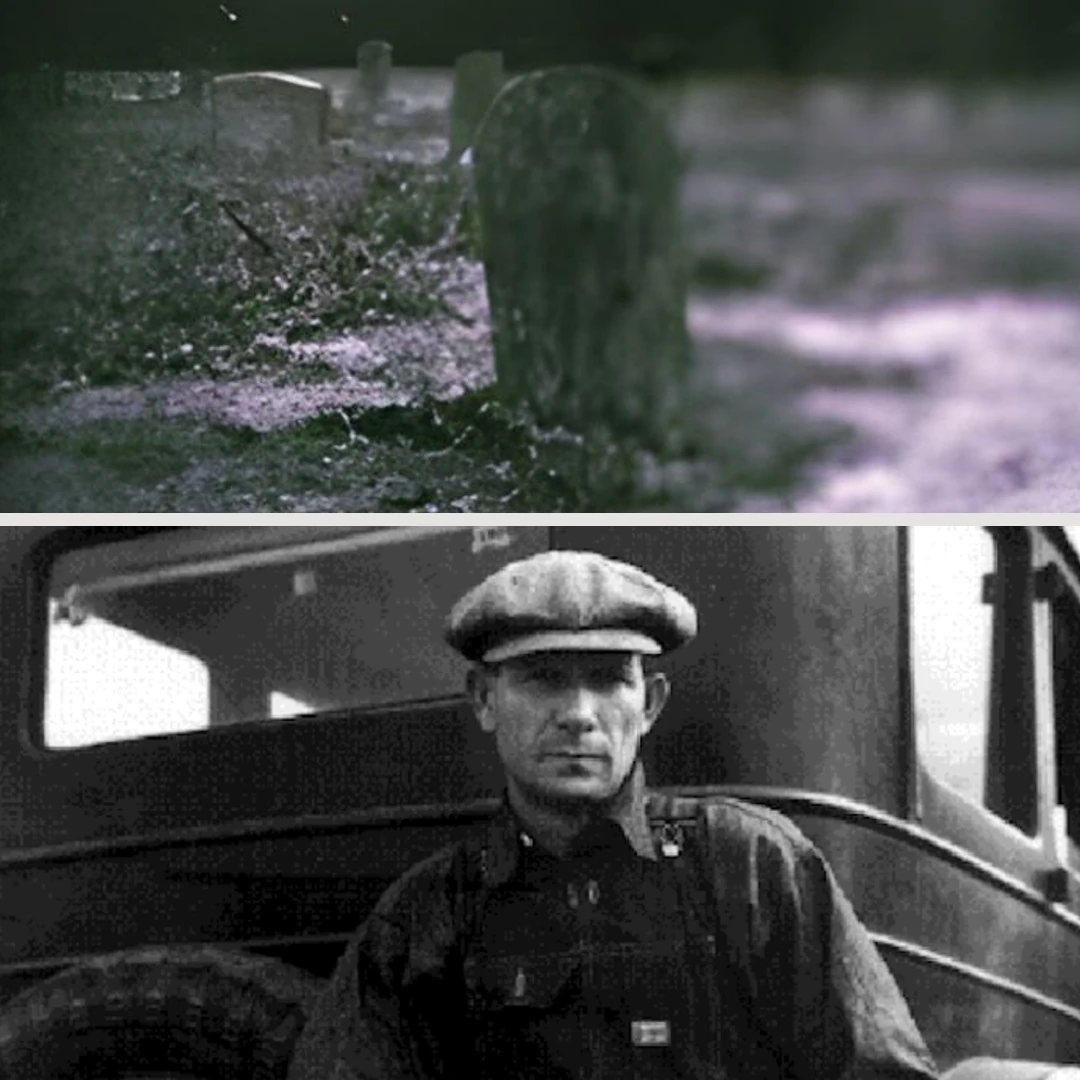
On a humid morning in the summer of 1938, the quiet town of Pulaski County, Kentucky, was shaken by a bizarre story. It was said that a man named Carl Pruitt returned home to find his wife with another man. Consumed by rage, he strangled her with a metal chain and later took his own life that same night. But the story didn’t end with the crime that captured the town’s attention—it truly began at the gravesite.
A grave like no other
Refusing to let Carl be buried next to his wife, her family had his body moved to another cemetery in a neighboring town. Soon after, visitors noticed something unique: small circles began to appear on the surface of Carl’s headstone. As time passed, these circles merged, revealing the unmistakable image of a metal chain.
The townspeople couldn’t find a scientific explanation. Whispers began to spread: “It’s acurse... a chain of deaths follows anyone who gets too close to his grave.”
The first victim... a deadly pattern
James Collins was the first to mock the grave. In front of his friends, he picked up a large stone and threw it at the headstone. But as he rode his bike home, his handlebars twisted, the metal chain snapped off and wrapped around his neck, strangling him. What started as a prank quickly turned into tragedy. His grieving mother, consumed by anger, went to the grave the following day and struck it with an ax. Later, while hanging laundry, the clothesline suddenly snapped and wrapped around her neck, ending her life in the very same way.
The farmer, the police, and the orb of light
Not long after, a farmer riding by on horseback fired his gun at the grave as a joke. Minutes later, he was thrown from his horse, struck by a taut rope tied between two trees, which wrapped around his neck.
Next, two police officers came to investigate, openly scoffing at the stories. As they drove away, a strange orb of light began to chase their car. One officer lost control of the vehicle, crashing into an iron chain that bordered a nearby field.
One officer was decapitated, while the other barely escaped by leaping out at the last moment.
The last to challenge the grave
Determined to put the rumors to rest, a man named Arthur Lewis approached the grave with a hammer.
Moments later, his screams were heard. People rushed to the cemetery and found him lying at the gate—strangled by a heavy iron chain used to secure the entrance. That was the end… both for Arthur Lewis and the cemetery itself.
A cemetery without graves... and a grave without visitors
Terrified, families began relocating their loved ones’ remains to other cemeteries. By 1958, only Carl’s solitary grave remained—abandoned and untouched, too ominous for anyone to remove. Local stories claim the cemetery remains unmarked and uncharted, so no one can find their way back.
Yet the legend endures.
Was it truly a curse, or did a simple stone play tricks on people’s minds?
From a scientific perspective, unusual markings on gravestones are often caused by:
- Chemical weathering
- Mineral deposits
- Oxidation
- Growth of microscopic fungi that form circular patches
Sometimes, these marks evolve to look like chains or symbols, explaining the eerie pattern that emerged on Pruitt’s grave.
As for the string of deaths:
- They may simply be local rumors that grew over time
- Or genuine accidents that were later attributed to the grave, because of the uncanny similarities—all involving strangulation by ropes or chains
Still, the story of Carl Pruitt stands as a fascinating example of how folklore can amplify real events, transforming natural weathering on marble into a living curse fueled by fear.
Why does the legend still persist today?
Because it’s the perfect supernatural tale, combining all the right elements:
- A mysterious murder
- A grave marked with unexplained signs
- A chain of seemingly fated deaths
- A mysterious spherical light (Orbs)
- A cemetery that vanished from the maps
- A lone grave that survived amid the ruins
This story reminds us that sometimes, fear comes not from ghosts, but from coincidences that feel all too intentional.
About the Author



No comments:
Post a Comment