Deep in Upper Egypt, where ancient traditions still shape everyday life, lies the small village of Bani Helwa, just a few kilometers from the city of Al-Balyana in Sohag Governorate.
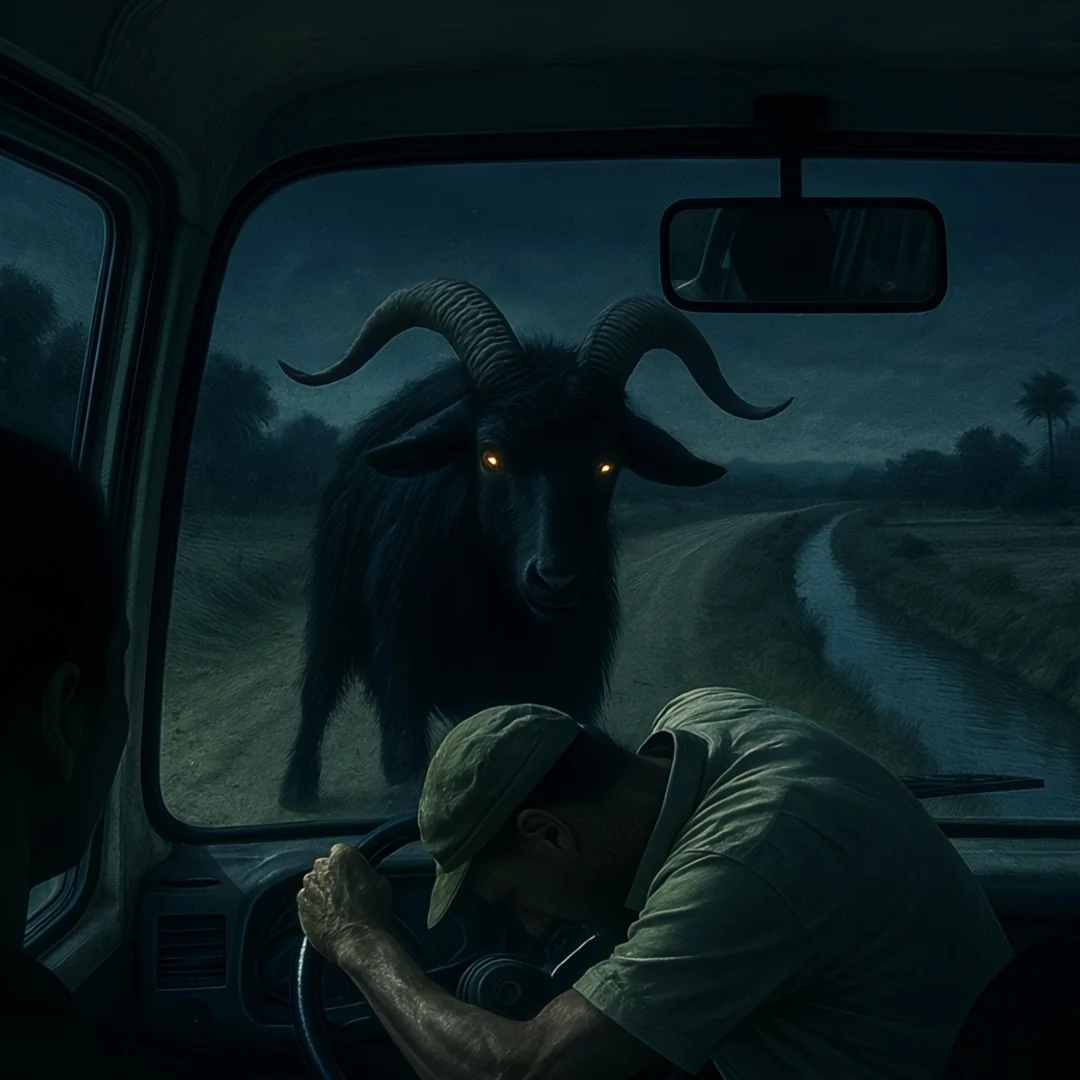
Despite its humble status as a typical rural Egyptian village, Bani Helwa has become famous over the past decades for a mysterious legend that continues to circulate quietly among drivers and travelers: the tale of the Devil Goat, said to appear out of nowhere on the road and cause a string of deadly accidents that have turned the village entrance into an infamous "cursed spot."
A Road Shrouded in Fear
Locals will tell you that most accidents on the Al-Balyana–Girga road happen right at the entrance to Bani Helwa, and just hearing the village’s name is enough to make drivers shudder.
With each new unexplained accident, rumors have spread of a strange, black goat that seemingly materializes in the middle of the road, causing drivers to lose control and end up in the nearby canal—or worse, in a fatal collision.
Some drivers who have survived these crashes even swear they witnessed the black goat themselves, emerging slowly from the ground and staring at the car right before disaster struck. Over time, “Bani Helwa” became synonymous with danger, inspiring everyone who passes through to quietly pray for safe passage.
Consistent Accounts and Repeated Accidents
Over the years, many drivers involved in accidents in the area have described seeing the mysterious black goat just moments before the crash; others recall sensing something dart by in the darkness, never getting a clear look. Although there’s no physical or photographic evidence, the repeated accidents at the same spot have convinced locals that something unseen is behind the tragedies.
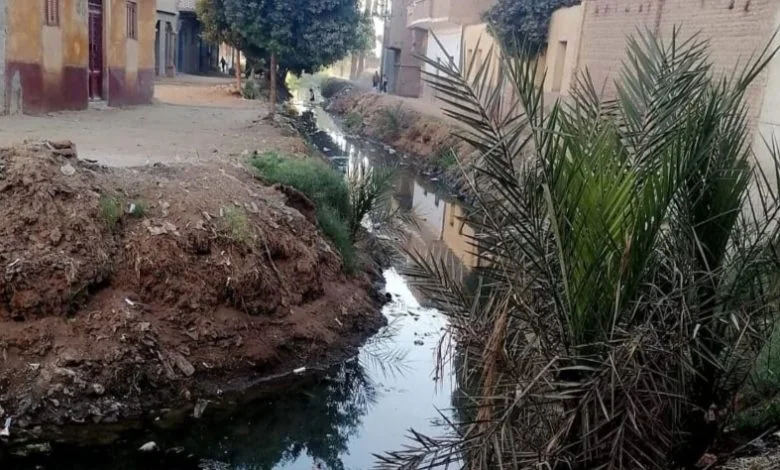
A more recent incident that brought the legend back into the spotlight was a horrific crash in January 2022 right in front of Bani Helwa, leaving nine people injured. While official reports blamed loss of control and excessive speed, locals added the event to the list of what they call the “Curse of the Black Goat.”
Roots of the Legend: Between Reality and Symbolism
The story isn’t new—it’s appeared in Egyptian popular literature. For instance, author Manal Abdel Hamid published a short story in 2010 called "The Devil Goat" on Paranormal Arabia website, mentioning it was inspired by real tales circulating in Sohag. With stories moving from oral tradition to the internet, the legend has secured its place as one of Upper Egypt’s most bizarre folktales.
Folklore researchers suggest the legend is more psychological than literal—a human attempt to make sense of the unknown. When accidents keep happening in the same place for no apparent reason, people seek meaning, and often find it in myth.
Scientific Explanations
There's no scientific proof that a “devil goat” emerges from the ground, but the phenomenon can be explained by several practical factors:
1. Road Design Flaws
The entrance to Bani Helwa may feature a sharp turn, a blind intersection, or poor lighting—hazards that make the road especially dangerous at night. Any of these could explain the recurring accidents without anything supernatural involved.
2. Actual Animals Appearing
Drivers could simply be seeing real goats or stray dogs crossing the road at night. In rural Egypt, livestock is often left to roam. A black animal can be almost invisible in the dark, leading to tragic crashes.
3. Power of Suggestion
As the legend spreads, people become psychologically primed to expect something unusual. Any shadow or movement can easily be mistaken for the legendary goat, especially when driving at high speeds.
4. Local Beliefs
In Arab and Egyptian folklore, it’s believed that spirits (jinn) can take the form of black animals like dogs or goats. The black goat is also used in some occult practices, making black animals a symbol of dread and secrecy in popular imagination.
The Black Goat in Cultural and Occult Symbolism
The black goat carries dark associations in both Arab and global folklore, often representing supernatural power or sacrifice. In ancient rituals, black goat’s blood was used for protection or summoning spirits. Western myths feature the goat symbol in the figure of Baphomet, representing a fusion of the human, animal, and demonic. All these cultural influences make the idea of a “devil goat appearing at night” both believable and terrifying, especially in rural communities where tradition and legend intermingle.
Between Myth and Reality
Stories like this reveal how folktales are born when real-life tragedies get woven into myth. There is no doubt that accidents have happened here, but blaming them on a supernatural creature is a way for people to cope with the unknown. Fear feeds the story, and the story perpetuates fear. Even today, many drivers slow down at Bani Helwa’s entrance and whisper prayers—not because they truly believe in the goat, but because the legend itself has become a part of local custom, an unwritten ritual for safety.
When Imagination Reflects Reality
The legend of Bani Helwa’s goat serves as a reminder that folklore is more than just fantasy: it’s a living record of people’s relationship with their environment, mortality, and the unknown. It marries real danger (the crashes) with symbolic meaning (the black animal as an embodiment of evil), blending fear with wisdom and warning with faith.
There may be no devil goat rising up from the ground, but there is a dangerous road in need of repair, lives that have been lost, and a community memory that has given tragedy a dark face in order to understand it. And so Bani Helwa remains—for travelers, a place to be feared; for dreamers, a place of belief; and for locals, an enduring symbol of mystery.
About the Author



No comments:
Post a Comment