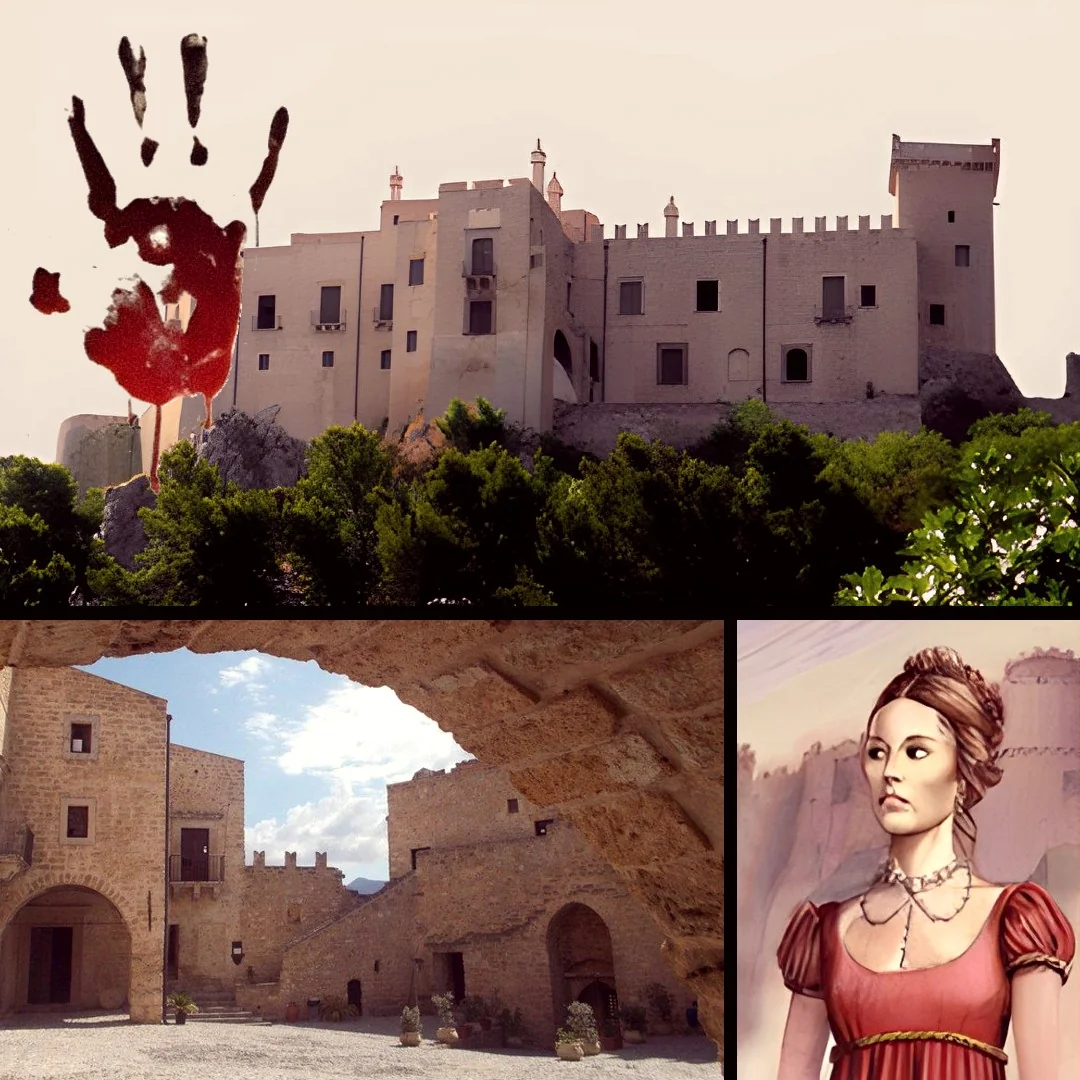
Perched on a hill overlooking the northwestern coast of Sicily, the La Grua-Talamanca Castle in Carini stands as one of the island’s most iconic noble landmarks. Yet its global fame owes as much to its haunting legend as to its architecture—the tale of Baroness Laura Lanza and the infamous “bloody handprint” said to appear each year on a wall of the castle on the anniversary of her murder, December 4, 1563.
A Brief History of the Castle
The castle's foundations date back to the Norman period (11th–12th centuries), built by the knight Rodolfo Bonello. Ownership later passed to the Abate family before King Martin I granted it in 1397 to Ubertino La Grua as a reward for his service. The marriage of Ilaria La Grua to the Catalan noble Gilberto Talamanca in 1402 marked the start of the La Grua–Talamanca dynasty, lasting until 1812. Over time, the fortress evolved into a grand noble residence, complete with ornate rooms and celebratory courtyards.
From Historical Incident to "Crime of Honor"
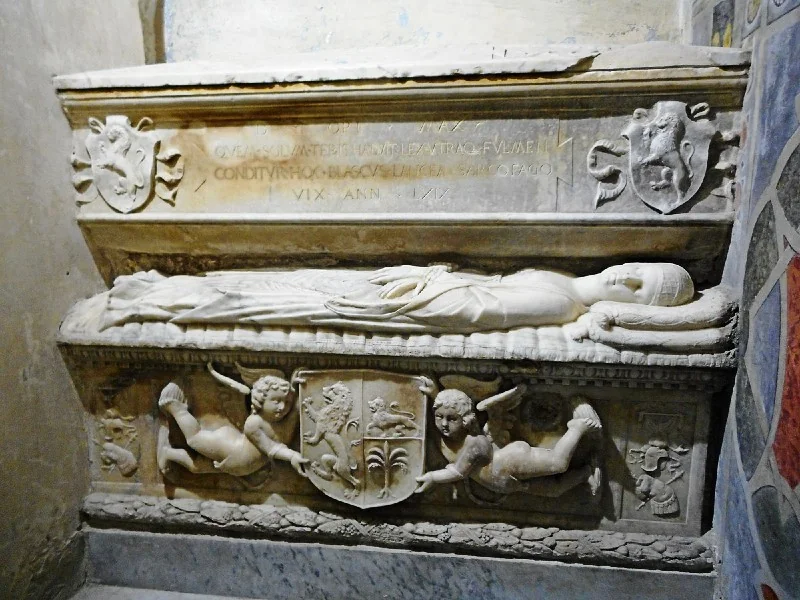
Church records in Carini confirm that Laura Lanza di Trabia and her lover Ludovico Vernagallo were killed inside the castle on the evening of December 4, 1563. An extensive academic study shows that confusion and family silence soon shrouded the event, partly to protect their reputation. Laura’s father, Cesare Lanza, defended his actions to King Philip II by invoking old legal justifications that allowed fathers to kill an adulterous daughter and her lover to preserve the family’s honor. Over time, the legal account intertwined with folklore, becoming the legend of the “Lady of Carini.”
Multiple sources suggest the father either committed the murder himself or ordered it after catching his daughter with Ludovico. This version became the basis for Sicilian ballads, poems, and later for plays and television adaptations.
The Legend of the Bloody Hand
According to legend, after being stabbed in the chest, Laura pressed her hand to her wound and then onto the wall of the room, leaving behind a bloody handprint that still marks the scene of the crime in the castle’s west wing.
Local tradition claims that this handprint reappears clearly each year on the night of December 4, serving as a ritual reminder of the tragedy. Italian writers, poets, and folklorists have preserved this unique detail in popular literature, and modern cultural and tourism materials continue to reference the story, retelling the details of “the hand” and connecting it to oral traditions that survive in the area.
Alleged Paranormal Phenomena
Beyond the handprint, visitors and local reports describe sudden drops in temperature in certain corridors, fleeting shadows, whispering voices, and an eerie feeling of being watched during nighttime tours—classic hallmarks of haunted places. The Palermo edition of La Repubblica has documented overnight investigations in the castle, where some audio evidence was attributed—by ghost hunters—to Ludovico Vernagallo.
On travel sites, visitor reviews praise the castle tour and its atmosphere, often referring with anticipation to the tragic story and the air of mystery it brings to the site. While these impressions may not be “scientific evidence,” they remain part of the lived experience that fuels the castle’s reputation as one of Sicily’s most haunted locations.
How Does the Local Community See the Story?
Laura Lanza’s tragic story has become a living part of Sicilian cultural heritage—featured in the folk song “The Baroness of Carini,” explored in both old and new folklore studies, and retold in TV and theater productions. This has created a collective memory that intertwines historical fact and legend. At the official level, Carini’s municipal council keeps the castle open to visitors and actively promotes its legendary status through cultural and tourism initiatives.
The Castle Today: Architecture That Bridges Two Eras
The castle still displays traces of its Arab–Norman origins in some of its gates, alongside richly decorated halls, festive courtyards, and heraldic engravings of the La Grua, Lanza, and other noble families. It remains one of the most significant historic noble residences in the Palermo area, offering guided tours and museum exhibits. Its physical presence provides the perfect stage for the legend, ensuring that the story continues to capture the imagination of all who visit.
About the Author



No comments:
Post a Comment