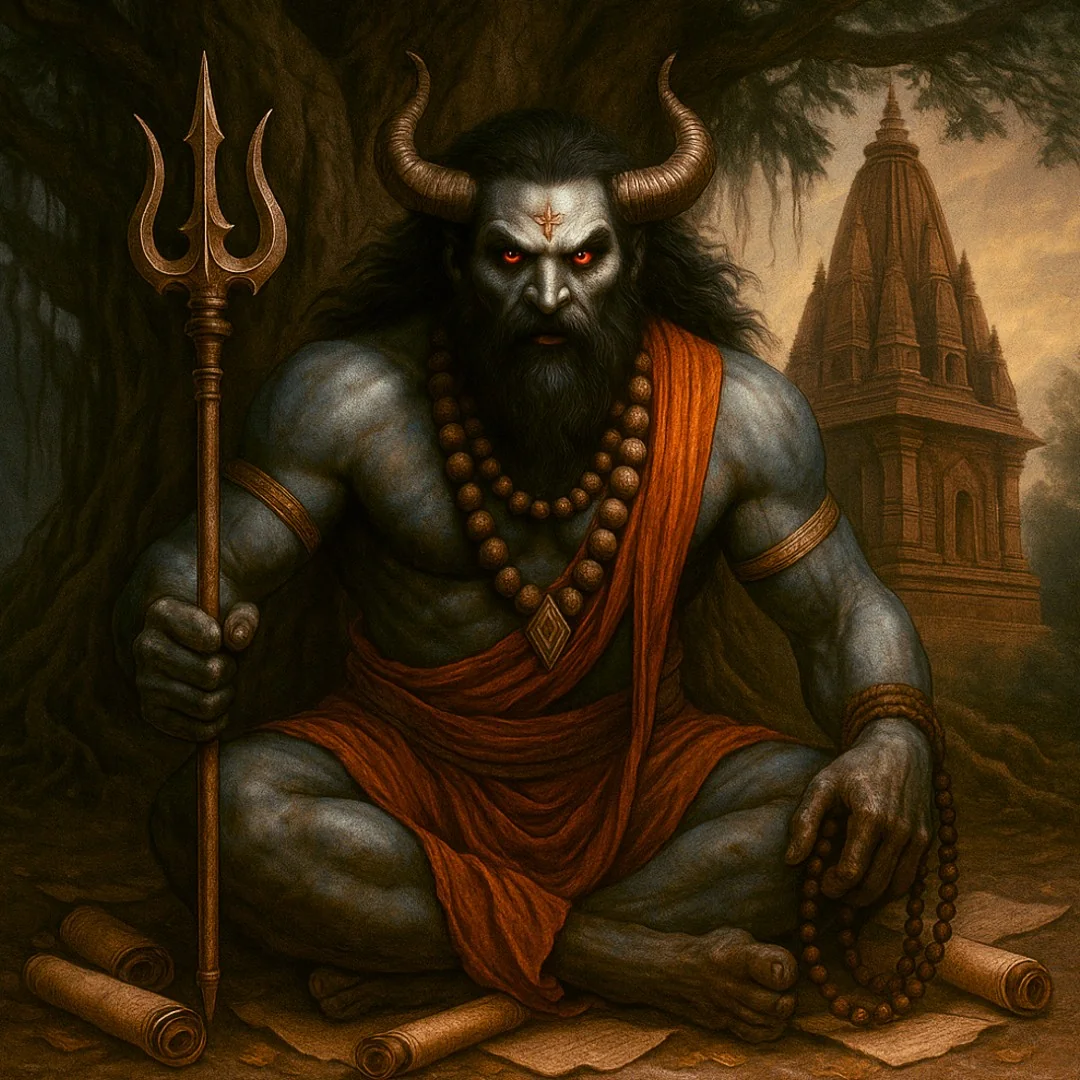
Hidden deep within India's forests—among abandoned temples and the ghostly sway of peepal trees—lies one of the most bizarre tales in Hindu mythology: the story of the priest who became a Brahma Rakshas, a monstrous being caught between divinity and malevolence, serving as a chilling reminder that the path to hell sometimes begins with a single step inside a temple.
The Beginning of the Curse
There once was a priest named Somasharma, a member of the sacred Brahmin caste, living in a small temple along the banks of the Godavari River. Renowned for his wisdom and his mastery of the Vedic texts, he longed for something more than spiritual enlightenment. He craved the power of kings.
One night, while poring over ancient scrolls, he uncovered a forbidden incantation called the 'Mantra of Kings'—a sacred chant said to open the gates to higher realms and grant its chanter cosmic power. Defying his teacher’s warnings, Somasharma recited the mantra at midnight beside the statue of Vishnu. But instead of being bathed in divine light, dark smoke billowed around him and a thunderous voice proclaimed: 'Those who seek crowns not meant for them become food for shadows.' The priest fell dead on the spot, but his story didn’t end with death.
Birth of the Brahma Rakshas
Legend claims his soul never found its way to the realm of light. Instead, it returned as something new—a creature called Brahma Rakshas. Half priest, half demon: the face of a sage, the eyes of hellfire.
From that day, villagers claimed to see a tall shadow gliding beneath the old peepal tree near the temple. On damp nights, ancient chants would whisper through its branches, and those who dared approach after midnight heard the priest’s voice: 'Bring back my mantra… Restore the light you stole.' In Hindu belief, the peepal (sacred fig) tree is the dwelling place of gods—legend holds that the Buddha himself gained enlightenment beneath its shade.
Powers and Traits
Unlike any other demon, the Brahma Rakshas retains his knowledge and magical abilities from his former life, according to Hindu lore. He is said to:
- Manipulate minds and terrify even the wise.
- Bestow riches or secret knowledge upon those who please him, in exchange for dark offerings.
- Appear as a learned sage by day, but transform at night into a giant entity wreathed in blue flames.
Some stories describe him living high in sacred trees, feeding on the souls of arrogant priests—haunting them in an endless act of vengeance.
Alleged Encounters
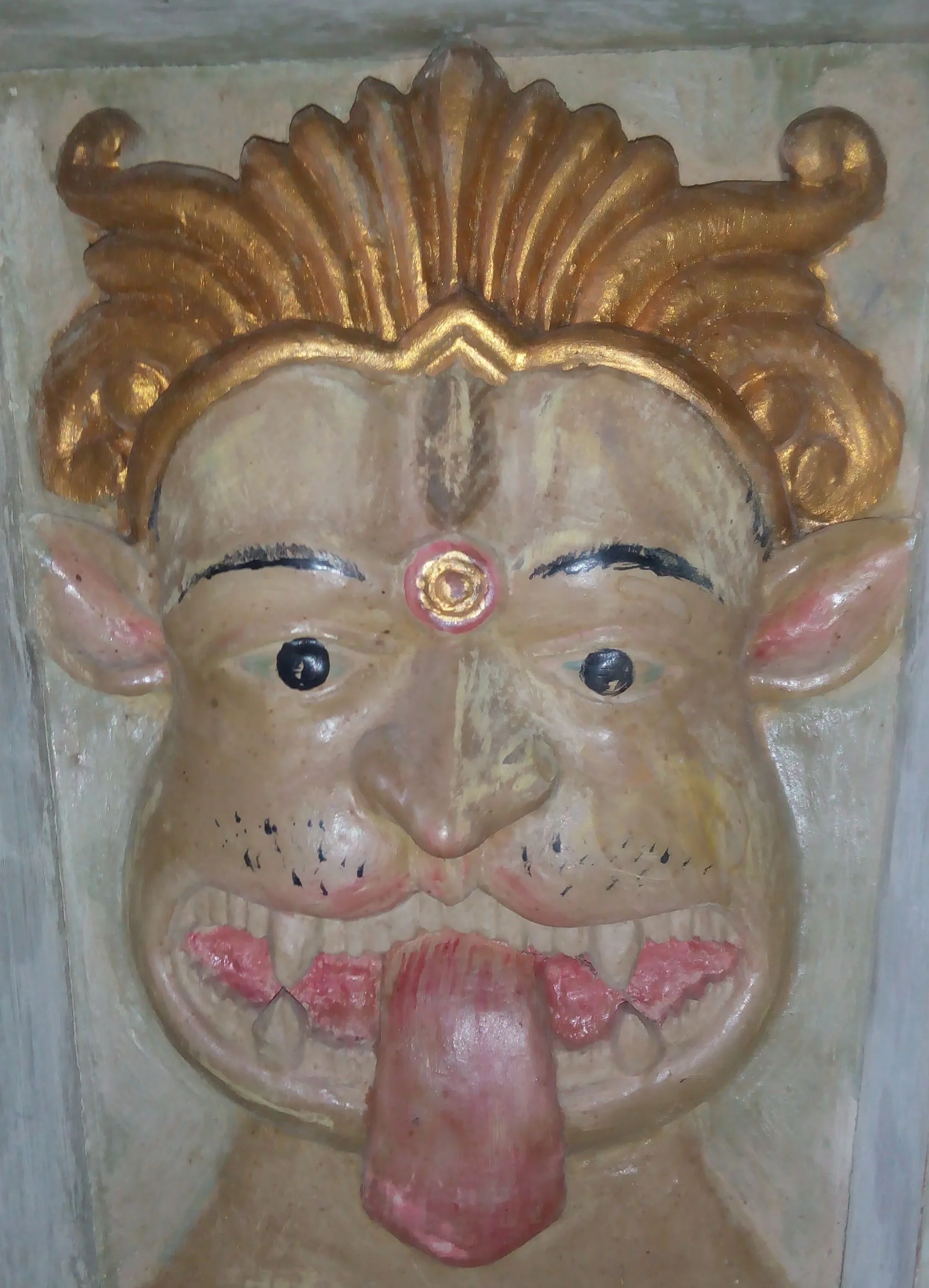
In villages of southern India, locals tell of abandoned temples where passersby still hear ancient hymns, and of priests who vanished after attempting to cast out the resident spirit. In 1912, British researcher Edward Giles recorded in his journal that while staying in Maharashtra, he saw a strange statue inside a peepal tree—a giant priest with fangs. A local monk warned him, 'Don't go near… that’s not a statue. It’s a guardian, flesh and stone together.'
Symbolism and Deeper Meaning
Brahma Rakshas is more than a mythic demon; he’s a symbol of a profound truth: knowledge without purity of intent becomes a curse. The priest who coveted the universe’s secrets became captive to his own ignorance. The legend serves as a warning against spiritual arrogance and using wisdom as a means of domination. To this day, in some temples, new priests hang signs reading: 'Beware the forbidden mantra—it is a door of light that leads to darkness.'
Legacy in Popular Belief
The story is still retold across India by monks and elders, often as a cautionary tale for temple students about venturing into mysteries they cannot understand. Many believe that simple offerings—like milk or white flowers—at the roots of a peepal tree calm the spirit of the Brahma Rakshas and ward off nightmares. But if you hear his voice in the night, you must neither answer nor look back; to meet his eyes is to be bound to his world.
Beyond the Curse
In Hindu mythology, divinity and darkness are often intertwined. The tale of the Brahma Rakshas is more than a story of a cursed priest—it's a metaphor for human nature itself: reaching beyond your limits can turn ambition into a living curse. Perhaps this is why the peepal tree, believed to house the spirits of lost priests, remains a powerful symbol of the thin line between sacred knowledge and supernatural madness.
About the Author



No comments:
Post a Comment