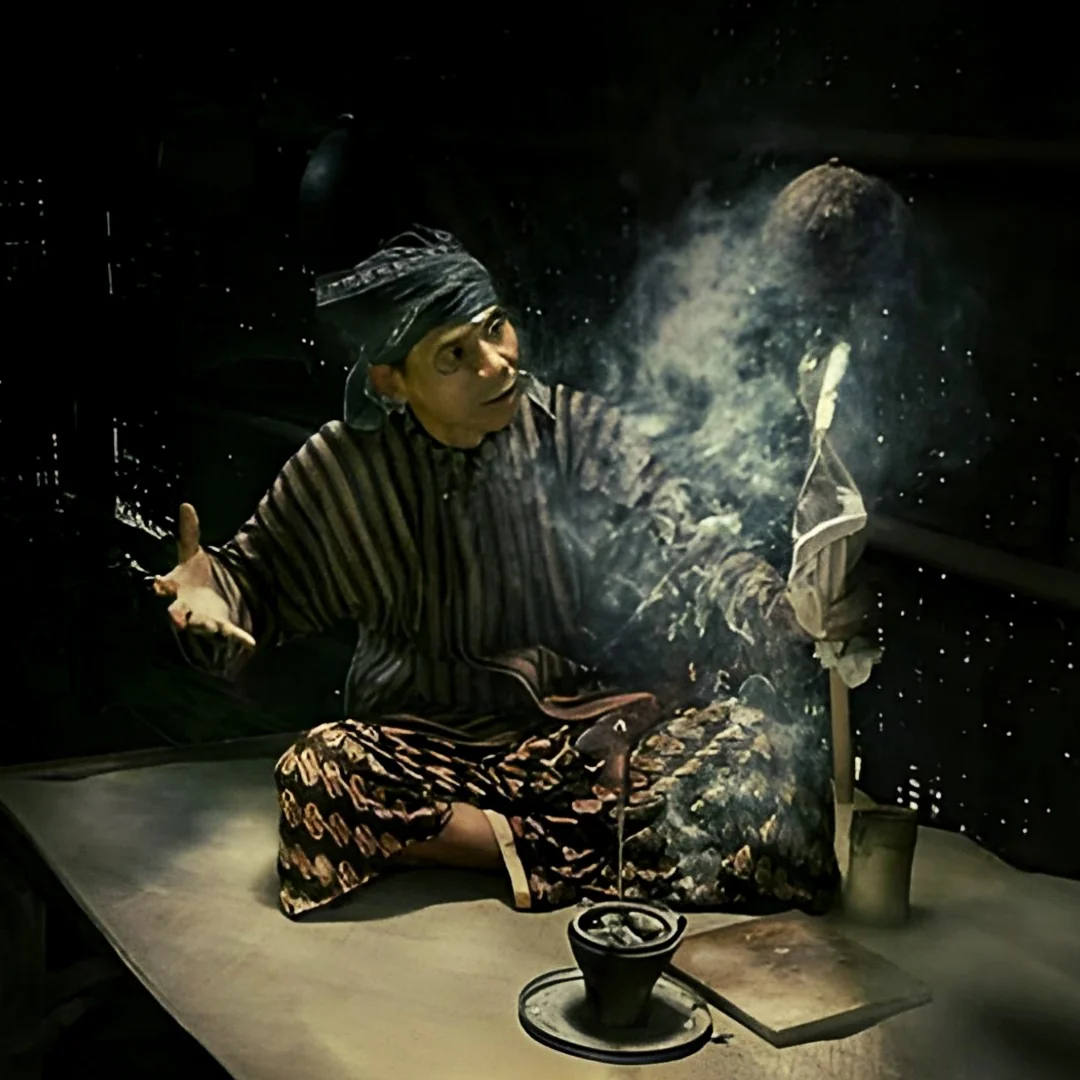
Across the Indonesian archipelago, where ancient temples stand side by side with modern skyscrapers, a hidden world continues to exist among the people—a world blamed for sudden illness, unexplained poverty, restless conflicts, and love that can tip into obsession.
These events are not seen as mere coincidences, but as signs of a secret magic moving invisibly between the physical and spiritual worlds.
At the center of all this stands the dukun, or spiritual healer. To some, the dukun is a guardian of the unknown and a healer of souls; to others, a sorcerer who preys on illusions and dark powers. Dukuns are called upon to break curses, help generate love, or ward off evil believed to come from afar. Despite growing religious and legal efforts to stop such practices, their roots run deep in Indonesian society and find new forms with every generation.
Stories that reach the outside world—maids caught at airports with talismans, or tailless cats rumored to be used in mysterious rituals—are just a piece of a larger picture, where fact blends with legend and faith with superstition.
This report dives into that world in all its shades—from charms and incantations used for personal and household protection, to strange rituals like susuk and santet—trying to understand how Indonesians live with an invisible world they believe has surrounded them for centuries.
Who is the Dukun—and what does the dukun do?
In Indonesian, 'dukun' refers to a shaman, folk healer, or spiritual medium, whose role often moves between traditional medicine, spells, preparing amulets, and communicating with spirits.
People sometimes distinguish between a 'pure/healing' dukun and a 'santet' dukun, whose work is closer to black magic—causing harm to others.
Some dukuns claim abilities including reading energies, reciting spells (called mantra or jampi), using plants and herbs, creating talismans, dream interpretation, and channeling spiritual energies or spirits for their work.
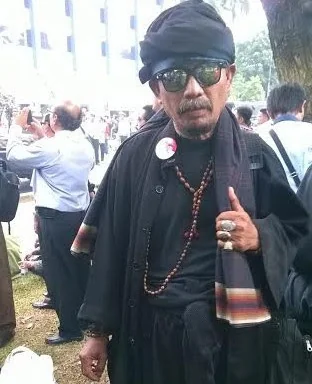
In many regions, the craft is passed down through families or learned from a spiritual teacher. Many details are kept secret from outsiders.
The dukun acts as an intermediary between the material and spirit worlds. What matters here are the rituals they perform and the talismans and spells they create or distribute.
Harmful Magic / Remote Sorcery (Santet)
Known as santet, this practice uses objects such as a victim’s hair or nails, a piece of cloth, small dolls, needles, shards of glass, blood, or written texts burned or buried, with the goal of causing illness, harm, failure, or infertility.
Traditionally, the dukun may prepare a cloth or doll with the victim’s name, adding needles, glass, or blood, then 'sending' this energy to the target at a distance. The victim may develop mysterious symptoms (joint pain, dizziness, fatigue, hallucinations). Some believe the afflicted person may even cough up needles or glass meant to represent the curse.
Love Magic (Pelet)
Called pelet, or love spells, this type of magic is claimed to use energy, mantras, or symbolic objects to make someone fall in love, feel attracted, or restore harmony between spouses. Sometimes viewed as a form of 'white magic' or a gray area between natural affection and spiritual influence.
Magical Needles (Susuk)
Susuk involves inserting a tiny needle (sometimes gold) beneath the skin of the face, chest, neck, or hands to increase charm, luck, charisma, or protection against envy and evil. Medical imaging in Indonesia has confirmed the presence of these needles in people who did not know they were there.
Stories circulate about women undergoing susuk before job interviews or marriage meetings; the procedure is done quickly, and clients are told to avoid certain foods.

Dark Control Magic (Pupuk)
In the Batak traditions of North Sumatra, there are infamous rituals called pupuk, where a child may be kidnapped and killed to create a liquid used in powerful talismans—or the spirit of the child is transformed into a servant spirit for the dukun. The purpose is to increase power, provide protection, destroy enemies, or gain spirit control. This is considered one of the darkest forms of magic and is documented in Batak historical records.
A healer known as a datu may kidnap a child, force them to drink liquid metal, or kill them, then use the body and soul to craft a highly potent talisman. The resulting substance is stored in a container such as a buffalo horn and is believed to greatly enhance spiritual power or harm others.
The Batak people maintain books called Pustaha that record spells, rituals, and magical lore (medicine, protection, harm). These texts serve as references for healers, datu, or priests, containing both white and black magic traditions.
Spoken and Written Incantations (Mantra / Jampi)
These are called mantra or jampi—spells inscribed with symbols or text, sometimes using blood or ink, carved on paper or leaves, or recited ritualistically. They’re believed to have spiritual power, especially when chanted over water, mixed with food, or burned in front of the afflicted.
Protective Amulets (Azimat / Jimat)
Widely used amulets called azimat or jimat are made from metal, stone, old books, folded paper, or inscribed charms, worn on the body or placed in homes. They’re thought to protect against envy, evil, or to bring blessings. A healer may prepare the amulet through specific rituals, including reading spells over it, dipping it in water, sprinkling it in certain places, or embedding it in the structure of a home.
Removing Magic with Rituals
When someone is believed to have been affected by magic, they visit a dukun to identify the source and undergo cleansing rituals—sleeping in a purified place, reciting spells, being sprinkled with enchanted water, burning charms, receiving protective amulets, or performing counter-rituals.
Spiritual Mediation / Spirit Summoning
This involves seeking help from spirits or supernatural entities, often through a spiritual medium or inspiration from a spirit guide. Sometimes, it’s believed a dukun strikes a pact with spirits (including jinn) to execute certain magical tasks.
Cat Tails Cut Off in Indonesia
Some viral videos on social media have claimed that cat tails are deliberately cut off in Indonesia to be used in witchcraft. Is there any truth to this?

In reality, many cats in Indonesia and Southeast Asia naturally have short or kinked tails due to a genetic mutation in the HES7 gene (among others), which is well documented in genetic studies—the trait is dominant and has been recorded since the 19th century. This explains the prevalence of “bobtail” or kinked tails in Bali and Java, without needing to invoke tail-cutting. As a result, claims that “Indonesians cut cat tails for use in magic” are not supported by credible scientific or journalistic sources and contradict well-established genetic explanations.
Indonesian Domestic Workers and Amulets
From time to time, regional media report cases where employers find amulets or unusual objects in Indonesian domestic workers' belongings, often interpreted as magical charms meant to control or win favor. There are examples (Hong Kong/Singapore press) of “strange items” being linked to suspicions of magic, but these remain isolated incidents rather than a widespread phenomenon.

Conversely, high-profile cases—such as that of Indonesian domestic worker Parti Liyani in Singapore, who was acquitted after a lengthy legal battle—highlight the dangers of unsubstantiated accusations and have sparked wider discussions about bias against domestic workers.
The key point is that while items like azimat and jimat (jimat/azimat) and magic rituals exist within the culture, and some workers may carry symbolic objects for protection or good luck, making automatic assumptions of malicious intent or “magic to control employers” is an unjustified generalization unless there is clear, case-by-case evidence.
The Law: What Does Article 252 Prohibit?
Indonesia’s new penal code (Law No. 1/2023) includes Article 252, which does not criminalize “magic” itself but rather the act of claiming to have supernatural powers to harm others or achieve personal gain—a formal offense based on specific claims and alleged intent, rather than on proving “supernatural harm.” Human rights groups also warn of challenges in proving such cases and the potential dangers of expanding “living law.” Full implementation of the law is set for January 2, 2026.
Legal summary: The law targets harmful claims and exploiting people's beliefs, not ordinary folk rituals. Harmful supernatural acts (“santet”) are treated as fraud or threats, not as verifiable occult acts.
How Are These Practices Viewed in Indonesian Islamic Culture?
In most conservative areas, magic is formally forbidden in Islam and regarded as heretical and misguided. However, some people may still engage in these practices under a “religious cover” or justify them as secret prayers or concealed healing rituals.
Some dukuns (spiritual practitioners) and intermediaries incorporate Islamic texts—Quranic verses or God’s names—into their rituals to avoid accusations of heresy and to improve social acceptance.
Local media often report that people using susuk susuk or amulets claim they are “for beauty or protection,” not magic, as a way to avoid suspicion. This is more a linguistic compromise than a literal description.
The existence of these practices does not mean they are widespread or consistently applied in every case; many circulating stories are likely exaggerated or blur the line between folklore, psychological issues, or cases that medical science cannot immediately explain.
It is difficult to prove that a charm directly caused harm, meaning many claims remain unsubstantiated or rest solely on belief.
Medical documentation of susuk susuk gives the practice a measurable aspect, but this shouldn’t be mistaken as evidence that everyone claiming to be affected by magic is truly a victim.
Certain cases in history, such as the serial killer Ahmad Suradji (Ahmad Suradji), show how extreme spiritual practices can cross into real crime, as he claimed to have carried out deadly rituals as part of his beliefs.
Advice for Readers
If you are unfamiliar with these practices, keep the following in mind:
- Magic rituals in Indonesia are incredibly diverse: from simple protective charms to complex and dangerous spells (such as bubuk pupuk).
- Not every amulet or “magical item” is harmful or intended to hurt others. In many cases, they are used for protection or blessing—there’s a wide difference between benign beliefs and malicious intent.
- Documentation of practices like susuk susuk or bubuk pupuk doesn’t mean that everyone who practices or believes in them is guilty of wrongdoing; these examples highlight that some rituals can be harmful, especially when they clash with the law or religious principles.
- When reading such stories, it’s important to ask: What’s the evidence? Were there credible medical or legal confirmations? Are incidents officially recognized as magic, or is it just a label given by believers?
Finally, it’s important to remember that these traditions are a part of local cultures, not simply scams. It’s best to approach the subject with caution, rationality, and respect for people and their beliefs, while also distinguishing between cultural practices and real criminal acts.
About the Author



No comments:
Post a Comment