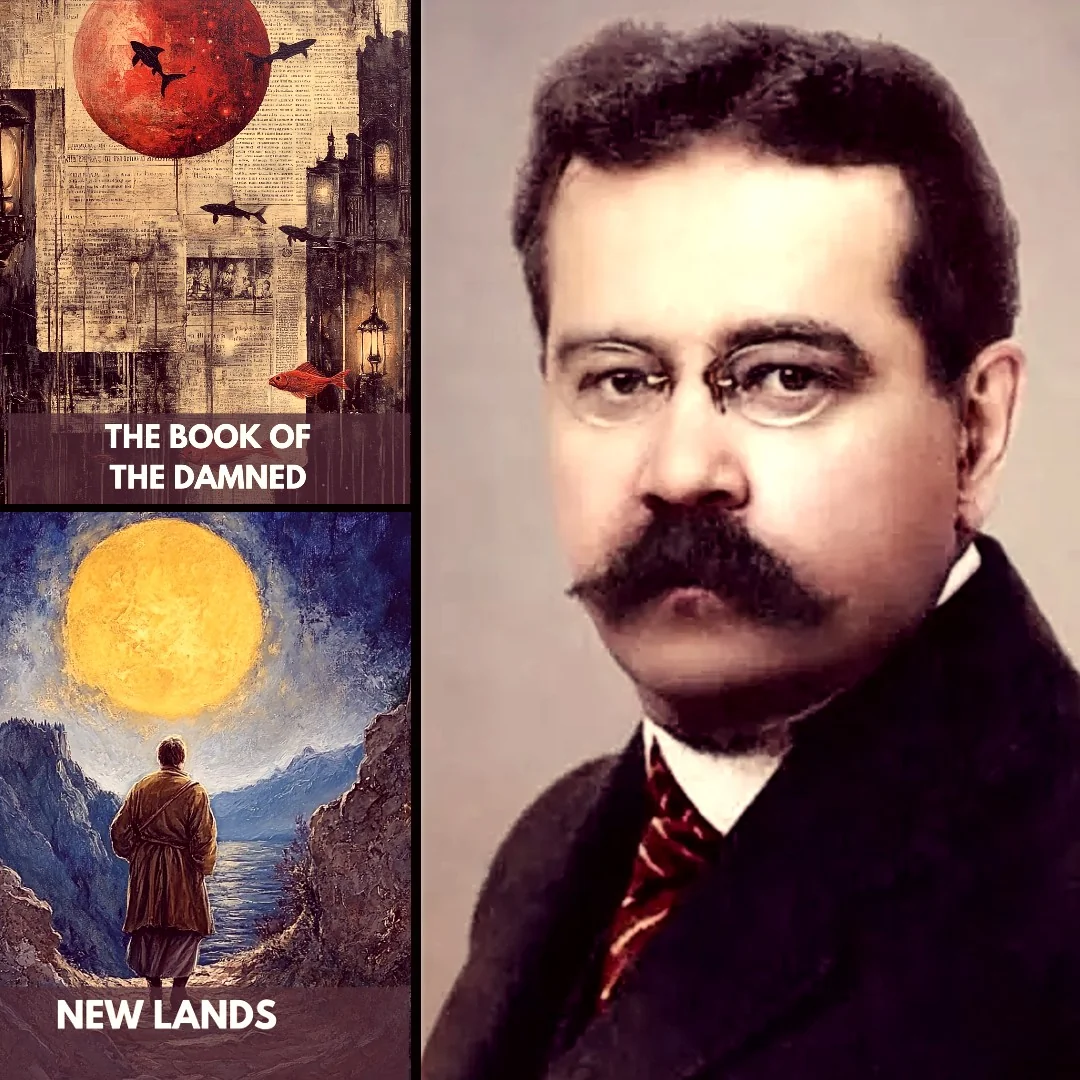
In a world ruled by laboratory logic and statistics, an American man emerged in the early twentieth century to declare: “There are far too many phenomena to ignore, yet they don’t fit into what science tells us.” That man was Charles Fort (Charles Fort), the spiritual father of anyone daring to question the forbidden frontiers between science and legend, humanity and the unknown.
From Journalism to the World of the Unexplainable
Fort was born in 1874 in Albany, New York, to a modest family. He developed an early passion for reading and observation, but left school to work as a journalist. What set him apart wasn’t just his writing—but his obsession with the unexplained.
He spent years in the New York Public Library and the British Museum in London, collecting thousands of newspaper clippings and articles about bizarre incidents that made the news but were quickly forgotten: rains of frogs, stones falling from the sky, mysterious lights appearing, people vanishing, strange tracks in the sand. For Fort, these were “facts excluded” from scientific history.
The Book of the Damned
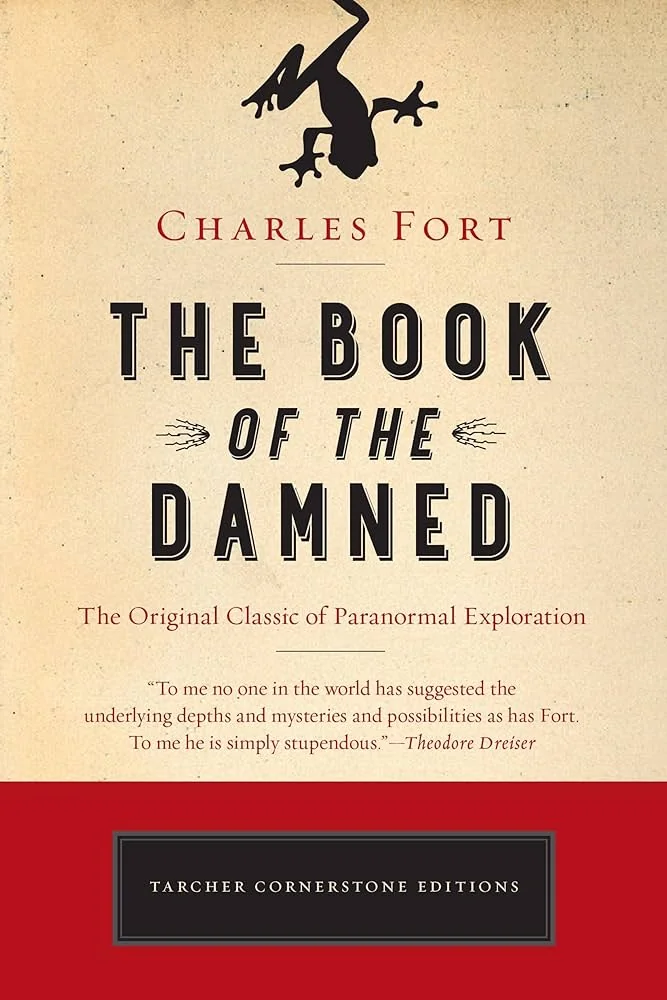
In 1919, Fort published his best-known work, The Book of the Damned The Book of the Damned, which sent shockwaves through academic circles.
The book wasn’t a novel or a traditional scientific treatise; it was a meticulously curated catalogue of phenomena rejected by science because they didn’t fit its theories. Fort used the word “damned” The Damned metaphorically, describing facts exiled from the paradise of science, much like the devil cast out of heaven.
He wrote: “Science is just another belief system with its own priests and taboos… anything that doesn’t fit its theories is condemned and banished.”
Among the cases Fort chronicled:
- Reports of sticky or bloody rain verified in meteorological records.
- Accounts of flying objects centuries before the invention of flight.
- Stories of people vanishing before witnesses’ eyes.
- Cases of animals and inanimate objects appearing suddenly in locked rooms without explanation.
“Fortean” Thinking
After the publication of his subsequent books—New Lands (1923), Lo! (1931), and Wild Talents (1932)—a new word entered the English language: Fortean phenomena, or “Fortean” phenomena, in Fort’s honor.
This term refers to any event or phenomenon unexplained by science or dismissed by mainstream academia, such as:
- UFOs.
- Rare atmospheric phenomena.
- Unknown creatures or legendary “monsters” (Cryptids).
- Psychic abilities like telepathy and clairvoyance.
- Cases of people or things vanishing and reappearing out of nowhere, or even time slips (Time slips).
Fort and the Cha llenge to the "Religion of Science"
Charles Fort wasn’t a follower of traditional religious mysticism, but neither did he firmly believe in the infallibility of science. In his view, people are held captive by temporary theories and absolute truth remains elusive. His writing often had a sardonic tone, poking fun at scientists who “regard themselves as the high priests of reality.” As he put it: “If Darwin’s theory were entirely correct, science would not exist—it would simply be a new religion called evolution.”
His goal was not to prove superstition, but to challenge blind faith in any intellectual system that claims sole ownership of truth. Fort was more like a philosopher of skepticism, a metaphysical critic of modern science.
His Lasting Influence on Twentieth Century Culture
Though he wasn’t widely known during his lifetime (he died in 1932), his influence exploded after his death. In the 1940s, the Fortean Society (The Fortean Society) was founded to continue his legacy and promote the documentation of strange phenomena. Magazines like Fate Fate and Fortean Times Fortean Times drew direct inspiration from him, becoming global reference points for the bizarre. Prominent writers like Robert Anton Wilson, John Keel (author of The Mothman Prophecies), and Colin Wilson were influenced by Fort, as were sociologists such as Thomas Kuhn, who saw Fort as an early critic of “dominant scientific paradigms.” Even today, the term “Fortean” Fortean is used in media and research to describe any phenomenon that lies in the gray area between science and the fantastic.
Fort and Other Worlds
Among Fort’s most intriguing ideas was his enigmatic hypothesis that Earth is not closed off physically or temporally, but overlaps with “other worlds”—possibly responsible for mysterious creatures and phenomena appearing in ours.
In one of his texts, Fort wrote: “Perhaps we are someone else’s property… Maybe we live on a cosmic farm, the gates to which open and close at the whim of its owners.”
This concept preceded, by decades, the notions of the “multiverse” and “parallel universes.— concepts that have now found partial acceptance in contemporary theoretical physics.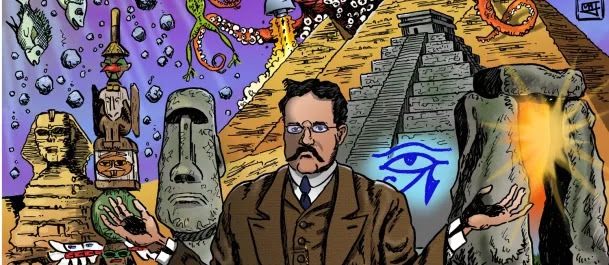
Charles Fort Through Today's Eyes
Today, Fort is seen as the father of modern paranormal studies (Father of the Unexplained). Not because he offered irrefutable proof, but because he opened the door to thinking beyond rigid scientific models, introduced a critical and satirical approach that blended science, literature, and philosophy, and laid the groundwork for examining rejected data as a new way to understand reality.
In our digital age, thousands of videos and articles capture his spirit—from shows like Ancient Aliens to YouTube channels dedicated to mysteries. All of them owe their origin to his pioneering spark.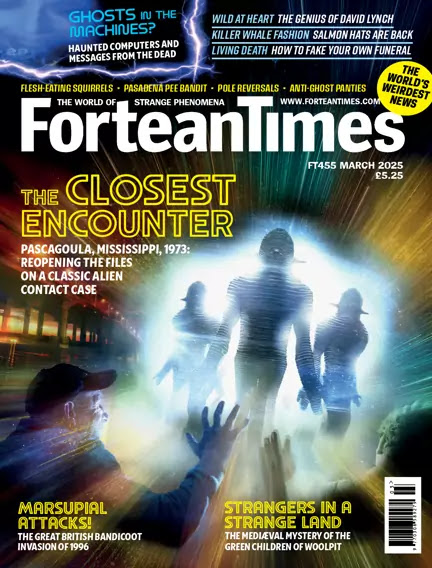
Fort’s Intellectual Legacy
Charles Fort was more like a metaphysical writer in the guise of a skeptic. He never demanded belief in his findings, but he challenged us not to close our minds to the strange. He believed that truth, much like light, can blind those who stare at it too long—sometimes it’s wiser to seek it in the shadows.
Charles Fort was not a scientist, prophet, or magician. He was a chronicler of the unexplained who diligently recorded what others dismissed. Thanks to him, the term “Fortean phenomena” exists, along with an entire school of thought that weaves together scientific inquiry, philosophical imagination, and a fascination with the unknown.
Perhaps his most enduring legacy is his simple and timeless question: “Are we truly sure we understand this world—or have we just grown used to ignoring what we cannot explain?”
About the Author



No comments:
Post a Comment