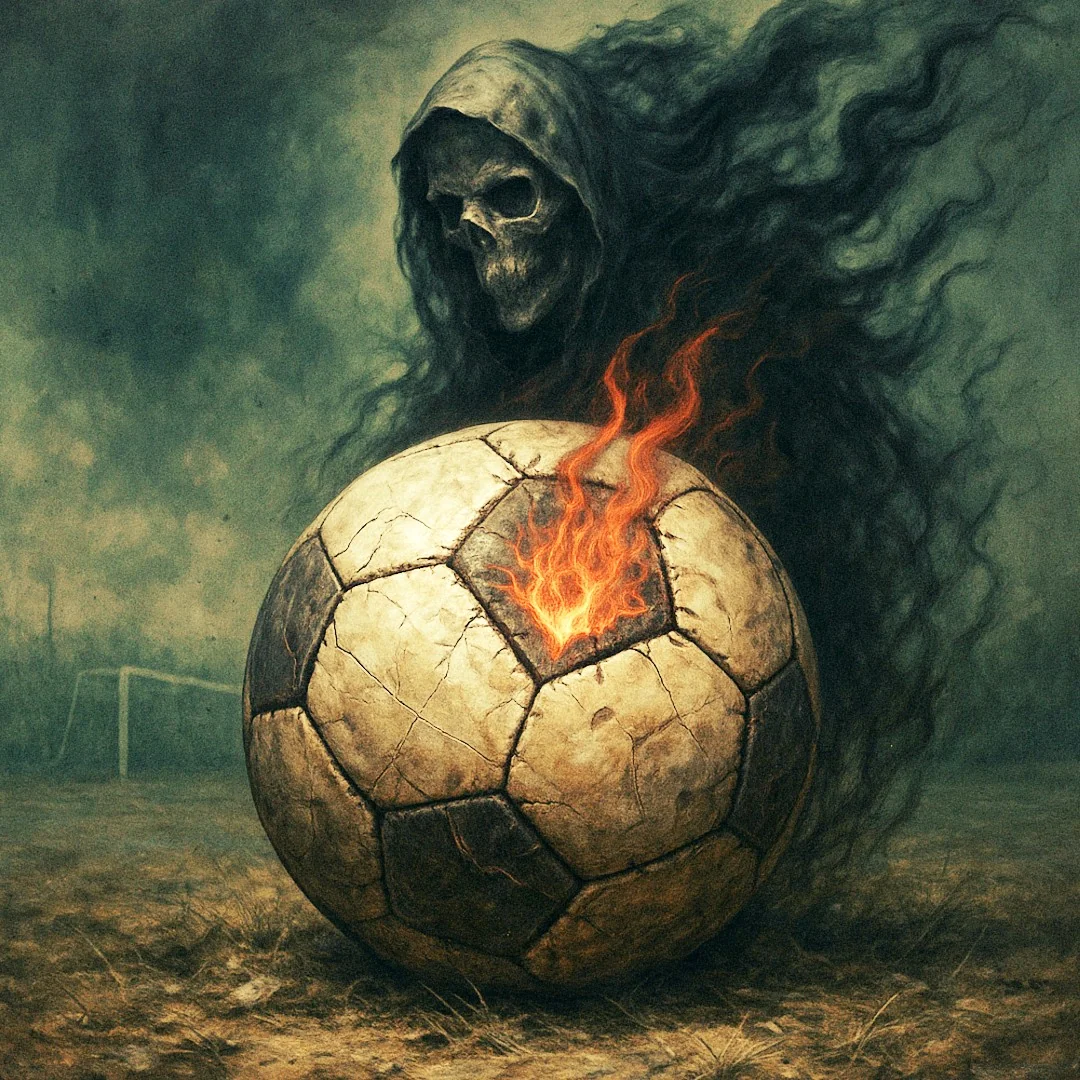
Out of this atmosphere, legends have sprung up about cursed teams and clubs, said to be haunted for decades—stories so powerful that players sometimes claim to feel their psychological weight on the pitch.
The Witch Doctor’s Curse and Australia’s National Team
In 1969, Australia’s national team needed a win to qualify for the World Cup. On the advice of a Mozambican journalist, they hired a witch doctor to curse their opponents by placing bones near the goal. But when the players refused to pay for the service, the curse turned against them. The team failed for years to reach the finals—until, decades later, Australian broadcaster John Safran performed an 'anti-curse' ritual in Mozambique. Soon after, Australia qualified for the World Cup for the first time in 32 years.
The Number 7 Curse: Manchester United
Since Cristiano Ronaldo’s departure in 2009, wearing the number 7 shirt at Manchester United has seemed like a burden. Angel Di Maria, Alexis Sanchez, and Memphis Depay all struggled despite previous stardom. Fans began whispering about a 'number 7 curse,' with some blaming psychological pressure and others suspecting true misfortune.
The Black Cats Curse: Racing Club, Argentina
In the 1960s, fans of Racing Club’s rivals reportedly buried seven dead black cats beneath the stadium. What followed was a long stretch of disappointing seasons. Racing Club only returned to form decades later—after the final remains of the cats were unearthed in an exorcism-like ritual. The immediate return of trophies solidified belief that the curse had been real.
The Gypsy Curse: Birmingham City
St. Andrew’s Stadium, built in 1906 on land owned by Roma gypsies, was rumored to have been cursed by its original inhabitants. The club has struggled for significant success ever since, plagued by relegation, fires, and bizarre incidents. Even coaches hanging giant crosses from the floodlights failed to break the streak of bad luck that lasted well into the 21st century.
The Guttmann Curse: Benfica (Portugal)
After coaching Benfica to two consecutive European titles in 1962, Hungarian manager Béla Guttmann demanded a pay raise; when the club refused, he left, declaring, 'You won’t win another European Cup for 100 years.' Since then, Benfica have lost eight European finals in a row. Club legend Eusébio even visited Guttmann’s grave to plead for mercy, but the streak continued.
Arabic Examples of 'Football Curses'
1- Wydad & Raja – Morocco
In Casablanca, fans of both major clubs swap stories of witchcraft before crucial matches, especially ahead of the intense Casablanca derby. Tales circulate of strange items buried near goals or 'magic water' sprinkled on the pitch, and even the Moroccan media occasionally covers these rumors as part of the fierce rivalry.
2- Ahly & Zamalek – Egypt
Egypt’s top clash comes with its own tales of bad omens and superstition. Some say Zamalek is 'cursed' in African Champions League finals against Ahly because of repeated defeats. Fans speak of 'jinxes,' and certain players reportedly consult spiritual healers or recite Quranic verses before big games. Egyptian media has even documented cases where clubs were accused of seeking out spells to gain an advantage.
3- USM Alger – Algeria
Stories have circulated in Algeria claiming some stadiums are 'unlucky,' especially when the home side loses more often than it wins. USM Alger supporters have talked about a run of bad luck in continental finals, suggesting that the team needs to 'break the jinx' rather than just swap players.
4- Al-Hilal & Al-Merrikh – Sudan
Sudan's legendary clashes between Al-Hilal and Al-Merrikh are surrounded by myth and legend. Al-Merrikh’s fans, in particular, speak of 'magic' used in high-stakes games. Some players have even refused to enter their rivals’ locker rooms, claiming they’re under a spell.
5- Arab Teams in African Tournaments
Whenever Arab national teams like Egypt, Tunisia, or Morocco participate in the Africa Cup of Nations, rumors swirl that some host teams turn to 'ritual magic' to weaken their opponents—burning incense or inviting local shamans. These stories often surface as explanations after unexpected results.
The Unique Nature of Curses in the Arab World
What separates tales of football curses in Europe or Latin America from those in the Arab world are cultural and religious contexts:
- Here, curses are closely associated with witchcraft and magic—practices seen as religiously forbidden, yet strongly rooted in popular belief.
- Fans and players may mix collective prayers and Islamic ruqyah with personal rituals for luck or to ward off misfortune.
- Arab media uses terms like 'jinx' or 'complex' more often than 'curse.'
How Do Players Deal with 'Curses'?
Personal Talismans
Some players wear bracelets or tuck small amulets into their boots.
Team Rituals
Entire teams sometimes enter the field in a specific way, or make sure to step onto the pitch with their right foot first.
Turning to spiritual advisors
In some regions, such as Africa and Latin America, witch doctors or shamans are consulted to lift bad luck.
Religious practices
Players may recite verses or group prayers seeking protection from misfortune.
Protective spells in African sports
In African sports, there's something known as "mohti magic" (Muti), rooted in local traditions. These rituals are carried out at stadiums, from burying animal parts under the goalposts to sprinkling mysterious liquids on the field's lines to bring luck or weaken the opponent. Several incidents have made headlines, including games halted when referees caught players pouring magical substances on the pitch—acts considered a form of protection spell.The psychological impact: between placebo and nocebo
Placebo Placebo
A positive mental boost that happens when players believe a ritual, lucky charm, or prayer will bring them good fortune. This belief builds confidence, reduces stress, and actually improves performance—even if the charm itself has no real power.
Nocebo Nocebo
The nocebo effect is the opposite: when a player believes they are cursed or jinxed, the negative expectation can erode focus, hurt performance, and lead to a chain of failures. This is common in stories about "cursed jerseys" or "haunted stadiums," where the mental impact comes before the physical one.
In many cases, what fans call "soccer curses" can be explained through the placebo and nocebo effects: belief itself becomes a powerful force that can tip the outcome one way or another.
The Islamic perspective on superstition and bad omens
Islamic culture strongly discourages superstitions and omens. According to a teaching of the Prophet: "There is no infection and no evil omen, and I am pleased with good expectations." (Reported by Bukhari and Muslim)
Islam fundamentally rejects the idea that bad luck or misfortune can be transferred by signs or omens, or that failure is due to mysterious forces. Instead, it encourages optimism as a positive mental force.
Superstitions
In pre-Islamic Arab culture, people feared certain birds, sounds, or directions as bad omens. Islam actively challenged and ended these beliefs.
Black magic and witchcraft
These are strictly forbidden in Islam due to their association with supernatural practices or calling upon spirits.
Mental energy
While Islam doesn't use terms like 'placebo', the concept of 'optimism' aligns with boosting hope and self-confidence, helping to raise morale and improve performance.
The curse: a mysterious force between legend and psychology
At its core, a curse is an old idea—the transfer of misfortune or harm through a word, ritual, or ill intention. In sports—especially football—this concept becomes part of a team's collective story. Fans blame recurrent failures on the "curse," and players themselves may buy into these beliefs, even without realizing it.
Psychological impact
The belief that some hidden force is working against the team can create collective anxiety and weigh heavily on players' minds going into a match.
Social impact
Curses can provide a shared excuse for disappointing results or become a club legend passed down through generations, like "Guttmann's curse" with Benfica.
Media impact
Stories about curses get amplified by the media, which cements them in public consciousness and makes each new defeat seem further proof.
So, in this sense, a curse may be more of a cultural phenomenon than a supernatural one—yet it has real effects because it shapes mindsets and behavior.
Fact or fiction?
Sports psychology explains that superstitions give athletes a sense of control in a chaotic environment. This can ease anxiety and boost confidence. But if belief in bad luck becomes obsessive, even minor setbacks get interpreted as proof of the "curse," creating a cycle of self-doubt.
The game beyond the field
Curses in football aren’t just amusing myths—they reflect our deep desire to make sense of luck and its twists. Whether real or simply psychological, these stories add another layer of drama and intrigue to the beautiful game, making it even more captivating for fans worldwide.
About the Author



No comments:
Post a Comment