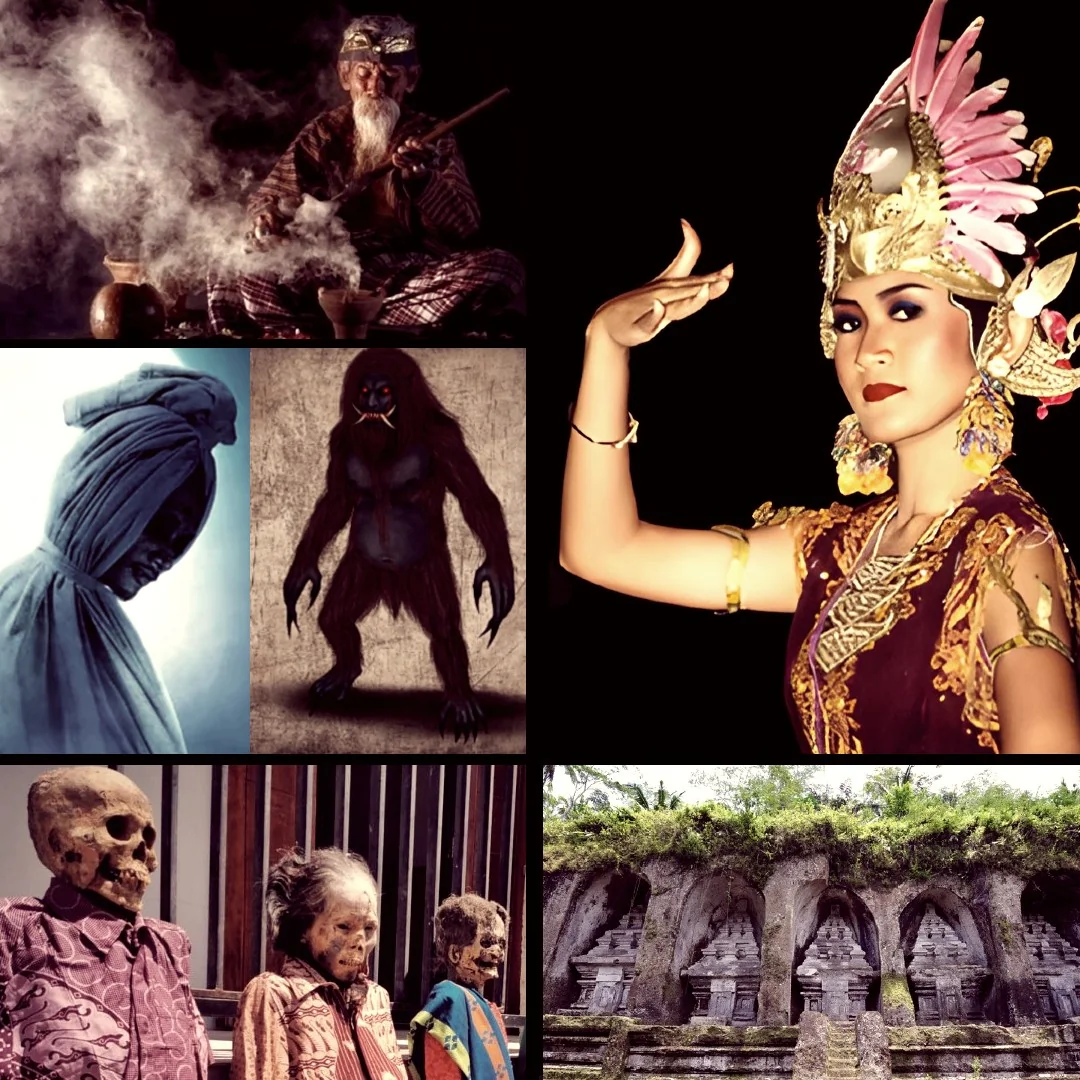
Indonesia—a sprawling archipelago set between the Indian and Pacific Oceans—is one of the world’s richest regions in terms of cultural, religious, and linguistic diversity. But this diversity goes far beyond people; it extends into realms of the unseen: spirits, supernatural beings, and magical beliefs that continue to shape Indonesian society to this day.
Every island has its own unique tales: restless spirits, mysterious beings roaming the forests, and shamans performing ancient rituals passed down for generations. In this overview, we explore the most famous mythical creatures, legends, magical practices, and haunted places that make up Indonesia’s paranormal landscape, blending mythology, history, and local folklore.
Legendary Beings and Spirits
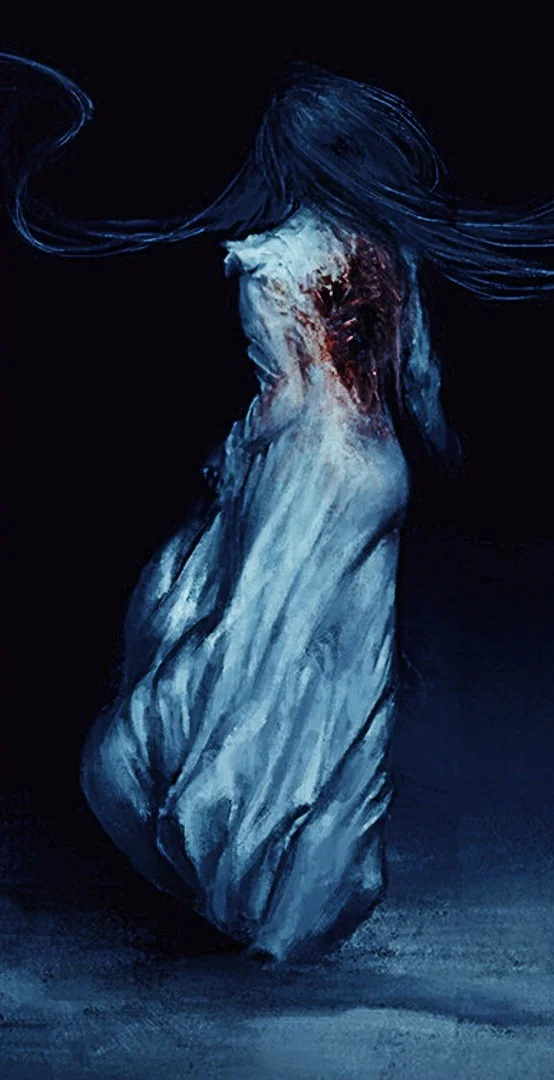
1- The Lady With the Hole
Sundel Bolong is one of the most terrifying spirits in Javanese lore. She is said to be the ghost of a woman who died during childbirth after an out-of-wedlock pregnancy, appearing in white with long hair that covers a gaping hole in her back.
She is believed to seek revenge on men who exploit women and on neglected children. In Indonesian cinema, she has become an icon of folk horror and a symbol of unforgiven societal sin. Beneath this legend runs a sharp social critique of a culture that links honor and death to women.
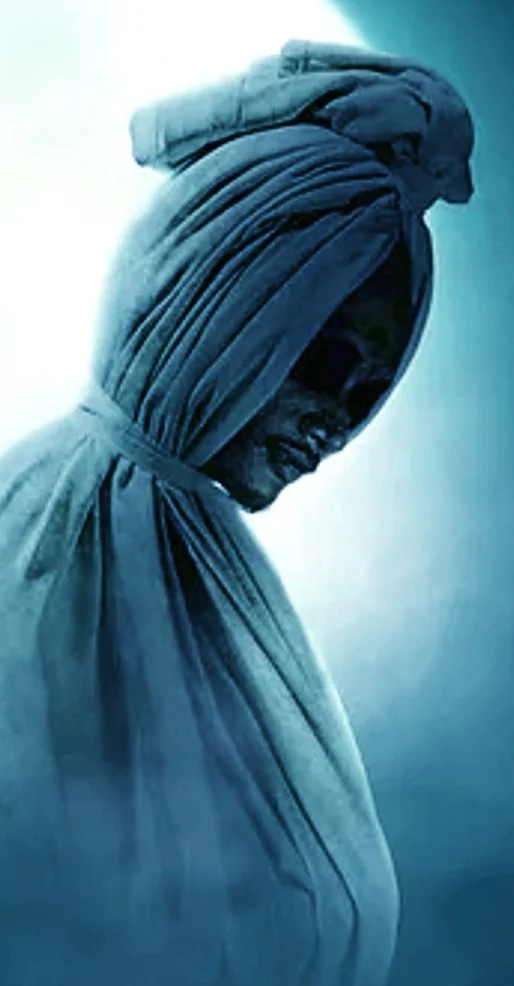
2- The Shrouded Ghost
One of the most widespread spirits in Indonesian folklore, the Pocong is the ghost of someone whose burial shroud wasn’t properly untied after death. It rises from the grave, bound and hopping because of the tied cloth at its feet.
It usually appears near graveyards or village pathways, delivering a single message: the dead were not laid to rest properly. The Pocong has become a symbol of unfinished business and longed-for justice, even after death. Read more about The Shrouded Ghost legend.
3- The Javanese Child Snatcher
The legend of Wewe Gombel sits at the intersection of horror and compassion. She is believed to be the spirit of a woman denied motherhood after being betrayed by her husband. She kidnaps the children of neglectful or abusive parents.
But instead of harming them, she shelters them in her world until their parents learn their value. This tale reflects a mother’s longing for justice, transforming pain into a form of supernatural protection.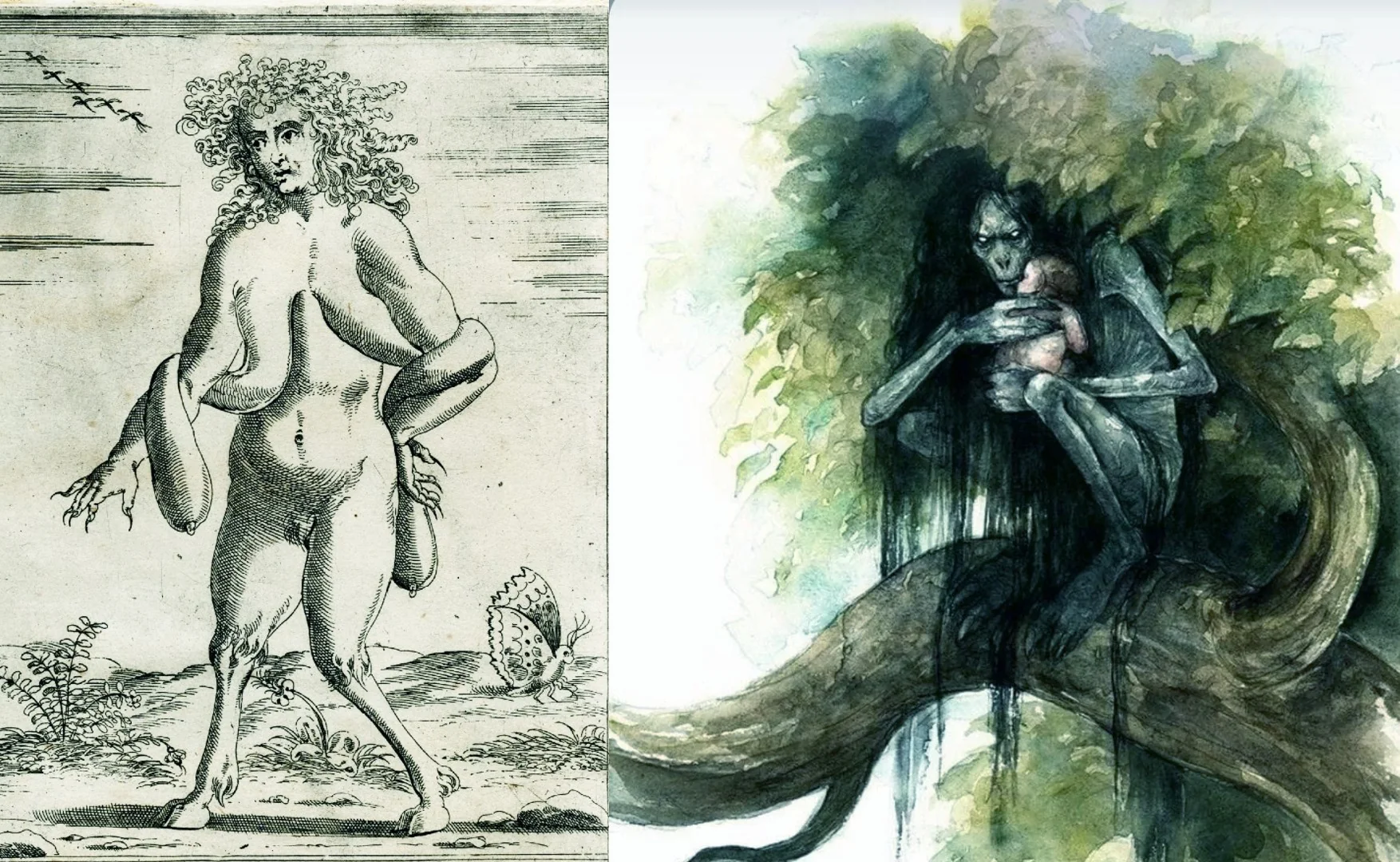
4- The Javanese Monster
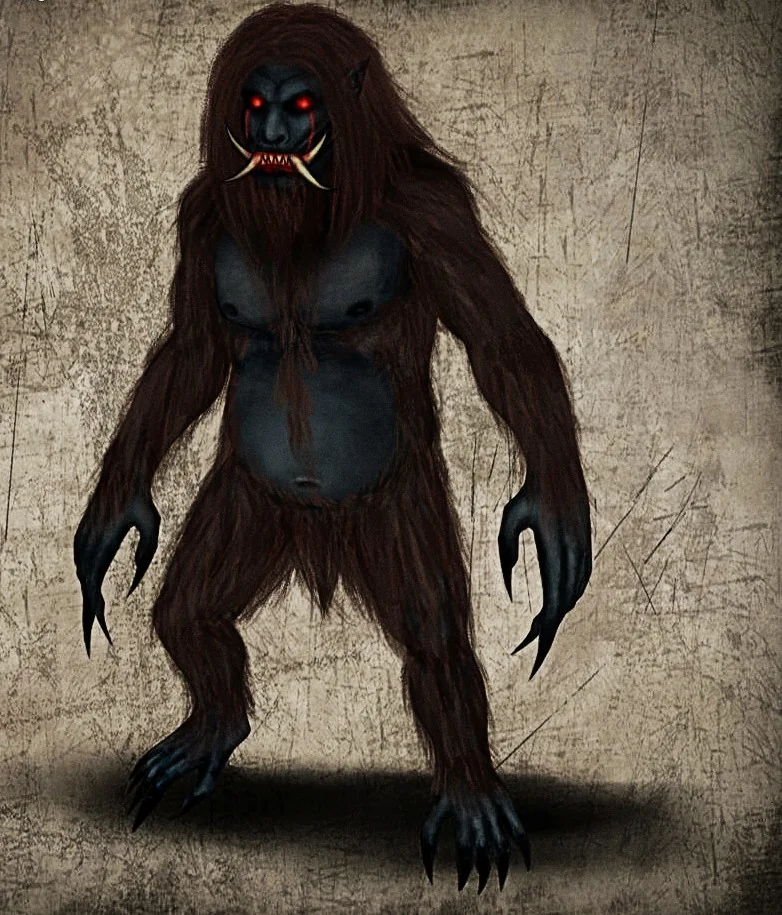
Deep in Java’s dark forests lurks the Genderuwo, a large, hairy beast with glowing red eyes and a raspy voice. Some say it can shapeshift to deceive people, seduce women, or haunt abandoned houses.
This creature embodies mankind’s primal fears of nature, the night, and the unknown. It has been portrayed in Indonesian theater and film as both a figure of horror and popular satire.
5- The Living Doll
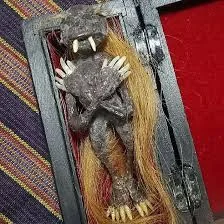
The Jenglot is a tiny creature, no bigger than a hand, covered in hair and believed to reside inside a statue or doll used in occult rituals. Legend says it feeds on blood offered during secret ceremonies.
Some people keep jenglots in their homes for luck or protection, and a few have even been on display in Jakarta museums—sparking debates on whether they are mummified remains or bizarre magical crafts.
A true story about this doll was previously published as The Box Demon.
6- The Vengeful Spirit from Eastern Indonesia
In the Maluku Islands and Papua, the legend of Swanggi tells of a woman’s spirit who returns for vengeance after being wronged and killed. Women who have experienced strange events are sometimes accused of ‘harboring the Swanggi spirit,’ an allegation that can result in exile or even communal violence.
This story highlights how belief in spirits can be used to exert social control, justify violence, or reinforce power over vulnerable groups in these regions.
Rituals and Magical Practices
1- The Shaman or Dukun
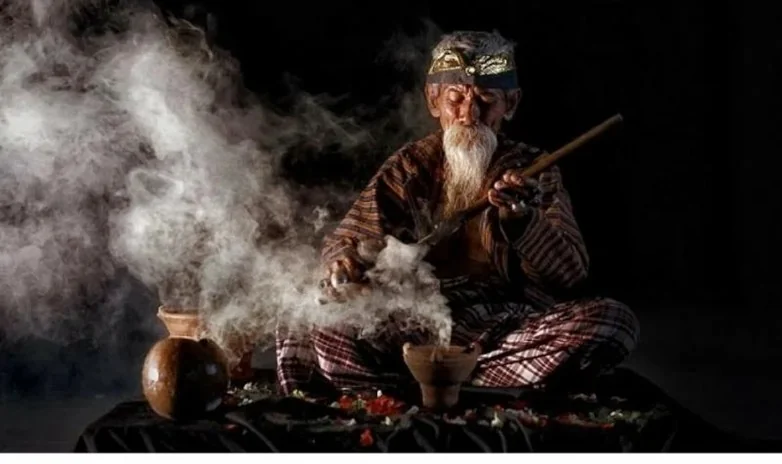
The Dukun is a pivotal figure in Indonesian culture: healer, seer, and spiritual advisor all in one. Their rituals often involve chanting mantras and summoning spirits, and their work is seen as good or evil depending on intent.
Some employ their abilities for healing, while others practice black magic—known as Santet—to inflict harm from a distance.
2- Magic for Love and Control
These rituals are designed to attract someone or dominate them emotionally. Practitioners use things like nail clippings, hair, or photographs alongside secret incantations. What may start as infatuation can spiral into obsession or madness, and such stories serve as cautionary tales about manipulating emotions with supernatural powers.
3- The Magic Beauty Needle
A mysterious ritual said to grant irresistible charm and attraction involves inserting tiny needles of gold or silver beneath the skin of the face or body.
The magic of Susuk Susuk is believed to work only if strict spiritual rituals are followed. Breaking any rule can bring misfortune or even physical disfigurement, making it one of Southeast Asia’s riskiest forms of beauty magic.
4– Spirit Summoning with the Basket
The Jailangkung Jailangkung ritual is famous in Indonesia and resembles the Ouija board. Participants dress a bamboo basket doll with a shirt and a wooden cross, placing paper and a pen in front of it.
Incense is then lit and incantations are chanted to invite a spirit into the doll, which answers questions by moving the pen. The Egyptian writer Anis Mansour described this ceremony in his travels to Java, and it is still practiced today by teenagers and seekers of the supernatural.
5- The Spirit Dagger
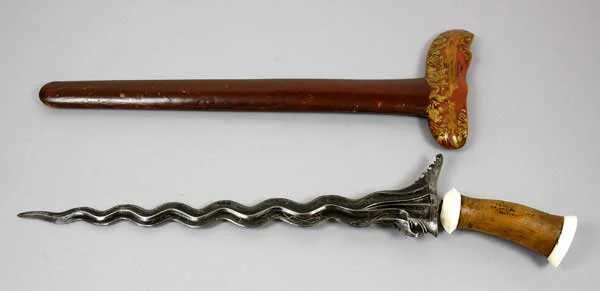
The Keris Keris is a sacred dagger with a wavy blade, far more than just a weapon in Indonesian belief. Each Keris is said to possess its own spirit, or 'master,' bringing protection if respected and disaster if insulted. Many dukuns use the Keris in rituals as a symbol of spiritual authority, and it is displayed in temples as a talisman blending artistry and holiness.
6- The Price of Cursed Wealth
In parts of Java, some believe that those seeking quick riches can make a pact with spirits through the Pesugihan Pesugihan ritual, offering sacrifices—sometimes even family members—in exchange for wealth.
Babi Ngepet Babi Ngepet is a creature summoned by black magic that transforms into a thieving pig, bringing its master money each night. But to succeed, the master must remain naked and in silent meditation in the dark. This is a stark symbol of human greed willing to sell itself to darkness.
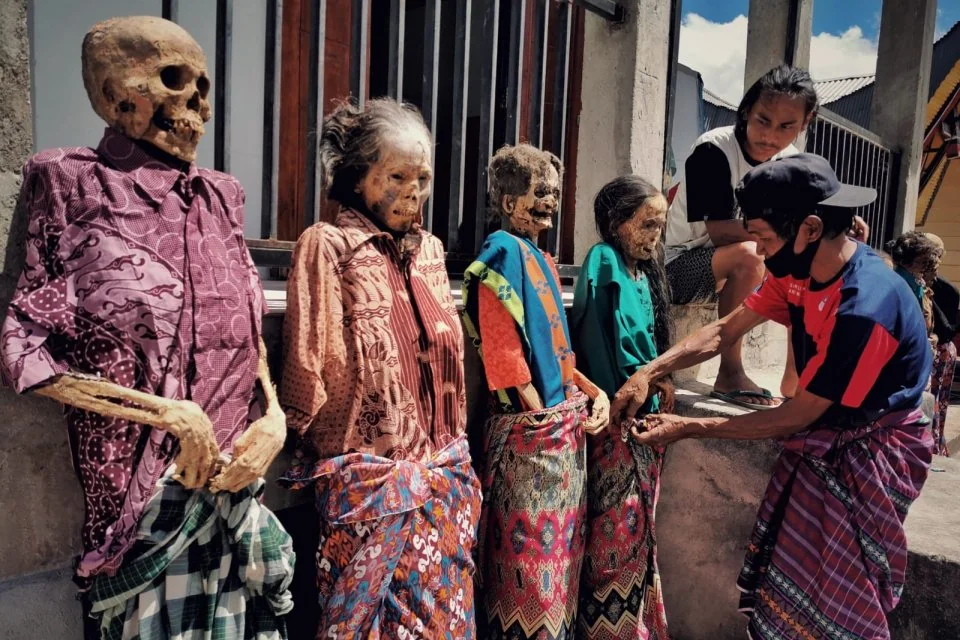
7- The Toraja Rituals of the Dead
In Tana Toraja, Sulawesi, death is viewed as a transition rather than an end. The deceased are often kept at home for weeks or months while funds are gathered for the funeral, and are treated as though simply ill.
In the Ma’nene Ma’nene ritual, families bring out their ancestors’ bodies each year, clean and dress them, and parade them around the village—as if the dead still walk among the living.
This unique custom expresses both a belief in the spiritual return of loved ones and the enduring bonds of family that stretch across worlds.
Haunted Places and Earthly Oddities
1- The Headless Priest’s Cemetery
In South Jakarta, the Jeruk Purut Jeruk Purut cemetery lies quiet among thick trees. Local legend claims a priest was mistakenly buried in the Muslim graveyard, and now his ghost appears holding his own head, led by a black dog.
It’s said he appears only to visitors in odd-numbered groups, making the graveyard a destination for those seeking paranormal thrills. Jeruk Purut remains one of Jakarta’s most infamous haunted sites.
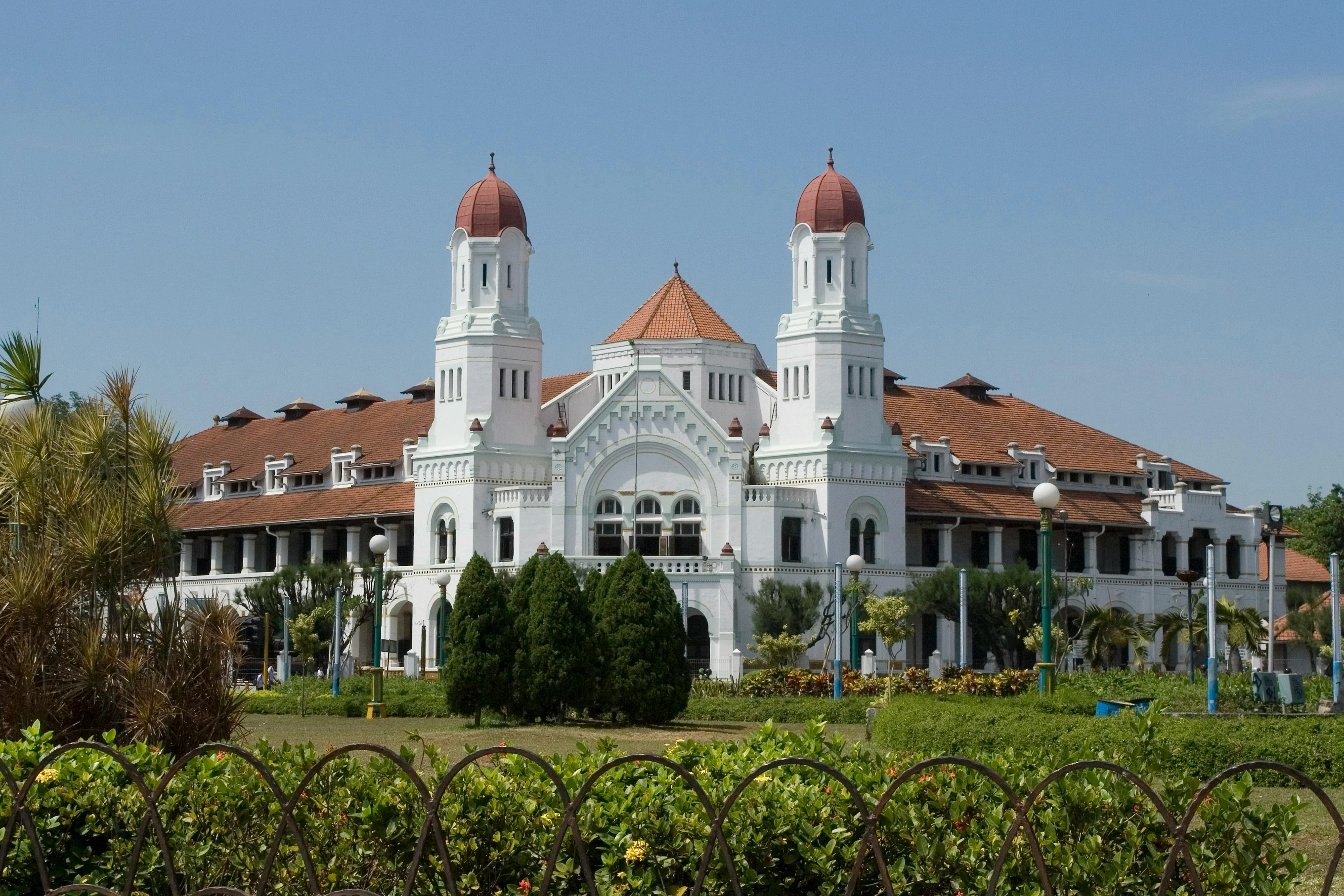
2- The Thousand Doors Palace
In Semarang, Lawang Sewu Lawang Sewu stands as a colonial architectural marvel, built by the Dutch and later used by the Japanese as a prison and torture site during World War II. Witnesses say cries of prisoners are still heard at night in the basement and shadowy figures drift through the building’s legendary 'thousand doors.' The palace has become a symbol where tragedy and the supernatural intertwine.
3- The Valley of Spirits Temple in Bali
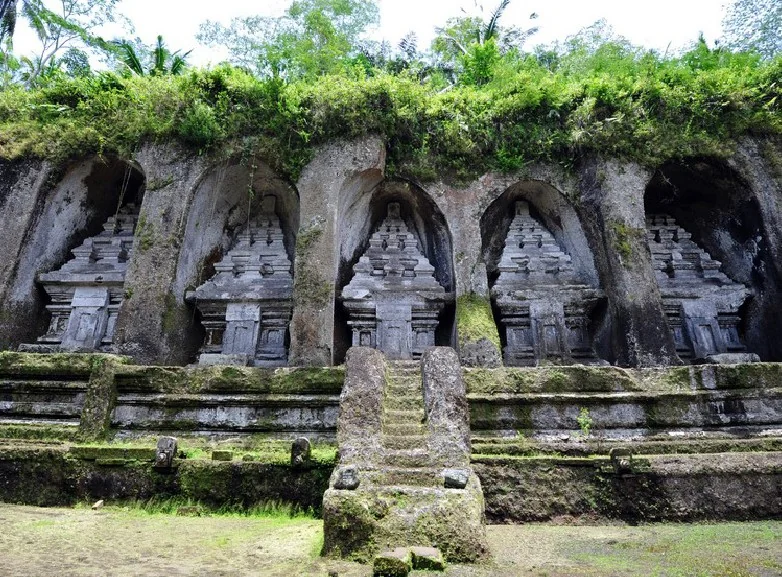
On Bali, the rock-carved temple of Gunung Kawi Gunung Kawi, dating to the 11th century, sits surrounded by waterfalls, mist, and the sounds of the jungle.
It is said that the souls of ancient kings guard these stone shrines, and that at night, visitors may hear whispers and prayers that are not of this world.
This temple is a vivid example of how Balinese Hinduism blends with Indonesian spirituality, with every mountain believed to be a living being filled with sacred energy.
In conclusion, Indonesia is not just an archipelago of islands, but a crossroads of unseen worlds: spirits searching for justice, lost souls trapped between life and death, rituals that blur medicine and magic, and resting places that remind us the earth never forgets.
The country’s supernatural traditions reveal another dimension of Indonesian civilization—one as profound as its art and temples. Here, death is seen as a new beginning, the unknown is a source of knowledge, and mythology serves as a mirror for reality.
About the Author



No comments:
Post a Comment