
Folklore is a powerful reflection of a society’s deepest anxieties and core values. Among its many tales, the ghost—a figure caught between life and death—emerges as a vivid expression of collective fear, moral conflict, and existential dread.
In Southeast Asia, and especially in Indonesia, legendary spirits are part of everyday life. Two supernatural figures loom especially large in the popular imagination: Sundel Bolong Sundel Bolong and the Pocong Pocong. These ghosts may appear visually distinct, but both evoke themes of fear and symbolism, embodying ideas of innocence and sin, punishment and release, in a place where religious beliefs and local traditions intertwine.
Sundel Bolong: The Ghost with a Hole
The name "Sundel Bolong" comes from Javanese: "sundel" meaning "woman of ill repute" or "prostitute," and "bolong" meaning "hole." Out of this combination emerges a haunting figure: a young woman, once beautiful, who died under tragic circumstances tied to an illegitimate pregnancy and returns as a restless spirit seeking revenge in the shadows.
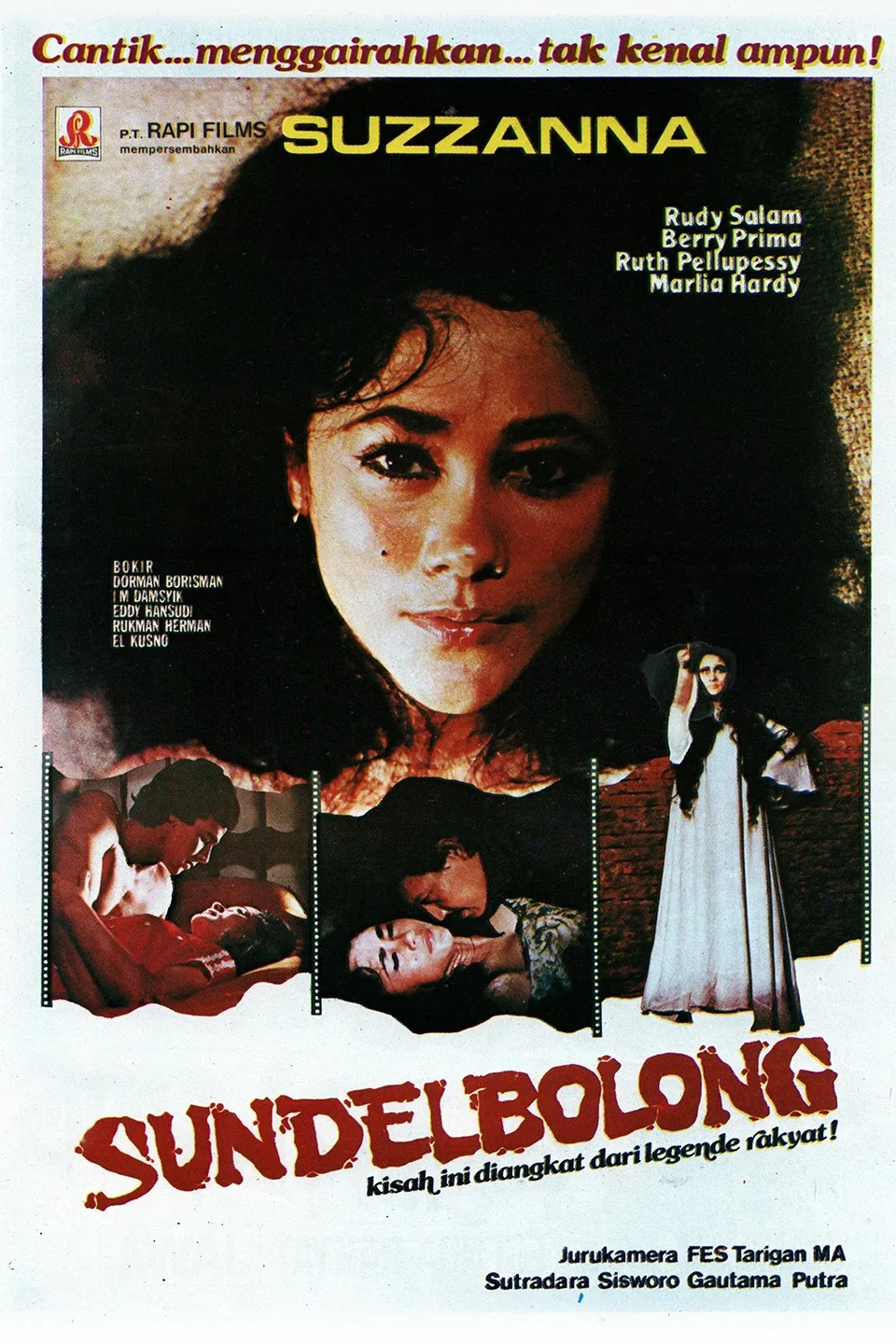
Sundel Bolong appears dressed in a long white gown, with thick black hair cascading down her back and sorrowful eyes. Her most distinctive feature is a gaping hole in her back—said to be where her baby emerged from her grave at birth. The hole is far more than a physical deformity; it is a stark symbol of unresolved shame and the social rupture caused by violence, abandonment, or wrongdoing in societies that too often punish women while excusing those who wrong them.
Legend and Behavior
According to folklore, Sundel Bolong haunts dense forests and deserted alleys, preying on solitary men. She lures them in with her beauty, only to exact a terrible vengeance. It's said she targets those who mock her, castrating men who ridicule her pain, and even abducting children to replace her lost baby.

In some versions, her spirit can only be set free if someone drives a nail into the nape of her neck, turning her back into an ordinary woman. This "remedy" can be seen as a symbolic attempt to reassert male control over the unruly feminine, echoing broader societal obsessions with taming women's autonomy.
Sundel Bolong in Popular Culture
Since the 1981 film "Sundel Bolong" to the present day, Sundel Bolong has been a horror icon in Indonesian cinema, used to evoke both thrill and mystery. She also appears in video games such as DreadOut, and in locally sold illustrations. Her story remains especially popular in children's tales, serving as a cautionary figure used to reinforce moral boundaries through fear.
The Pocong: The Shrouded Ghost
The Pocong legend stems from Islamic burial rites in the Indonesian archipelago, where the dead are wrapped in white shrouds tied at the head, waist, and feet. Tradition requires that the head knot be untied after burial to set the spirit free. If this doesn't happen, it's believed the spirit remains trapped, returning as a Pocong— a ghostly figure bound in burial cloth, with only a pale, expressionless face and unblinking eyes visible.
Appearance and Movement
The Pocong is portrayed as a corpse bound so tightly, it cannot walk and must hop or float instead. While its appearance is disturbing, it's not typically considered evil but rather a silent messenger—channeling the unfinished business of the dead.
Seeing a Pocong is a portent that funeral rites were left incomplete, a call for action rather than a threat. Some stories claim Pocong can spit a foul, sticky substance that renders people unconscious, but its intentions are more about seeking help than causing harm.

The Pocong in Public Imagination
Pocong is perhaps the most recognizable ghost in Indonesian pop culture, frequently appearing in horror films, on television, and even in comedic pranks. Its status was comically elevated in 2020, when volunteers in a Javanese village dressed as Pocong to persuade residents to stay indoors during the COVID-19 lockdown—a modern use of a traditional symbol for public good.
Symbolic Analysis: Guilt and Purity
Sundel Bolong represents deep societal anxieties about "fallen" women, while Pocong speaks to spiritual fears around improper farewells in death. Both are tied to a failure of duty: in one, society fails the woman cast out; in the other, the living fail the dead.
The contrast is stark: the first appears sexually and emotionally disturbing, the second physically constrained and immobilized. If Sundel Bolong horrifies with a body marked by shame, Pocong unsettles with a body trapped by unfinished ritual. Both stand as silent witnesses to injustice, haunting the living not for revenge, but to demand recognition and justice.
What These Ghosts Say About Us
These ghosts are more than chilling stories or cautionary tales; they raise important questions: How does society treat women who defy norms? How does it handle death, especially when rituals are neglected? Through Sundel Bolong and Pocong, Indonesia navigates the boundary between past and present, myth and faith—a process of confronting fear through images and giving voice to unresolved guilt. Ultimately, both are the voices of the forsaken: one abandoned in life, the other neglected in death. Whether silent or screaming, both demand to be heard.
About the Author



No comments:
Post a Comment