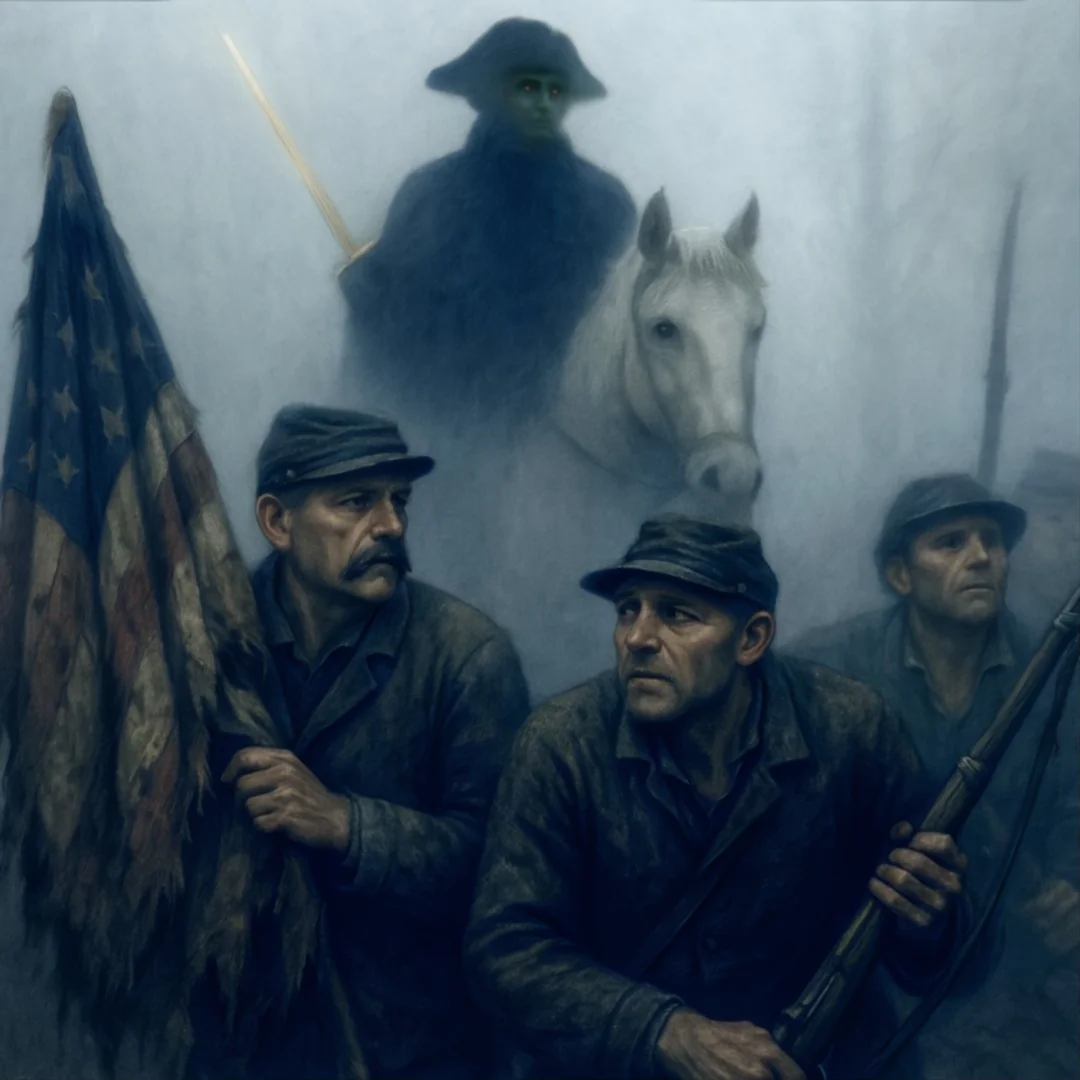
In the mid-19th century, the United States stood on the brink of self-destruction. The country was split between North and South, brothers turned enemies on the battlefield. The American sky, once born out of ideals of liberty and equality, was now clouded with the smoke of the Civil War (1861–1865)—the most brutal conflict the young nation had ever seen.
The pivotal battle unfolded in a small town called Gettysburg in Pennsylvania in the summer of 1863, when Union (North) and Confederate (South) armies clashed in a bloody confrontation that lasted three days and left over fifty thousand dead or wounded.
There, amid cannon fire and the cries of the wounded, something happened that would live on as one of the most mysterious and stirring moments in American military history:
It was said that a black angel appeared to Union soldiers at their lowest point, and later they realized it wasn't a heavenly angel—it was the spirit of George Washington, founder of the American Republic and its first president, returning from beyond to inspire them and urge them to stand firm.
That story became the spark linking the Civil War to the very founding of the nation—between its long-dead founder and the soldiers now fighting to preserve all he had built.
Since that strange night at Gettysburg, one question has lingered:
Did Washington really return from the afterlife to defend the Union?
And was his death truly natural, or is there a secret that remains uncovered?
He Remained on the Battlefield
According to the tale, Union troops in the front lines were on the verge of collapse as bullets rained down like a storm and officers' shouts vanished into the haze of gunpowder.
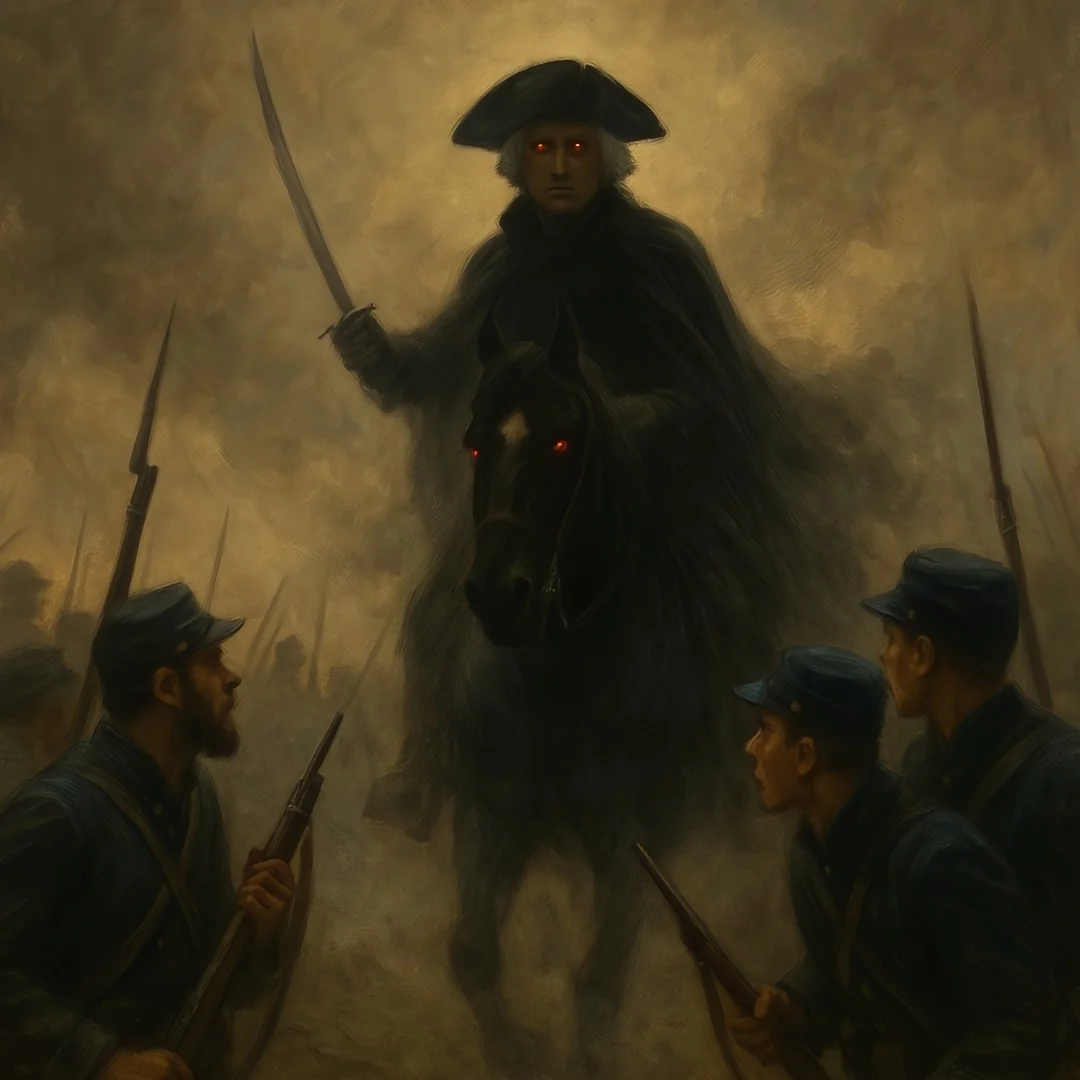
At that desperate moment, some claimed to see a man approaching on a white horse, dressed in an old military uniform, sword raised high to the sky.
He was unlike any other commander—stern-faced, his eyes burning like embers in the dark. He walked calmly through the fire, his voice echoing: 'Forward, men! The Union will not fall!'
One astonished officer reportedly whispered to his comrade:
— "Do you see what I see?"
— "Yes… He looks just like George Washington!"
The soldiers surged after him, as if drawn up by an unseen force. When the battle smoke cleared, there was no sign of the mysterious figure—but the tide had turned in their favor, as if victory itself had ridden with that apparition.
From then on, surviving soldiers swore they had witnessed something beyond explanation. Some called it a dark angel with a shining white face, others said it was the founding father’s spirit returning at a time of danger to protect his people.
The Father Who Never Left
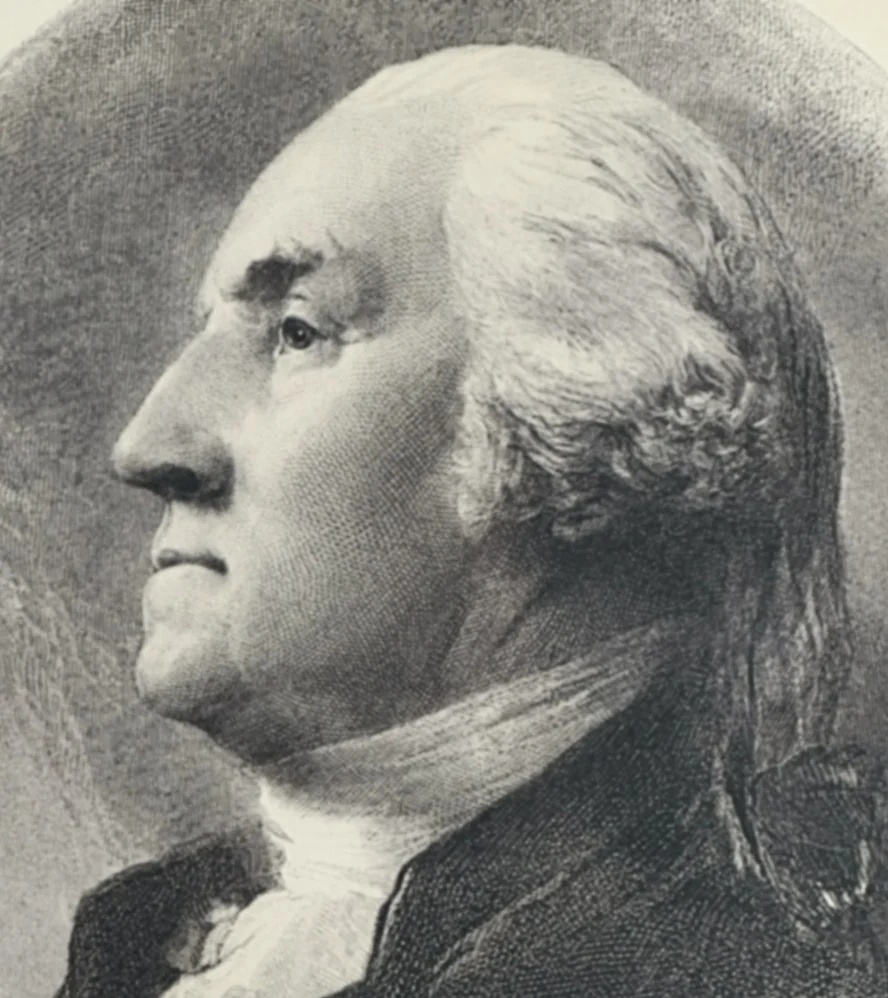
For Americans, George Washington was as central as Saladin to Arabs or Alexander the Great to the Greeks—a symbol of national origin.
He died in December 1799 at his Mount Vernon estate, after suddenly developing a severe throat infection.
That night, his condition deteriorated rapidly. With the limited medical knowledge of the time, doctors drew nearly two liters of blood from him in hopes of reducing his fever. But the loss was too great—he drifted in and out of consciousness and finally passed away, whispering to his loyal servant, 'All is well now.'
Still, rumors quickly spread. Some whispered that Washington hadn’t died of illness but had been killed, that one of his doctors had purposely bled him out out of jealousy or under political orders, to prevent his return to power after his second term.
Nothing was ever proven, but mystery surrounded those final hours, as if something had been left unfinished.
Washington was also said to possess uncanny foresight. Years before his death, he wrote of fearing the nation would one day split over slavery, warning: 'The sons of the Union will fight each other on one land.' When war erupted in 1861, it seemed his prophecy had come true. Read more about Washington’s Prophetic Visions.
Was the apparition at Gettysburg a continuation of the strange, almost fateful connection between Washington and the destiny of his country?
Washington After Death
Since the Battle of Gettysburg, the site has become a national shrine—and the center of some very strange tales. Visitors have sworn they saw a man in 18th-century attire walking among the graves, or heard a deep voice repeating phrases about freedom and unity.
Some have even described a distinct scent of tobacco and leather clinging to these encounters, just as Washington was known for in life.
The most commonly reported vision is that of a rider dashing across the hills at midnight, hand raised toward the east before vanishing into the mist.
Every time the story is told, it's said that the battle that preserved the nation’s unity was more than a military turning point—it was a spiritual event that joined past and future, reconnecting the nation’s founder with the descendants who kept his legacy.
From Legend to Symbol
Perhaps the 'Black Angel' was nothing more than a collective embodiment of hope in a moment of despair, or a shared illusion born from fear and longing. Yet for Americans, it became a permanent symbol—proof that Washington’s spirit never truly left them.
Some historians suggest the legend spread after the war as a way to add sacred meaning to a bloody victory, while believers in the supernatural see it as evidence that the founder’s spiritual energy continued to guard the nation long after his death.
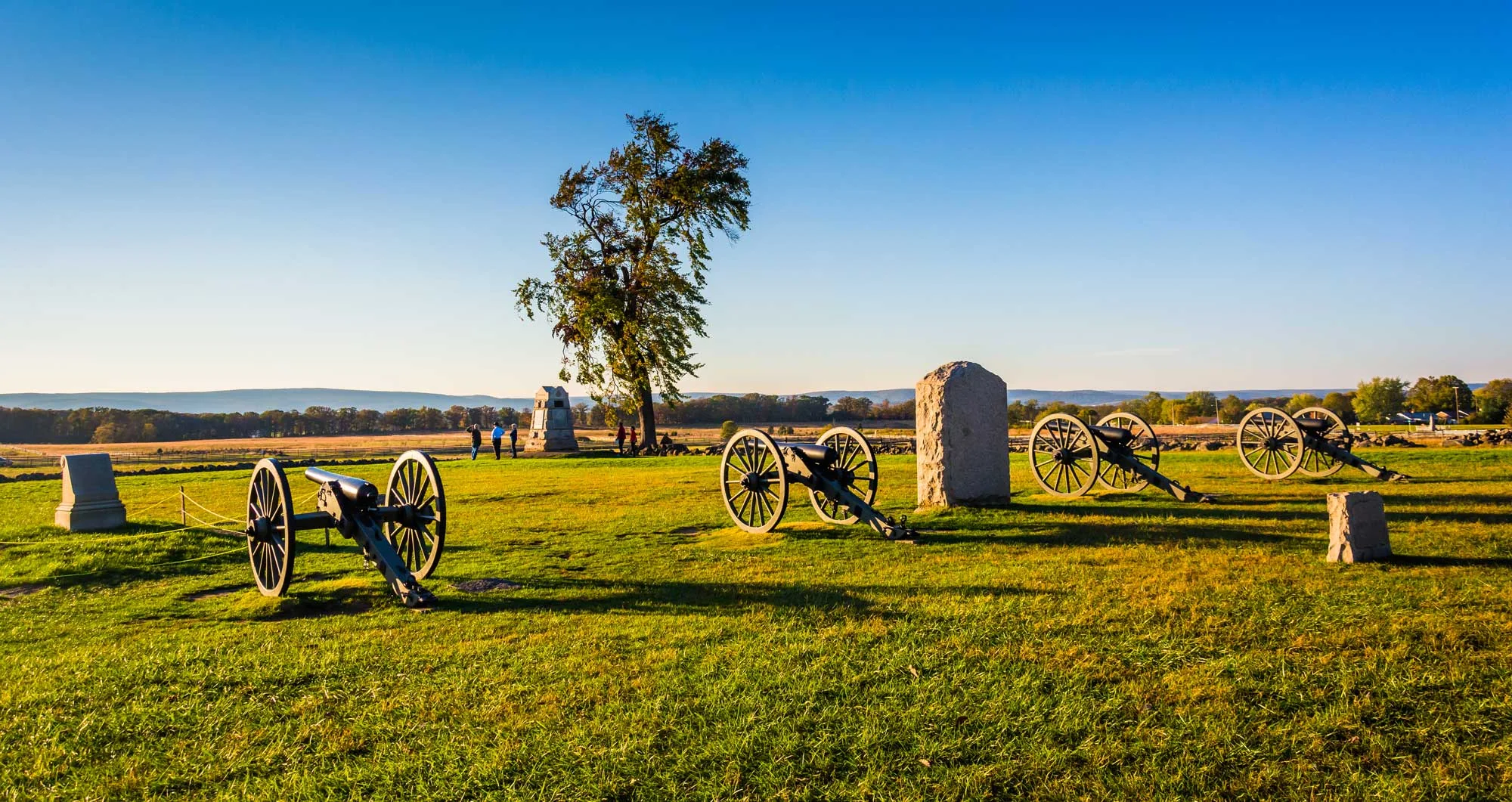
Regardless of the interpretation, the scene at Gettysburg remains vivid in memory: a small town that witnessed the horrors of war, where the ghosts of fallen soldiers are still said to appear.
Visitors report hearing footsteps on the hills, the groans of the wounded carried by the wind, and fleeting shadows that flash across the fields before vanishing… as if the land itself still remembers those who fell upon it.
About the Author



No comments:
Post a Comment