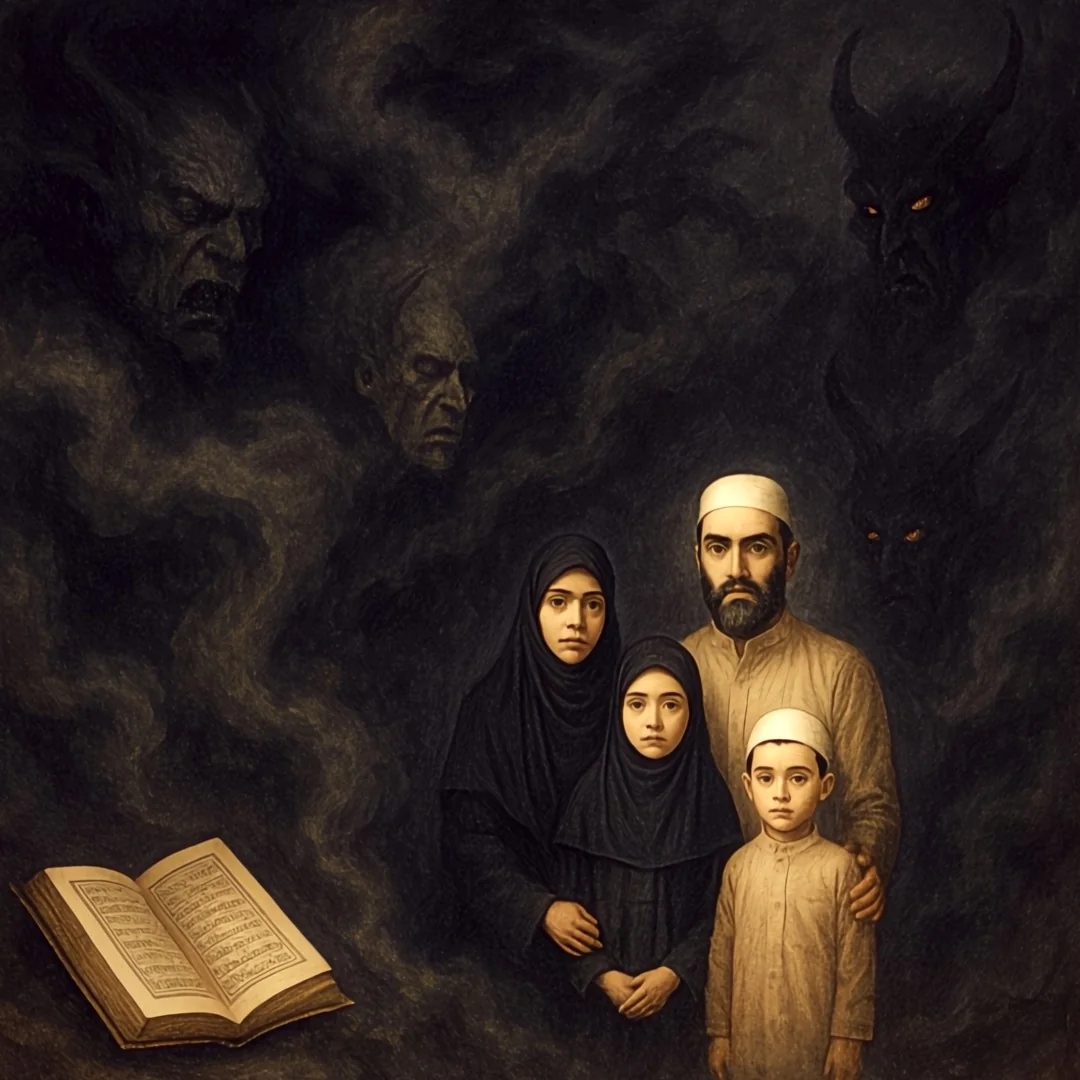
Stories about possession, black magic, and supernatural lovers circulate daily in Arab and Islamic societies. These tales often come from religious and conservative families who turn to the unseen world for explanations when medicine or logic falls short.
As a researcher in the paranormal, I've spent over a decade collecting hundreds of firsthand accounts. Most come from religiously observant communities where faith shapes their worldview.
What's striking is that many people involved in these experiences are diligent in their religious practices—prayer, reciting protective verses, and listening to Quranic recitations. Some even become more devout as their experiences intensify. This raises a profound question: Does religious devotion offer protection from these phenomena, or can it sometimes create a fertile ground for their emergence?
Religion as a Framework for the Unseen
Belief in the unseen is a fundamental pillar of Islam. Over centuries, it has fostered a worldview where the material and spiritual realms are deeply intertwined. When faced with mystery or psychological distress, the immediate cultural response tends to be: 'cursed,' 'possessed,' or 'envied.'
Religion here doesn’t directly cause supernatural experiences, but acts as a lens through which people interpret them. Children raised on stories of jinn, curses, and evil eyes are primed to recall these concepts whenever something inexplicable happens.
Religious Upbringing and Fear of Straying
In devout families, moral missteps are seen as openings for evil influences. Guilt and fear of divine punishment increase under this pressure. With suppressed feelings or emotional unrest, psychological struggles can morph into supernatural projections: demonic lovers, whisperings of the devil, spells preventing marriage, or the evil eye derailing success. These explanations relieve personal blame, but can trap individuals in a perpetual cycle of religious fear.
The Conservative Community and Collective Memory
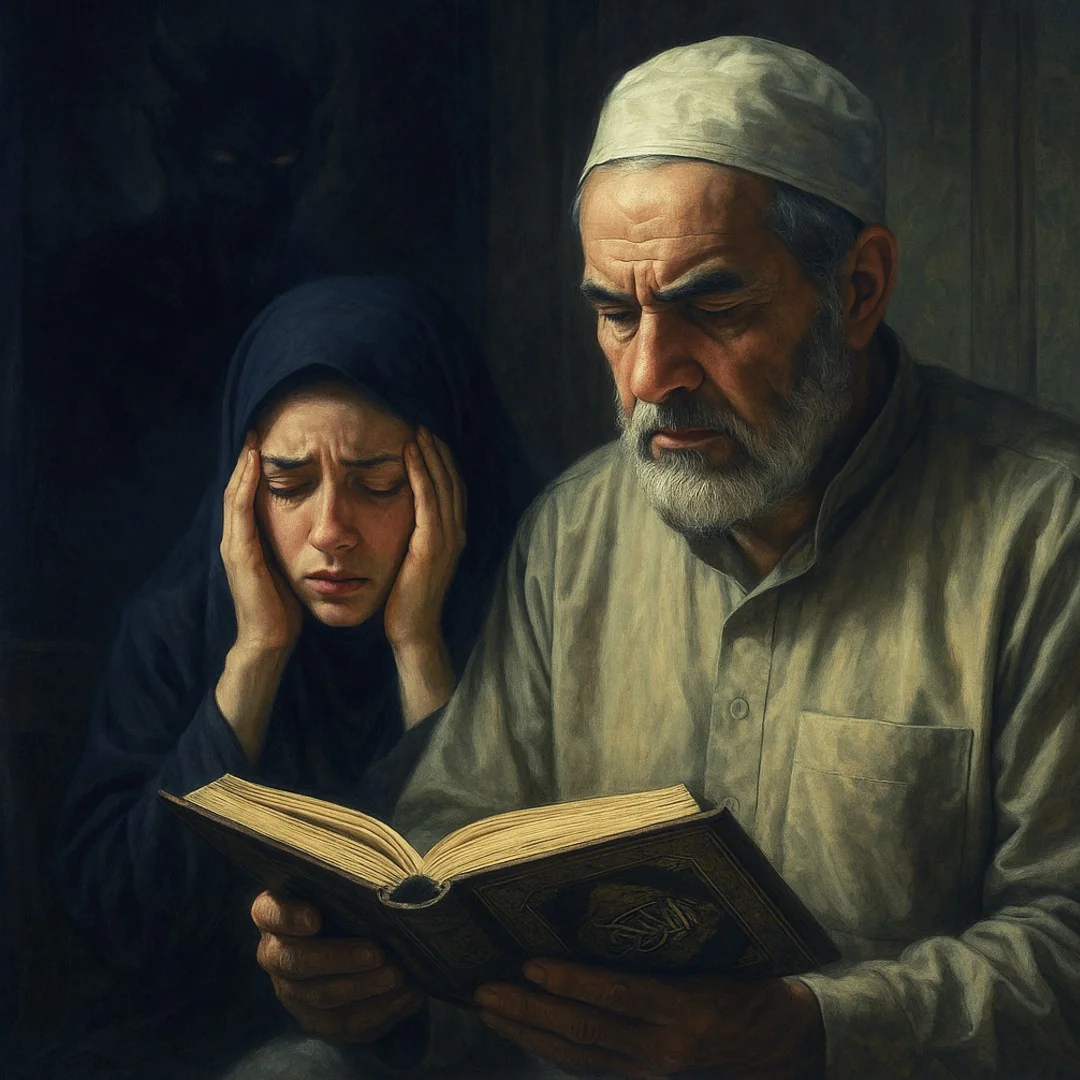
In conservative environments, mental health issues are rarely discussed openly. Depression is labeled as 'possession,' anxiety as 'witchcraft,' and schizophrenia as 'demonic influence.' These ideas are handed down through generations, becoming embedded in the collective memory. In such families, relatives may 'diagnose' a condition before a doctor does: 'Our daughter has a love-struck jinn; she screams when the Quran is recited.' Medical professionals might simply see panic attacks or mental disorders.
Societies with Little Emphasis on the Paranormal
By contrast, countries like those in Scandinavia or East Asia, where children aren’t raised on supernatural beliefs, rarely report stories of possession or magic. This isn’t because the unseen is absent, but because the culture lacks supernatural explanations for psychological issues. Distress is treated as a medical matter, not a spiritual one, and addressed in clinics rather than faith healing sessions.
Education and Culture: The Silent Safeguard
Higher education and awareness reduce the tendency to attribute mysterious events to the supernatural. Educated individuals recognize that hallucinations can have medical causes, and that dreams and visions aren’t always messages from another realm.
On the other hand, low levels of education make it difficult to distinguish between metaphor and reality, blending psychological suggestion with religious belief, creating immersive 'paranormal' experiences in people’s minds.
A Common Family Scenario
In many religious Arab homes, mothers recite Quranic verses to their daughters before bed to protect them from nightmares or unseen threats. Children are taught to repeat these verses nightly, as a shield against 'jinn,' the evil eye, or harmful spirits.
While the intention is spiritually noble and strengthens the bond between mother and child, psychologically it can instill an ongoing sense of threat from invisible forces. Rather than sleeping peacefully, the child may begin to imagine terrifying entities lurking, waiting for her to let her guard down.
The healthier approach is to teach children calmness and confidence, nurturing their sense of safety and trust in God without fear. Persistent fear of the supernatural can evolve into chronic anxiety or mental health problems, which parents might later misinterpret as evidence of spells, jealousy, or possession.
Faith isn’t about living in constant fear of evil. It’s about trusting that goodness is stronger than fear, and true protection comes from inner peace rather than constant dread.
Culture-Bound Syndromes
In cultural psychology, there's a condition known as Culture-bound syndrome, which refers to patterns of mental disturbance closely tied to a particular cultural or religious background.
In these cases, it’s not the experience itself that’s unusual, but the way it is understood. Our minds interpret what we encounter not in a vacuum, but through the cultural filters we inherit.
When culture is saturated with supernatural ideas—jinn, magic, the evil eye—any psychological or bodily disturbance can be interpreted as something mystical.
And so, anxiety, hallucinations, nightmares, and dissociation become 'possession' or 'black magic,' not because these forces are truly present, but because cultural beliefs dominate collective consciousness.
This interplay between culture and the mind creates the unique landscape of paranormal experiences in Arab and Islamic societies, where religious teachings mix with popular myths, forming a worldview that can be impenetrable for conventional psychiatry without cultural awareness.
Psychiatry: An Ally to Faith, Not Its Opponent
Psychiatry shouldn’t be seen as an enemy of faith, but as its complement. Psychological insight doesn’t exclude the unseen—it clarifies how spiritual experiences can sometimes arise from within. Faith and science are not at odds; rather, faith frames science ethically. The key is not to abandon belief, but to acknowledge that some cases labeled 'magic' may actually be cries from within ourselves, not signs from another world.
Religious families should treasure their faith as a source of strength and balance, but also recognize that ignorance of science leaves room for delusion. Wisdom lies in uniting spiritual and medical care—in combining Ruqyah with therapy, Quran with medicine, faith with reason. Not every paranormal occurrence has its roots in the supernatural—sometimes, it’s simply our own lack of self-understanding.
Ultimately, the prevalence of supernatural experiences in religious households does not point to a weakness of faith, but highlights the strong cultural influence of the unseen in shaping collective consciousness. When we grasp the interplay between psychological and spiritual life, we see that the paranormal is less about breaking nature’s laws and more a mirror reflecting our inner depths, culture, and fears.
About the Author



No comments:
Post a Comment