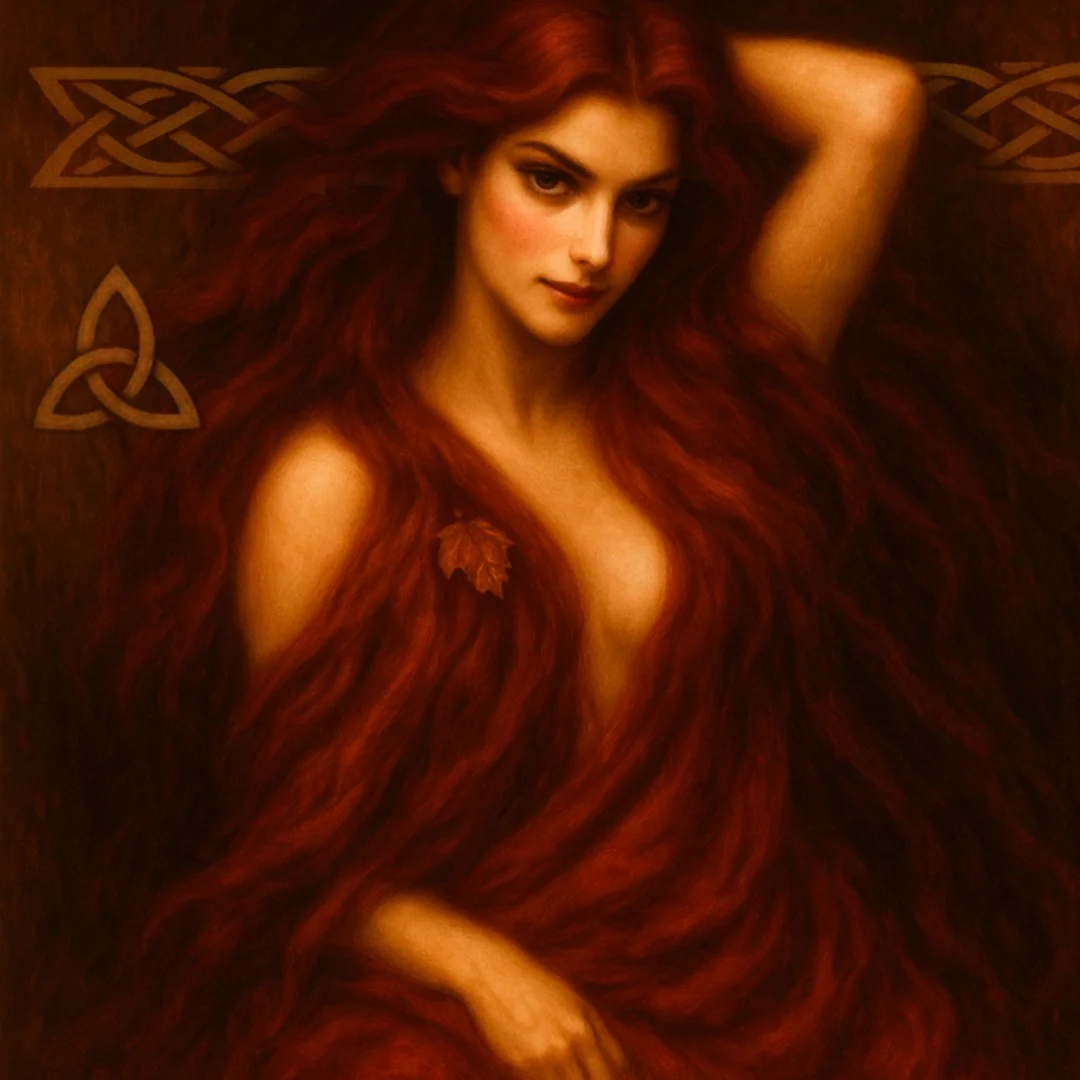
At the heart of Irish folklore stands the Leannán Sídhe, an enchanting fairy from the hidden hills—a vision of stunning beauty, intoxicating presence, and the irresistible promise of inspiration.
But inspiration comes at a price: a life that burns out faster, a lover who fades at the height of their passion.
Thus was born one of European folklore’s most iconic femme fatales: a being who ignites creative genius in the poet’s soul, only to feed on that brilliance until it is utterly spent.
Origins and Mythology
The name fuses two Gaelic words: Leannán (lover) and Sídhe (fairy folk dwelling in hills), meaning ‘the fairy lover.’ She belongs to the Aos Sí, said in ancient legend to descend from the Tuatha Dé Danann—a mystical race who retreated to hidden mounds and worlds at the edges of ours.
Though the legend is old, the Celtic Revival of the late 19th century brought her back to life: Jane Wilde described her in 1887 (as Speranza) as a muse for poets, and W. B. Yeats (1888) reimagined her in darker tones—a spirit who 'drinks the soul’s energy.'
What does she look like? How does she act?
She is always depicted as breathtakingly beautiful, appearing to her chosen one in whatever form most captivates them—as if stepping straight from their dreams. She seeks a human lover, often an artist, poet, or musician, and offers endless love and inspiration. To accept is to unlock creative genius and close the path to salvation.
But there is a cost: she feeds on her lover’s life force so they waste away, just as Yeats wrote—a rush of inspiration followed by physical and mental decline, sometimes ending in madness or an early death. In some stories, it doesn’t even end with death: the lover’s soul remains trapped in her realm forever.
Folklore warns against taking a fairy lover: such a relationship might bring extraordinary skill or knowledge, but she is possessive and cannot bear to share her beloved with the world.
Jane Wilde, in her chapter on ‘Eodain the Poetess,’ cast the Leannán Sídhe as a 'spirit of life' who inspires poets and singers, drawing a bright contrast with the Banshee, harbinger of death—emphasizing wisdom and empowerment for heroes and kings. the Banshee as a warning of death; a more positive approach that highlights the strength and insight she grants to chosen mortals.
Years later, Yeats cemented her stormier image: 'If you refuse her, you become her slave; if you accept, you become her king…she lives on their lives while they fade,' thus establishing the inspiration/destruction duality which defines her modern legacy.
Genius That Burns Too Bright
She is perhaps folklore’s purest symbol of the muse who both illuminates and destroys—unleashing a flood of creativity in art, music, and poetry, then gradually drawing out her lover’s life. In Irish imagination, she is woven into the myth of artists dying young: 'Live fast…die inspired.'
Modern psychology sees her as the personification of genius’s price: addictive inspiration, isolation, alienation from body and life—costs paid by many creatives down the ages.
Escaping Her Spell—Is There Any Way Out?
A handful of Manx and Scottish tales speak of rare survivors—those who broke free through sheer will, magic charms (like red rowan), or by transferring her 'bond' to another. But even stories of escape allow for it only once in a lifetime, and often through dark means.
Between the Succubus and the Vampire
How does she compare to the Succubus? Both are alluring females who drain their lover’s vitality through intimate or emotional connection, but the Leannán Sídhe inspires artistry in return for her fee, whereas the succubus in Christian lore tempts without rewarding inspiration.
Her resemblance to vampires is mostly metaphorical: she drains life energy, bringing about her lover’s decline, but doesn’t literally drink blood. That’s why modern culture sometimes calls her a 'muse vampire' instead.
Presence in Contemporary Culture
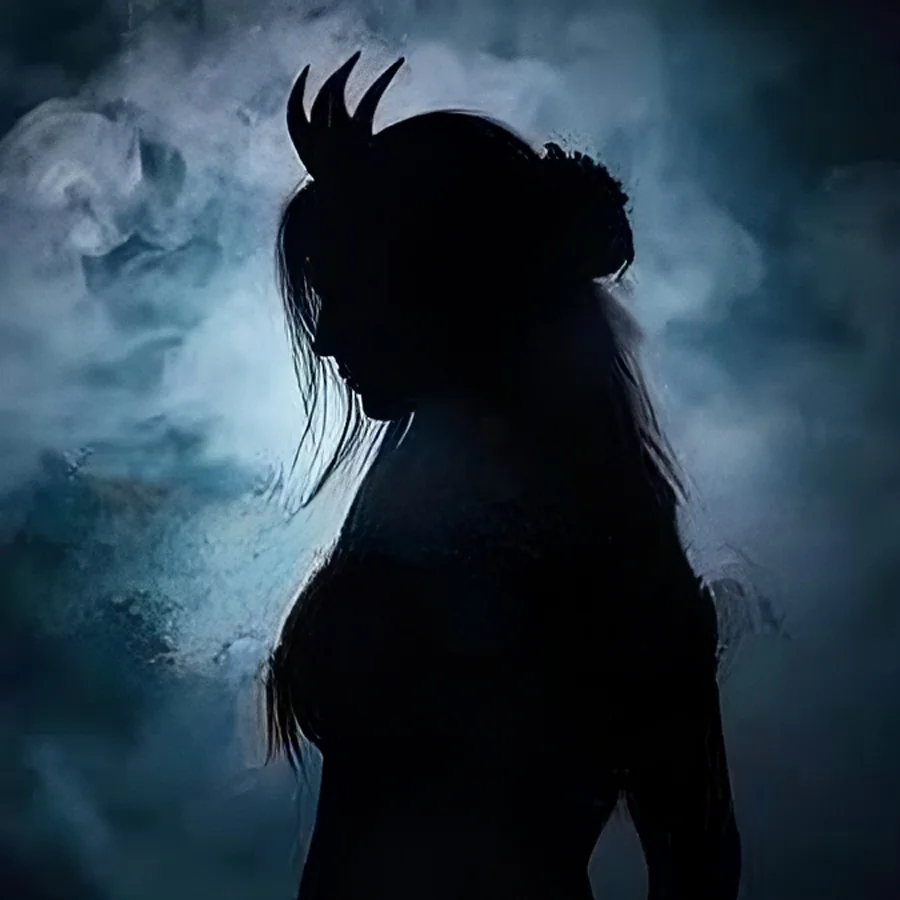
The Leannán Sídhe appears in modern fantasy literature and popular series like The Dresden Files as a bewitching fairy from the Winter Court, taking on the role of an urban enchantress.
In gaming, she features in worlds like White Wolf’s Changeling the Dreaming, portrayed as a beautiful fairy who inspires artists while draining their life—a direct reflection of the myth. Fantasy universes like D&D have embraced her too, calling her a 'kiss of death' with shapeshifting abilities.
Anime and manga often cast her in a tragic-romantic light—such as in Monogatari, where she falls for a human creator, inspiring him even as her nature slowly consumes his life.
In film and visual art she has inspired movies, poems, and digital works that play with her dual nature—seduction and danger, always reimagined as the darkly alluring muse.
Symbolism and Cultural Meaning
- Destructive Inspiration: A cautionary tale about the dangers of burning too bright—creativity that costs one’s health, relationships, perhaps even life itself.
- Obsession and Toxic Love: Echoing the 'femme fatale' archetype, with its jealousy, possessiveness, and all-consuming passion that leads to the lover’s downfall.
- The Demonic Remnants of a 'Muse'Some modern scholars suggest she is a reimagined version of an ancient muse, gradually 'tamed' by religious tradition over the ages.
- Beauty as an Aesthetic Threat'Beauty that terrifies' recalls the legacy of Romanticism and Gothic art, where sublimity and predation collide.
- The Art Endures, the Artist FadesThe song lives on after the singer is gone… The muse remains, a testament to creativity's power to outlast mortality—even at a steep cost.
Why Does This Myth Matter Today?
Because it's a clear reflection of a modern tension: how do we balance creativity and living? The brilliance of art with the risk of burning out? Liannan Shi isn’t just a frightening tale; she’s a metaphor for our dangerous alliances with the powers that inspire us, and how beauty can become obsession. Maybe that’s why this myth keeps resurfacing in books, games, and on screen: it captures the artist's—and lover’s—eternal question: how much of your soul are you willing to sacrifice for inspiration?
About the Author



No comments:
Post a Comment