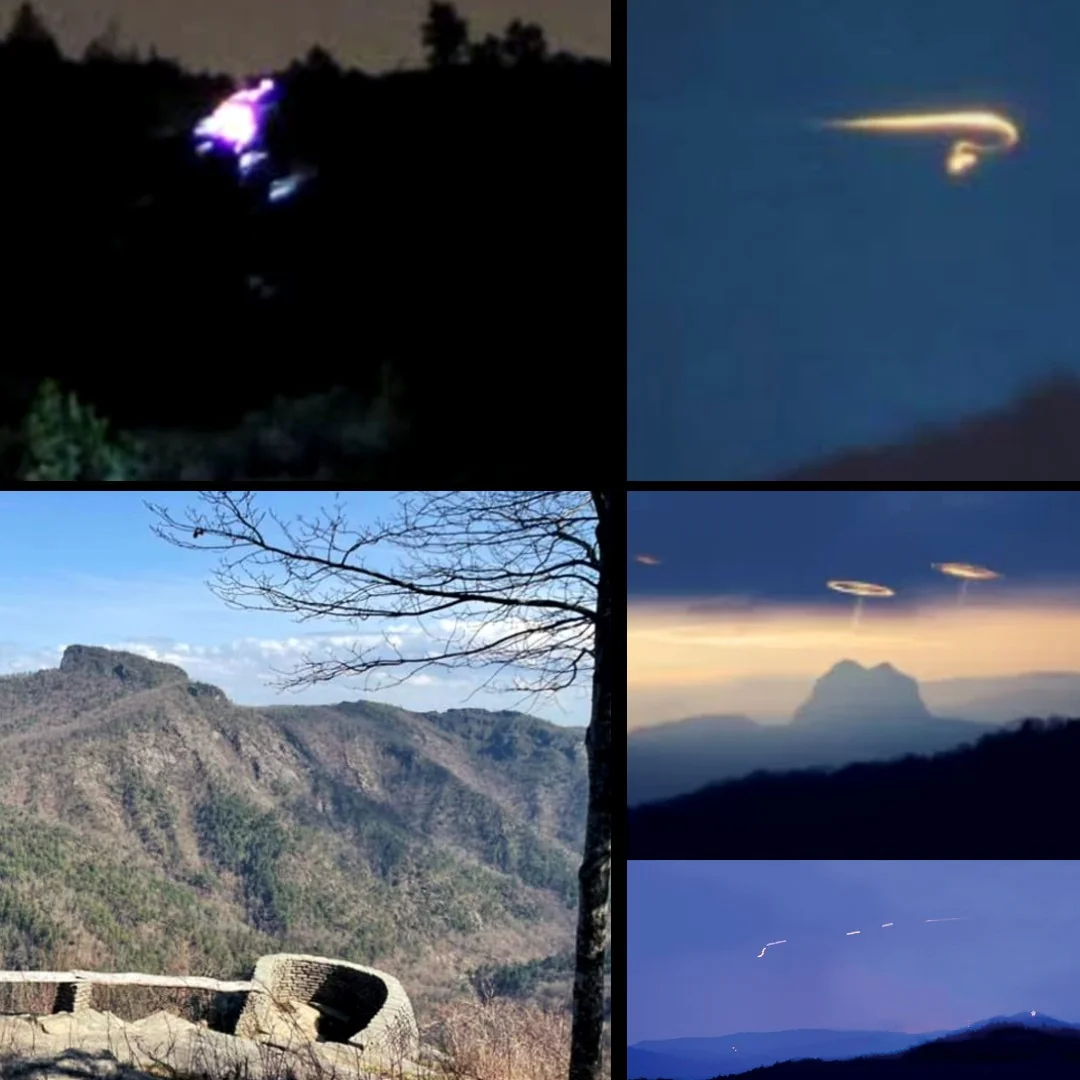
Nestled in the Blue Ridge Mountains of northwestern North Carolina, a modest peak called Brown Mountain (Brown Mountain) stands out—not for its height, but for a mystery that’s baffled scientists and locals for decades: strange spheres of light that appear at night, floating above its slopes, glowing in shifting colors, then vanishing without a trace. These mysterious orbs, known as the “Brown Mountain Lights – The Brown Mountain Lights,” are among the most documented unexplained phenomena in American history.
The origins of the mystery
According to legend, the Cherokee (Cherokee) and Catawba (Catawba) peoples witnessed these lights long before Europeans arrived, believing them to be the souls of fallen warriors searching for their way to the sky.
Modern records of the phenomenon began in 1913, when a local observer wrote to a newspaper describing lights over the mountain at 7:30 p.m. that reappeared around 10 p.m. The story spread quickly, drawing crowds of the curious who wanted to see what became known as the “Brown Mountain Lights.”
Eyewitness accounts
Observers report seeing glowing orbs slowly rising from the foot of the mountain, shimmering in white, orange, blue, or green. Sometimes, they appear to float five to fifteen feet above the ground before gradually fading.
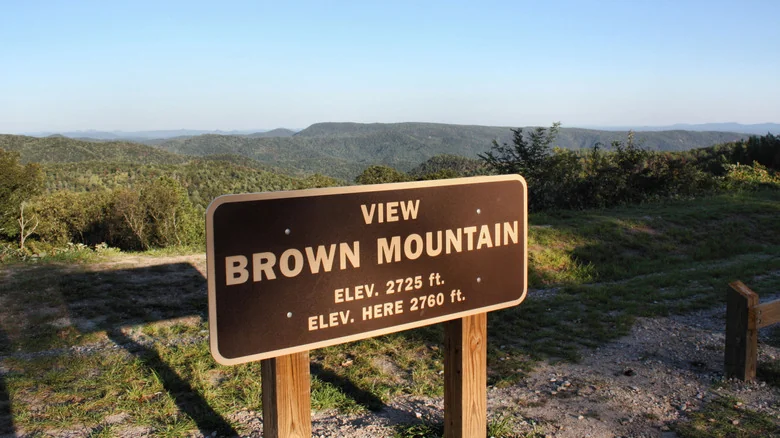
In some sightings, the lights grow larger as they rise and then burst noiselessly, like silent fireworks. Witnesses say the displays can be random—weeks might pass without a sighting before the lights suddenly appear on a clear night, captivating onlookers at well-known viewing spots such as Wiseman’s View “Wiseman’s View” or “Brown Mountain Overlook”.
Scientific attempts at explanation
1- Investigations in the 20th century
In 1922, the U.S. Geological Survey (U.S. Geological Survey) sent a team led by geologist George Mansfield to investigate. After weeks of observation, Mansfield concluded that most of the lights were the result of car headlights and train lamps from nearby valleys, as well as brush fires common in the region.
But local residents weren’t convinced: the lights had reportedly been seen before automobiles arrived, and sometimes appeared in directions where there were no roads or railways.
2- Atmospheric refraction hypothesis
With advances in atmospheric optics, scientists proposed another explanation: that lights from distant towns could be refracted and reflected by moist, cool air layers, making them appear to emanate from the mountain itself. Field experiments in the 1970s proved this was possible under certain pressure and humidity conditions, but it still failed to account for all reports.
3- Ball lightning and electrical phenomena
Some researchers have suggested the Brown Mountain Lights may be a form of Ball Lightning, a rare atmospheric electrical event. Others have speculated about glowing methane from decaying organic materials or underground electric charges, but geological studies haven’t found enough tectonic or gas activity to support these ideas.
A recurring mystery in the age of cameras
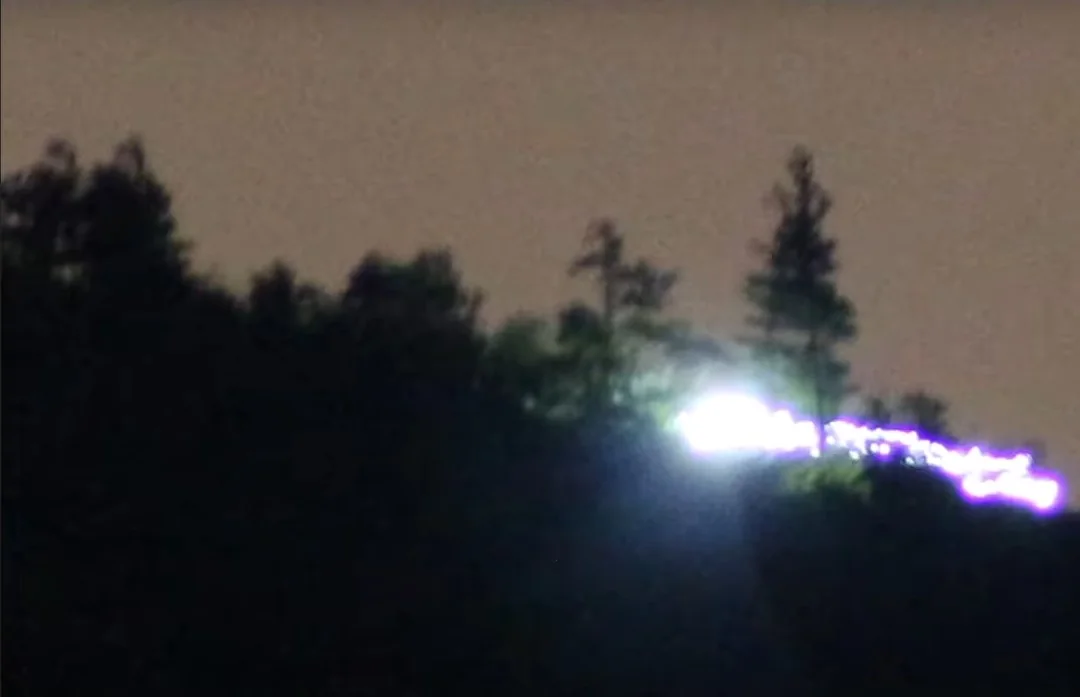
Since the 1990s, a team from Appalachian State University has deployed sensitive night-vision cameras to monitor the lights. Thousands of hours of footage have captured many events easily explained by human activity or light reflections, but a handful of cases—especially in 2016—showed slow-moving orbs that vanished suddenly with no visible source or known spectral signature, reviving the mystery.
The Hessdalen lights: a similar phenomenon?
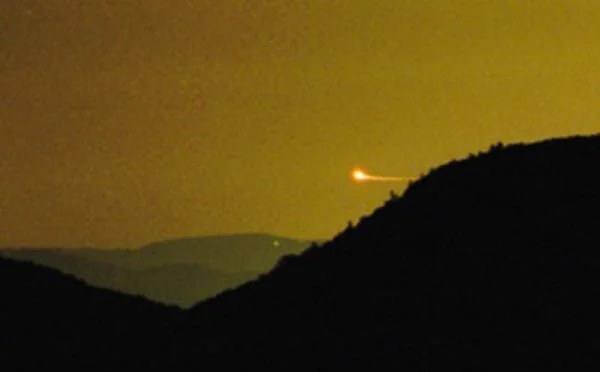
In Norway’s remote Hessdalen Valley, a similar baffling phenomenon has been recorded since the 1980s: the Hessdalen lights—glowing spheres that drift slowly across the sky, flashing white, blue, or gold, and then disappear in silence. Scientists have theorized they may be plasma produced by electrical reactions between minerals and moisture in the iron- and sulfur-rich soil, but some sightings are still unexplained. Like the Brown Mountain Lights, Hessdalen reminds us that there are forces at work on Earth that science has yet to fully understand.Between science and legend
Despite extensive research, the legend of the Brown Mountain Lights remains rooted in American folklore. Some say the lights are the lost souls of escaped slaves or servants, others claim they’re the ghosts of Native warriors, or even visitors from other worlds. The phenomenon has inspired songs, plays, documentaries, and is now part of the region’s identity, drawing visitors each year hoping to see the lights for themselves.
Why do some lights remain unexplained?
It seems that the Brown Mountain Lights aren’t a single phenomenon, but rather a mix of sources:
- Human-made lights and reflections account for most cases.
- Rare weather conditions produce misleading visual effects.
- Possible but extremely rare atmospheric electrical phenomena.
Yet, around 10% of sightings defy explanation—especially those reported by people in different locations at the same time, making hoaxes or illusions unlikely.
Some theories suggest these lights could be temporary plasma formed at the intersections of Earth’s electromagnetic fields—an idea that blends quantum physics with esoteric beliefs about “gateway points” in nature.
Why does the phenomenon keep inspiring our imagination?
It comes down to this: the Brown Mountain Lights blur the line between science and legend. They’re clearly seen and documented but aren’t always explained, leaving the door open to everything from atmospheric optics to energy fields—or even extraterrestrial visitors. In that gray area, the mystery thrives, making Brown Mountain one of the last places in America where the unknown still shines bright in the night.
Have scientists solved the mystery?
Most cases have been explained, but not all. The phenomenon appears to be a blend of physical reality, perception, and collective imagination. Like many other unexplained phenomena around the world, the Brown Mountain Lights are a reminder that the boundaries of what we know are wider than we think—and that just because something hasn't been understood yet doesn't mean it doesn't exist.
About the Author



No comments:
Post a Comment