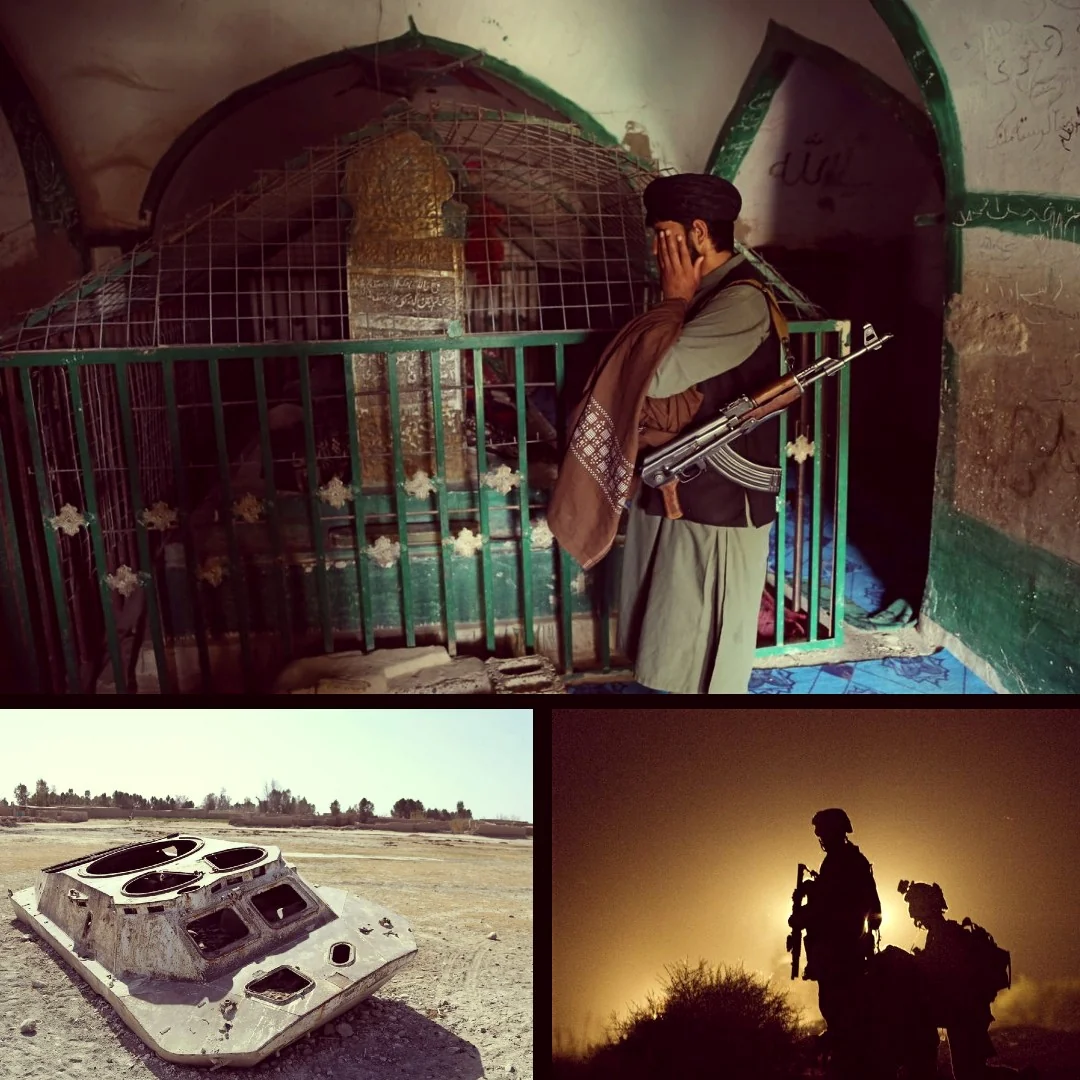
In the heart of Afghanistan’s Helmand province, surrounded by barren desert and the scars of past wars, stands a crumbling tomb known as the Shrine of Amir Hamza.
This is a place where history and holiness collide, and where local faith intertwines with legends that defy logic.
Over generations, this modest shrine—visited for its blessings—has become a center of myth and supernatural tales, shared by locals and soldiers alike.
Origins and Mystery
No one truly knows who Amir Hamza was. Some say he was a pious, anonymous figure from ancient times, perhaps one of the region’s revered saints. Others believe he was a tribal leader or even a mujahideen commander killed during the Soviet invasion.
Despite these varying accounts, everyone agrees that the shrine has stood for centuries. The surrounding village, known as Amir Agha, takes its name from the shrine, making it one of southern Afghanistan’s oldest sacred sites.
Location and Description
Perched atop a rocky hill in the Garmsir Valley, the shrine is enclosed by a green metal fence. Faded Pashto inscriptions cover its weathered walls, and inside lies a tall stone marker inscribed with worn Quranic verses, dust, and melted candle wax left by visitors. The structure may be simple, but its presence looms large in local consciousness.
One visitor described the experience: "Climbing the hill, you feel as if the air changes—like entering another world."
Legends and Mysteries
The Shrine of Amir Hamza is famous not just for its age, but also for the stories that surround it. During the 1980s Soviet invasion, locals say Russian tanks advanced toward the shrine only to become mysteriously stuck in mud, which was seen as a miracle attributed to Amir Hamza’s blessing.
Another tale tells of a Russian shell fired at the hill that passed into the shrine’s chamber, didn’t explode, and rolled out the other side before detonating far away, as if unseen forces protected the tomb.
In recent years, American and British soldiers stationed nearby at Observation Point Rock have shared eerie accounts of their own:
Some reported hearing Russian voices in the middle of the night despite no one being around, or seeing mysterious lights flicker above the shrine only to vanish. One soldier recalled repeatedly hearing the phrase: “Brozay oruziye” (Drop your weapon) echo in the darkness.
With no explanations, many came to believe the site was haunted by the war dead.
Folk Rituals and Practices
Despite the tales, the shrine remains a pilgrimage site for people from Helmand and beyond. Visitors come to seek blessings, recite Quranic verses, and make personal wishes at the tomb, trusting that prayers here are especially powerful.
Taj Mohammad, the elderly caretaker in his nineties, says: "Everyone who makes a wish here gets it, God willing. I’ve seen it happen hundreds of times."
This practice is part of a longstanding Afghan tradition, where people visit saints’ tombs hoping for healing, prosperity, or protection from harm.
Local Stories and Encounters
Many locals have stories that add to the shrine’s mystique. Juma Gul, the son of a local religious leader, says his father often recounted the shrine’s power—how the Russians could never cross its boundary.
Lala Jan, a former caretaker, recalls a night when foreign soldiers stole pieces of marble from the tomb. Days later, the soldiers suffered unexplained accidents and injuries, which villagers saw as a curse. Some visitors talk of a blue glow mysteriously appearing inside the tomb at night, unlike any natural light.
Social and Psychological Dimensions
Researchers suggest the mysteries around Amir Hamza’s shrine can be understood through a mix of cultural and psychological factors. Deep-rooted Sufi beliefs and a long tradition of faith in the supernatural make Afghanistan fertile ground for stories of djinn and ghosts. Years of war and trauma create a climate where people are likely to see or hear things that defy rational explanation.
Psychologists have observed that soldiers in conflict zones often experience auditory and visual hallucinations due to exhaustion and fear, leading them to interpret sounds or lights in supernatural terms.
Even so, the shrine undeniably holds a spiritual significance for the community—a place where shared suffering and hope blend, giving rise to legends that keep its story alive.
Beyond the Phenomenon
The Shrine of Amir Hamza is a living example of how myth grows from reality. A simple religious site has become a spiritual symbol, a place where the metaphysical meets collective memory and the legacy of war. Whether the voices and visions reported by visitors are real or fueled by fear and faith, they are woven into Afghanistan’s tapestry of mysticism, shaping the relationship between people, the sacred, and the unknown in a land steeped in legend and conflict.
About the Author



No comments:
Post a Comment