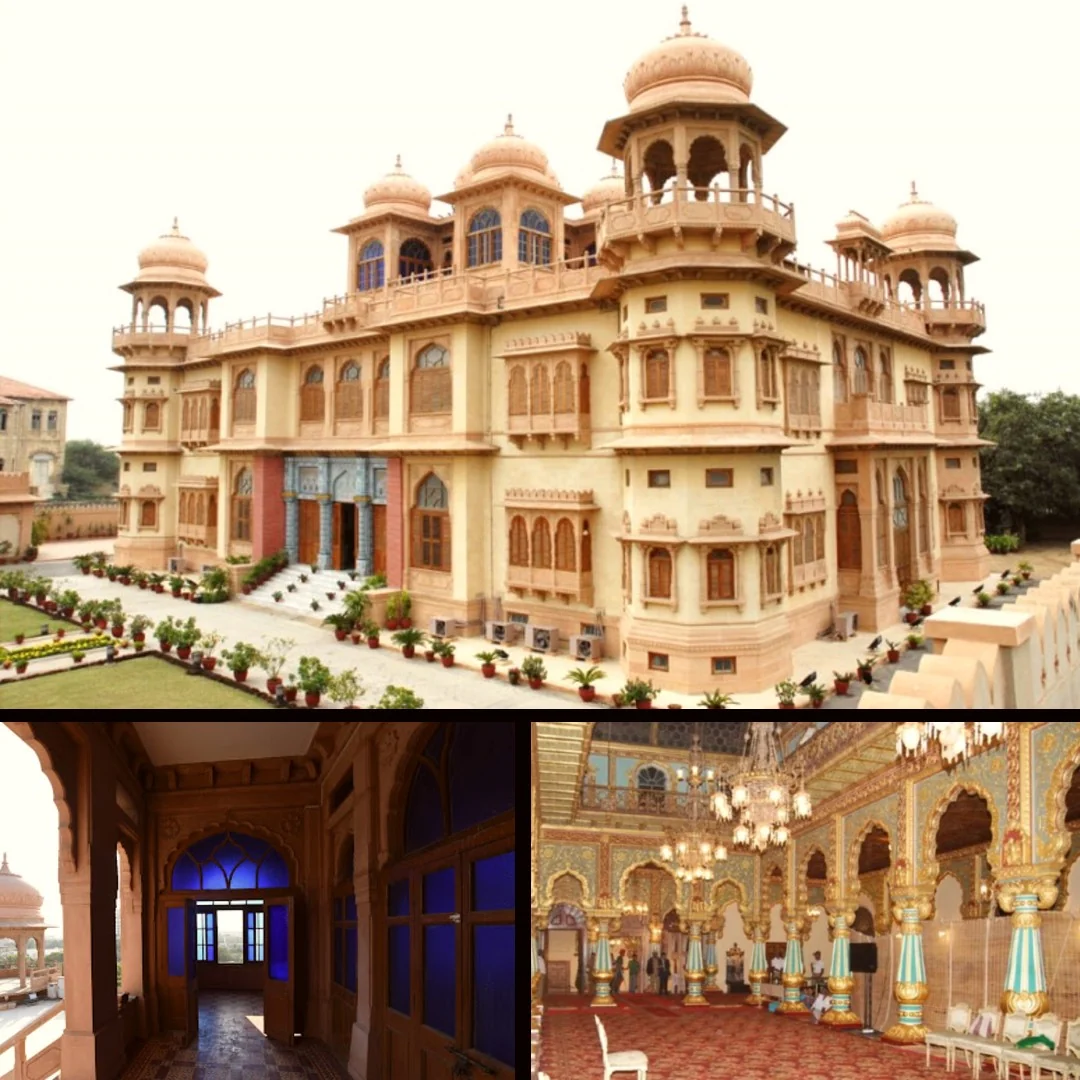
In the bustling city of Karachi, near Clifton Beach where the waves of the Arabian Sea crash against the Sindh coastline, stands a striking building of pink and yellow stone, blending Mughal ornamentation with lofty colonial windows. This is Mohatta Palace—one of the most beautiful and controversial palaces of the modern Indian subcontinent. More than an architectural marvel, it's become, in local lore, a place haunted by spirits and enigmatic shadows that emerge after nightfall.
From a House of Love to a House of Ghosts
Mohatta Palace was built in 1927 by the wealthy trader Rai Bahadur Seth Shivratan Mohatta as an expression of his love for his ailing wife. He wanted to offer her a seaside home, hoping Karachi’s moist sea air would restore her health. He commissioned the Muslim architect Agha Hussein Ahmed, who designed the mansion in the Anglo-Mughal style, using pink and yellow Jodhpur stone quarried from desert hills.
But the story didn’t unfold as Mohatta wished. After the Partition of India in 1947, Mohatta left for India, abandoning the palace, which was seized by the new government and used for a time as the Ministry of Foreign Affairs. In the 1960s it became the residence of Fatima Jinnah, sister of Pakistan’s founder Muhammad Ali Jinnah. She lived there in solitude until her death in 1967, marking the start of a new era of emptiness and silence.
For decades after, the palace remained closed and neglected, surrounded by dry shrubs and rusted doors. In 1995, Sindh Province acquired it, transforming it into a museum of art and national heritage. Visitors returned—and so did strange tales that no one could quite explain.
The Legend of the Secret Tunnel
Among the palace’s most enduring legends is that of a hidden tunnel. Popular stories claim that the architect built a secret passage under the palace connecting it to a distant Shiva temple, so Mohatta’s Hindu wife could perform her rituals unobserved.
Locals kept this story alive for years as the palace’s great mystery. But, museum officials later revealed the discovery was simply a narrow sewage conduit, far too small for a person to pass through. Still, the legend persists, symbolizing the mysterious undercurrents that seem to link this place to spiritual or hidden realms.
Nocturnal Sounds and Moving Furniture
Night guards have repeatedly spoken of hearing footsteps in the corridors after doors are locked, or of lights turning on even when the power is out. One guard, Taj Muhammad, told a local newspaper:
“When we were doing renovations, we would hear noises from the upper rooms as if someone was moving around. But when we checked, no one was there.” A museum curator confirmed that some staff quit their night shifts after feeling “something watching them” during rounds—although no one was physically harmed.
Such accounts, shared by staff and visitors, have earned the palace a local reputation in the media as "Karachi’s House of Ghosts."
A Place Marked by Absence
Cultural researchers in Pakistan note that the folklore surrounding Mohatta Palace is tightly interwoven with its history of exile and loss. Everyone who lived there departed under difficult circumstances:
- The original owner, forced to migrate to India.
- Fatima Jinnah, who spent her last days in seclusion.
- The long years of neglect, when the palace’s halls seemed frozen between the past and the era of independence.
This legacy of absence has given the palace an "emotional memory," revived every time its doors are opened. It’s little wonder that stories of restless spirits find such a home here.
The Official Stance and Attempts to Explain
Despite the prevalence of ghost stories, museum management officially denies any paranormal activity. Board member Hameed Akhund has stated, “These tales have circulated for years but there’s no clear proof.” He suggests the noises may be echoes in the spacious stone corridors or the effect of sea breezes blowing through arched windows.
Nevertheless, management now forbids night photography in the palace due to viral TikTok videos presenting it as a haunt for spirits, insisting this is to protect the cultural identity of the site rather than exploit it for entertainment.
The Palace Today
Since opening as a museum in 1999, Mohatta Palace has hosted art exhibitions and cultural events highlighting Karachi’s history and modern Pakistani art, becoming a major tourist attraction. Its reputation as a “haunted” site has only grown, enhancing its mysterious allure.
Tourists flock here by day to admire its striking architecture. By night, locals trade its legends—some believe them, others see them as products of collective imagination shaped by centuries of Sufi and mystical traditions mixing history with folk belief.
Beyond the Legend
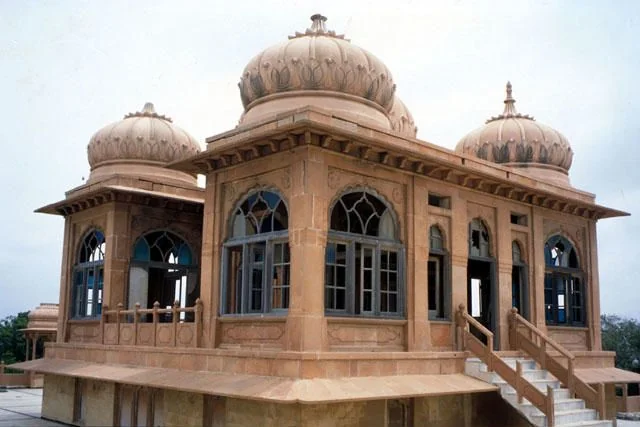
Whether or not we believe these stories, Mohatta Palace stands as a unique example of a place transformed from a symbol of love and beauty into one of mystery and myth. It embodies how cultures immortalize what history cannot fully explain: from a secret tunnel beneath the ground, to fleeting shadows on a wall, or an unexplained whisper in the dark.
In the end, one question lingers: Is what happens within these walls merely an echo of the past—or has the past itself never left?
About the Author



No comments:
Post a Comment