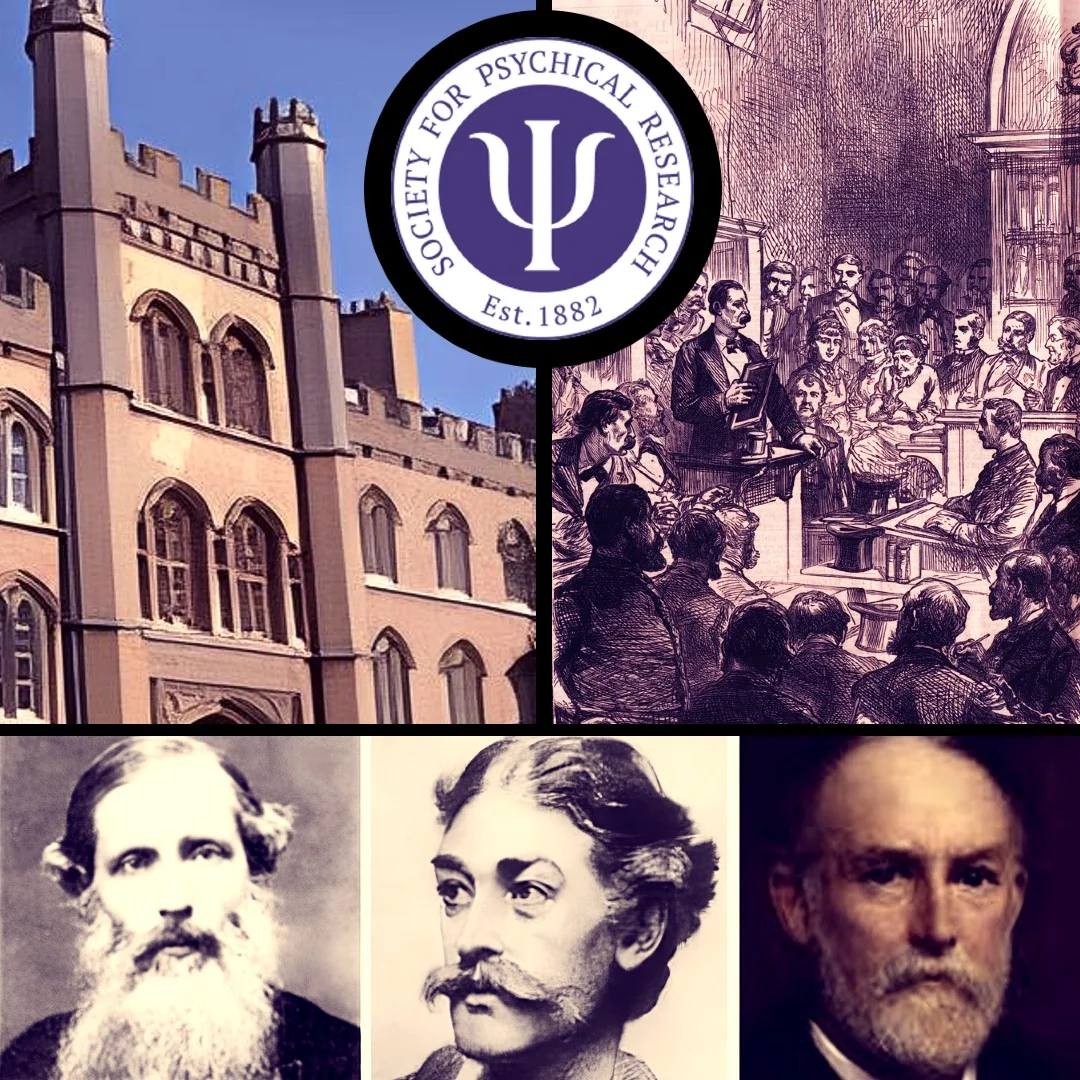
At the end of the nineteenth century, as Europe wavered between the shock of modern science and the allure of the spiritual, a unique society emerged in London with an ambitious aim:
" To study paranormal phenomena with the rigor of scientific inquiry."
This was the founding of the Society for Psychical Research Society for Psychical Research, commonly known as SPR, in 1882 — the first scientific organization dedicated to exploring the supernatural. Topics ranged from telepathy and ghost sightings to hypnosis and spiritual mediumship. The underlying idea was simple: what science cannot explain today, it might explain tomorrow—if only examined closely enough.
The Project Begins
The inspiration for the society was sparked at a conference in London in January 1882, called by a group of scientists and philosophers fascinated by mysterious psychological phenomena. Leading figures included:
- Henry Sidgwick: philosopher, ethics professor at Cambridge, and the society’s first president.
- Frederick William Myers: writer and psychologist, pioneer of the concept of the 'creative unconscious' and studies of telepathy.
- Edmund Gurney: psychologist specializing in hallucinations and hypnosis.
- William Barrett: distinguished physicist at University College Dublin.
- Eleanor Sidgwick: mathematics professor and Henry’s wife, among the earliest female researchers in Britain.
Other prominent members later joined, including Lord Rayleigh (Nobel laureate in physics), Arthur Balfour (future British Prime Minister), and American scholar William James from Harvard. This distinguished group believed that what was called 'spiritual phenomena' wasn’t necessarily superstition, but rather 'a field of knowledge yet to be properly studied.'
The Victorian Era: Science and Spiritualism Collide
Britain’s Victorian era (1837–1901) was a time of stark contrasts. On the one hand, natural sciences and material advancements flourished; on the other, séances and spiritualism became fashionable in upper-class society. People lived between the rational and the fantastical, between electric light and the mysteries that haunted their imaginations. In this dual climate, the SPR society took root—neither a religious movement nor a mystical club, but a scientific endeavor determined to examine the unknown with experimental methods.
Early Research: Telepathy, Visions, and Haunted Houses
The SPR society launched its activities through specialized committees focused on specific phenomena:
- Telepathy (Telepathy): They carried out group experiments to measure thought transmission across distances, yielding some intriguing results that defied easy explanation.
- Hypnotism (Mesmerism): Research on dual consciousness and the influence of suggestion.
- Spiritual Mediumship (Mediumship): Investigations into the credibility of mediums claiming to communicate with the dead.
- Ghosts and Haunted Houses: On-site investigations, some of which became famous case studies—like the Borley Rectory .
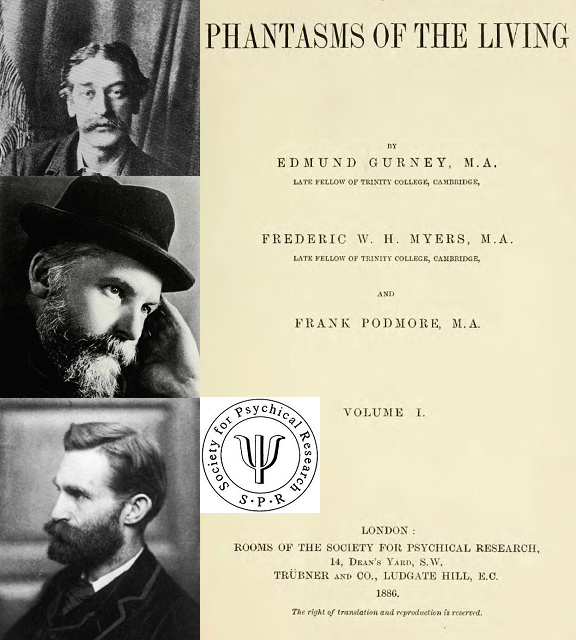
In 1886, the society published its landmark study Phantasms of the Living Phantasms of the Living, which catalogued over 700 cases of visions and experiences that coincided with death or illness. It was an early attempt to interpret these as forms of 'crisis-related mental communication' rather than proof of spirits.
Dramatic Investigations: Science vs. Deception
Among the society’s most well-known cases:
The Case of Photographer William Hope
Hope claimed to capture images of the dead in his photographs. In 1922, the society sent researcher Harry Price to investigate and discovered that Hope was secretly swapping photographic plates for pre-prepared ones. The society published a report exposing the fraud, which stirred up controversy—especially since author Arthur Conan Doyle (creator of Sherlock Holmes) publicly defended Hope and accused the society of bias against spiritualists.

Investigating Mediums
Researcher Davy S.J.M. Davey conducted undercover tests to demonstrate that 'slate writing'—messages supposedly received from spirits—could be produced with sleight of hand. Richard Hodgson investigated renowned medium Leonora Piper Leonora Piper in America, concluding that her case came closest to 'evidence of survival after death,' though the society itself remained divided on the matter.
The Helena Blavatsky Affair (Helena Blavatsky)
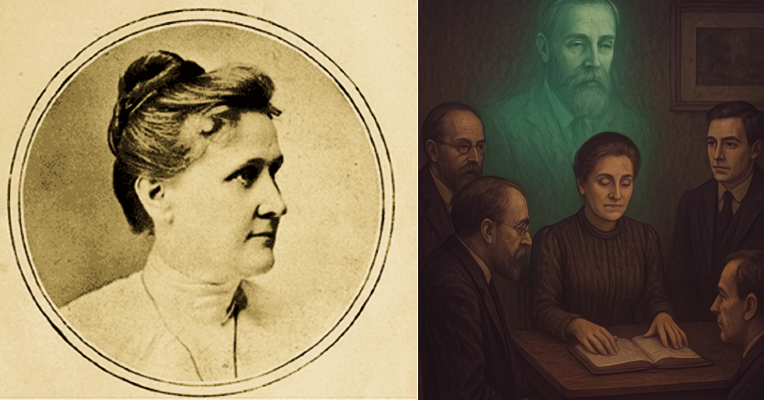
In 1885, the society released a report concluding that the Theosophical Society, led by Madam Blavatsky ,was 'deliberately using tricks' in her alleged communications from the 'Mahatma masters.' This caused a major scandal among spiritualists in both Europe and India.
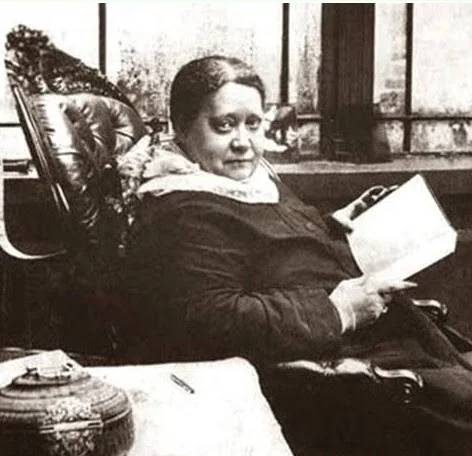
With its range of investigations, SPR became a massive laboratory for testing spiritual claims—sometimes validating them, sometimes exposing them as fraud.
An Internal Struggle: Science Versus Belief
The society's history was not without internal rifts. In the 1920s, tensions rose between members who 'believed' in spiritual phenomena and more skeptical researchers. The conflict peaked in 1930 when Arthur Conan Doyle resigned, criticizing the society for 'treating spirits as if they were criminals in the dock.' On the other hand, researchers argued their duty was neither blind belief nor rejection, but scientific verification. This debate ultimately led the society to adopt a more unified approach: analysis first, interpretation later.
The Modern Era: From Ghosts to Psychology
The society is still active today, more than 140 years after its founding. Its headquarters are now in London at 1 Vernon Mews, where it runs a library and archives holding thousands of historic documents, photos, and reports. It also publishes two academic journals: the Journal of the Society for Psychical Research Journal of the Society for Psychical Research and Paranormal Review Paranormal Review.
It continues to host annual conferences and seminars, bringing together experts from psychology, physics, philosophy, and neuroscience to discuss so-called 'borderline phenomena' that blur the lines between the natural and supernatural.
The current president is Professor Caroline Watt from the University of Edinburgh, a contemporary researcher in parapsychology (Parapsychology), also known as the study of the paranormal mind.
Global Influence of the Society
The reach of the British Society for Psychical Research (SPR) helped establish a worldwide movement of parallel societies, all adopting its scientific approach to the study of paranormal phenomena. Just three years after its founding, the American Society for Psychical Research (ASPR) was launched in New York in 1885, led by philosopher William James, becoming its first international branch.
In France, the Société de Psychologie Physiologique et Psychique was established in Paris in 1885 under the direction of Dr. Charles Richet. This was quickly followed by the German Society for Psychical Research (Deutsche Gesellschaft für Psychical Research) in Berlin in 1889.
In India, the Indian Society for Psychical Research was established in 1920 with contributors from the University of Calcutta. Meanwhile, in Australia, the Australian Institute of Parapsychological Research was launched in Sydney in 1977 to connect paranormal studies to modern academic methods.
In Scotland, the Scottish Society for Psychical Research (SSPR) was founded in Glasgow in 1987, entirely inspired by the spirit of the original SPR. Today, these independent yet collaborative societies represent the global intellectual legacy that began in London in 1882, when a handful of scientists decided to put 'ghosts under the scientific microscope.'
Between Falsehood and Fact: A Lasting Legacy
Despite heavy criticism from mainstream scientists, the pioneering role of the SPR Society in establishing rigorous research standards for paranormal investigation is undeniable. It has long served as the gateway through which the study of ghosts left séance circles for the halls of academia.
The society has exposed countless deceptions and hoaxes, but it has also contributed serious research into the boundaries of human consciousness, influencing scientific and philosophical thinking in the West.
Today, the society is less focused on spirits and more on the mysterious frontiers of the human mind—the gray area where science and psyche cautiously meet, physics overlaps with emotion, life borders on death, and the mind encounters the unknown.
In a world where the divide between science and spirituality is only growing, the SPR Society remains a witness to humanity’s ongoing quest to explore the unknown with an open mind. It aimed to bring method to the strange, turning 'superstition' into a 'phenomenon worth studying,' even if it couldn’t provide all the answers. Whatever its critics say, it still holds the title of the world’s oldest institution trying to prove that there’s more to the unseen world than just faith. The SPR Society publishes research, showcases books, hosts events, and has its website here.
About the Author



No comments:
Post a Comment